
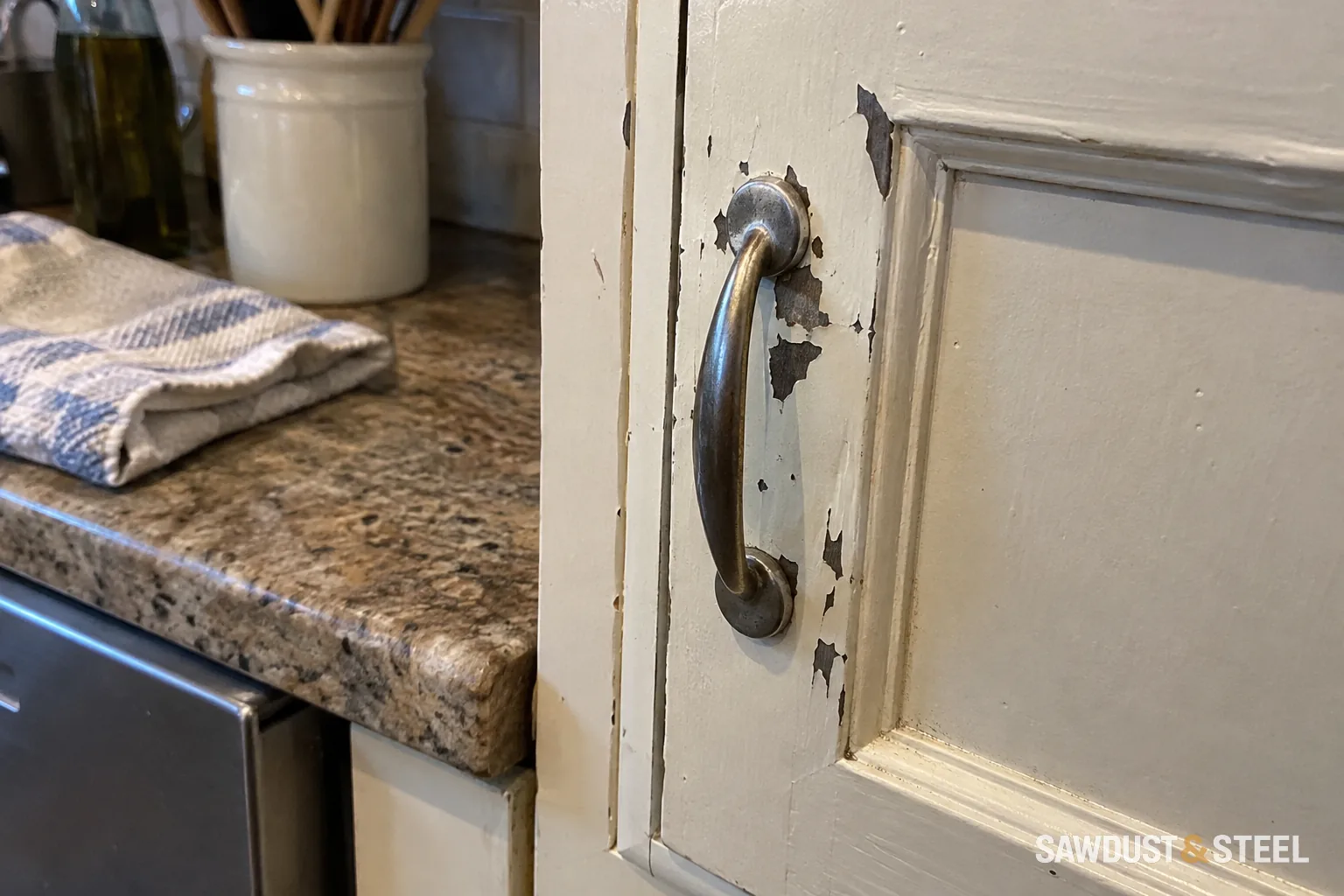
You can picture the new cabinet doors already. But will you still have to unload three saucepans to reach the frying pan? Refacing can make a tired kitchen feel good again when the boxes and layout work. It cannot move the dishwasher out of the walkway. Before choosing a door colour, open the cupboards and decide which frustrations you are actually paying to fix.
What each option changes
- Door replacement keeps the boxes and usually the visible box finish, then changes doors, drawer fronts, and often hardware.
- Refacing keeps the boxes but renews exposed ends, face frames, fillers, doors, drawer fronts, and related trim as one finish system.
- Full replacement removes the boxes and can change storage, cabinet sizes, appliance locations, clearances, and the room layout.
- A hybrid may keep a sound run while replacing an island, pantry wall, or damaged sink cabinet.
The keep-or-replace test
Empty the sink cabinet rather than inspecting around the washing-up liquid. On a refacing visit, a plastic shelf liner was hiding a swollen bottom panel while the adjacent drawer units were still square and solid. We had the leak dealt with first, then priced that cabinet separately from the doors. Keeping the sound run still made sense; covering the damaged box would only have postponed the awkward part. Check mounting, shelf sag, drawer travel and whether the openings are square, then test the actual appliance doors and bins. New fronts should not leave you kneeling on the floor to reach the same saucepan.
If the main complaint is doors that rub or sit crooked, first separate hinge adjustment, cabinet alignment, and moisture movement. The repair may be smaller than a refacing project.
Price the whole interruption
A refacing quote should say whether it includes end panels, fillers, toe kicks, hinges, drawer boxes, handles, disposal, paint touch-ups, appliance removal, and adjustments. A replacement quote should also cover demolition, wall repair, electrical and plumbing changes, permits where required, counters, backsplash, flooring transitions, and trim. Our renovation quote guide shows how to compare the inclusions.
If the boxes pass and you like working in the room, refacing may give you the change you wanted without rebuilding everything. If the cupboards themselves are the frustration, see what IKEA, semi-custom, and full custom cabinets would change for you. Then check the kitchen timeline, including how long the sink will be out of action. That part rarely appears on the door sample.
Choose the repair that changes your daily frustration
Start by listing what must work differently: a door finish, a sagging shelf, a damaged sink base, a cramped drawer or the whole cooking route. Inspect the boxes empty and photograph defects before a new skin hides them. A clean exterior tells you little about a swollen lower panel or a cabinet pulling away from its fixing.
For a hybrid quote, name every retained and replaced unit on a numbered plan. Check how the new fronts meet the old boxes, whether matching end panels are included and whether the counter can stay safely supported during the work. Ask who adjusts doors after the room returns to normal use. The cheapest front-only quotation can become a different project once hinges, fillers and damaged boxes are counted.
| Choice | Good reason to choose it | Problem it leaves behind |
|---|---|---|
| Retain and repair | Layout works; faults are limited and repairable | Existing appearance and storage arrangement |
| Refinish or reface | Sound boxes and a useful layout need a new surface | Box dimensions and most location problems |
| Hybrid | One damaged or awkward run undermines an otherwise useful kitchen | Careful matching and transition work |
| Replace | Condition or layout needs a fundamental change | More disruption and coordination |
Freshly painted cabinets: dry, handling-ready and cured
The painter has left. The doors look finished. It is tempting to load the shelves, wipe every fingerprint, and let ordinary life resume at full speed. The coating may still be catching up.
Ask which clock the painter is quoting
Benjamin Moore's care guide distinguishes drying from curing and explains why early cleaning can be troublesome. Exact timing depends on the coating and conditions. Obtain the actual product instructions instead of treating one online number as universal.
| Stage | What it answers |
|---|---|
| Dry to touch | Whether the surface still feels wet; it does not establish normal-use or cleaning readiness. |
| Ready for handling and light use | When hardware, doors and contents can return under the coating instructions. |
| Ready for routine cleaning | When the coating has cured enough for its approved cleaning method. |
Benjamin Moore's care guide advises waiting for full cure before routine cleaning. If a fresh spill needs attention sooner, ask for the product's spot-cleaning method; do not leave the spill for weeks or scrub the new finish. Keep the product name and application date with the painter's instructions so each stage has a useful reference.
Make the first weeks easier on the finish
Ask when doors can close normally, contents can return, and cleaning can begin. Avoid adding shelf liners, adhesive pads, or other contact materials without checking compatibility and timing. Report sticking or unusual marking to the painter before scrubbing or sanding it. Keep the product, colour, and sheen for future touch-ups.
A named coating example makes the waiting periods clearer
For ADVANCE Satin 792, Benjamin Moore's technical data sheet lists touch-dry at 4-6 hours and recoating at 16 hours under 25 C and 50% relative humidity conditions. It says to avoid heavy abrasion or returning shelves/tabletops to service for at least 5-7 days, and notes that optimum hardness and final sheen may take up to 30 days. Cooler or more humid conditions extend the schedule. These are that coating's stated conditions, not a rule for every cabinet finish.
Ask the painter to translate the actual product instructions into dates for door handling, normal closing, shelf loading and cleaning. Check for contact at door edges and bumpers before normal use. Delay adhesive liners and other sustained contact until the coating supplier confirms suitability. Keep the labelled leftover paint and the application date; touch-up work is easier when nobody has to guess which white was used.
Before returning painted cabinets to normal use
- Record the coating and its handling and cure instructions.
- Plan gentle use around the painter's product-specific advice.
- Keep labelled touch-up information and an approved cleaning method.
Get the painter's handling and cleaning dates before the cabinets fill up again. A temporary basket is a small nuisance; repairing a new finish because it looked ready is a much less satisfying job.
If doors are sticking at painted contact points, compare paint blocking at a door stop before assuming the timber needs trimming.