
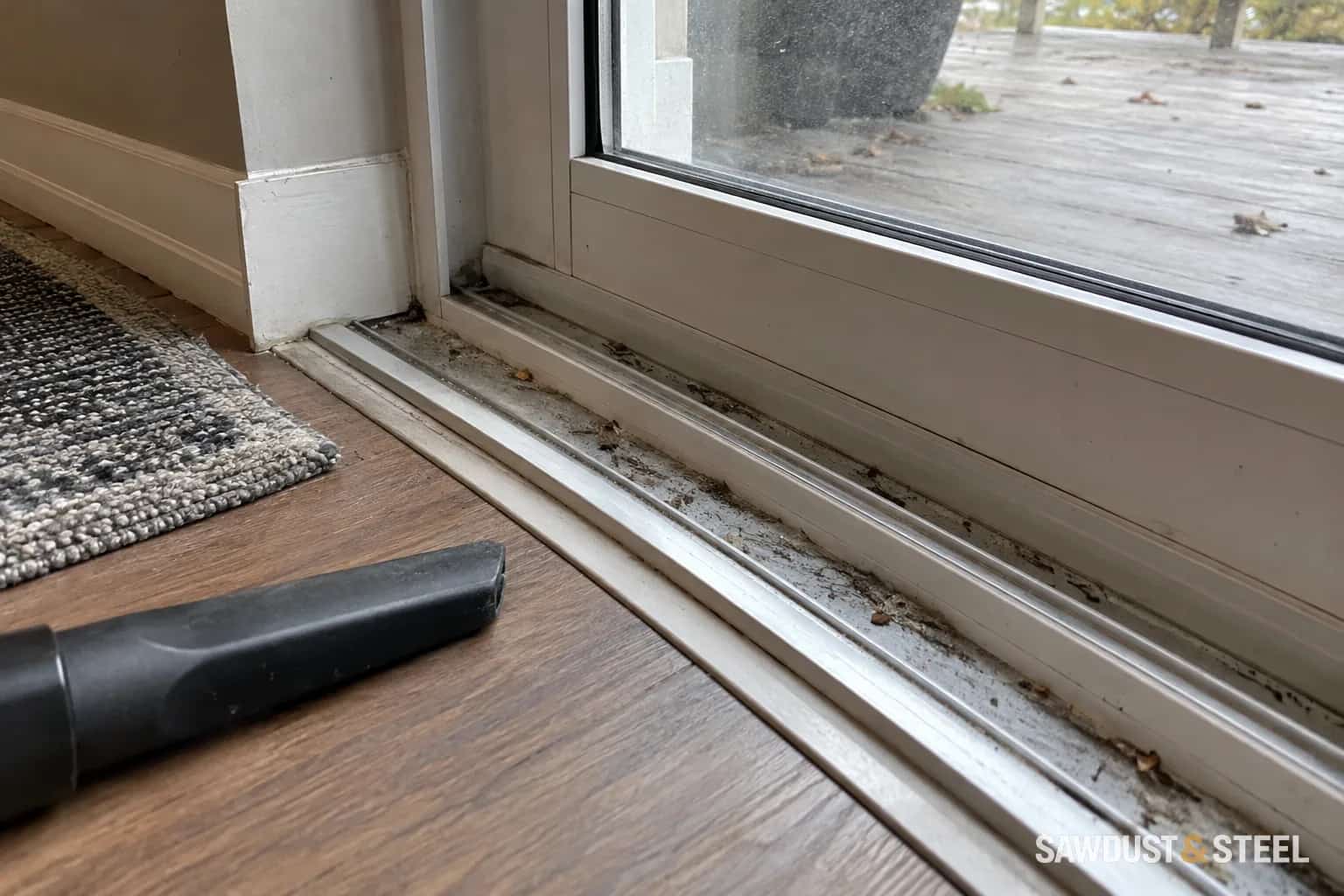
Does it drag everywhere or catch in one place?
Move the door gently through its travel. A crunching sensation with visible grit points toward cleaning. A regular bump can suggest a damaged rolling surface. Rubbing at one end, an uneven side gap or a latch that no longer lines up suggests alignment deserves attention. Stop if the panel lifts, tilts unexpectedly or appears partly off its track.
Check that the lock is fully disengaged and that a security bar or loose threshold accessory is not obstructing movement. Inspect the accessible track with a light. Pet hair, leaf fragments and construction dust often collect where a quick vacuum pass does not reach. Use cleaning methods compatible with the product and dry the area; do not flood the sill or block its drainage openings.
Clean, test, then decide
Andersen's product-care guidance separates gliding-panel roller adjustment from latch-receiver adjustment and calls for checking the panel's alignment Andersen: Product care and patio-door adjustment.
The sequence matters: moving the receiver to catch a sagging door does not correct the sag. Likewise, a loose handle may need attention but is not proof that the handle caused the drag. After cleaning, test again with an ordinary pull. If the improvement is brief or the track shows fresh scraping, stop adding lubricant and inspect the running gear.
Moves freely; latch works
Maintain the track and leave the adjustment alone.
Hard travel with an uneven gap
Check the model's panel and roller adjustment procedure.
Grinding or damaged track
Have rollers and running surfaces inspected together.
Frame visibly distorted
Assess the installation before replacing small parts.
Do not guess at the holes in the bottom rail
Find the product label and service instructions. Adjustment access, tool type and direction vary. Screws that retain parts are not necessarily adjusters. If the manufacturer permits homeowner adjustment, make small documented changes and check panel clearance, travel and locking together. Avoid winding an adjuster to its limit to compensate for worn rollers or a bent sill.
Removing the operating glass panel is not a casual extension of track cleaning. Large glazed panels are heavy and awkward, and the removal sequence may involve stops or anti-lift components. Arrange a service technician with the correct replacement parts and handling equipment when roller replacement is required. Replacing only one visibly damaged part without checking its mating surface can shorten the repair's life.
Confirm the door closes, seals and drains
After service, the panel should roll smoothly, meet the side jamb evenly and lock without being lifted. Check that screens still move independently and that accessible drainage routes remain open. If the lightweight screen is the only problem, use the screen-door track guide. If water is appearing indoors, record that separately using the sill-water check; easier sliding does not establish that a leak has been repaired.