
The packet says kitchen backsplash. Your stove says something much more specific in its installation instructions. Both matter, especially when the attractive little sheet is going directly behind the hottest part of the kitchen.
Peel-and-stick products vary: some are decorative films, some have thicker composite faces, and some resemble metal or tile without sharing those materials' installation properties. Identify the exact brand and product line before deciding whether it belongs behind your appliance. A photograph of someone else's kitchen is not an installation instruction.
Read two sets of instructions together
Appliance requirements
Locate the wall-material and clearance instructions for the exact stove.
Backsplash restrictions
Check heat exposure, substrate and product-specific separation rules.
Matching layout
Proceed only when the same arrangement satisfies both sets of instructions.
Conflict or uncertainty
Choose another finish or obtain written clarification from the manufacturers.
Find the stove model and its installation manual. Look for the requirements affecting the wall behind and beside it, including combustible materials and any approved protection. Then find the backsplash manufacturer's stove-location restrictions. The proposed layout needs to satisfy both; choose a different finish if the two cannot be reconciled.
For a concrete example, Smart Tiles' FAQ describes limits for its own products, including avoiding direct heat or flame and surfaces above 49 C/120 F. It also specifies an eight-inch untiled separation for certain stove configurations without a rear control panel or metal plate. Those are Smart Tiles conditions, not a universal clearance for every cooker or adhesive backsplash.
Do not assume an induction cooktop removes the question. Hot pans, steam and the appliance's own instructions still matter. Equally, a temperature reading during one ordinary meal cannot prove that the surface will stay within limits during every cooking condition. Ask the product maker about the exact appliance arrangement if the instructions leave it unclear.
Check what the adhesive will touch
The visible finish is only half the installation. Adhesive must bond to an approved, sound backing surface. Paint that is flaking, damp plaster, dusty filler or a greasy wall can release with the sheet still firmly attached to it. Start by assessing the wall, not by buying stronger adhesive to compensate.
Follow the product's cleaning, drying and curing directions. New paint may need time before covering; glossy or textured finishes may have different restrictions. Do not add a primer, solvent or extra glue unless the system permits it. A small trial in an inconspicuous approved location helps assess appearance and adhesion, but it does not overrule heat restrictions.
Lay out the pattern on paper first. The first visible edge beside the stove and the termination beneath a cabinet matter more than how quickly the central sheets go on. Avoid leaving a thin, easily lifted sliver at a frequently wiped corner. Order enough of the same batch to complete the run and retain a spare sheet with the product details.
Outlets and edges need a plan
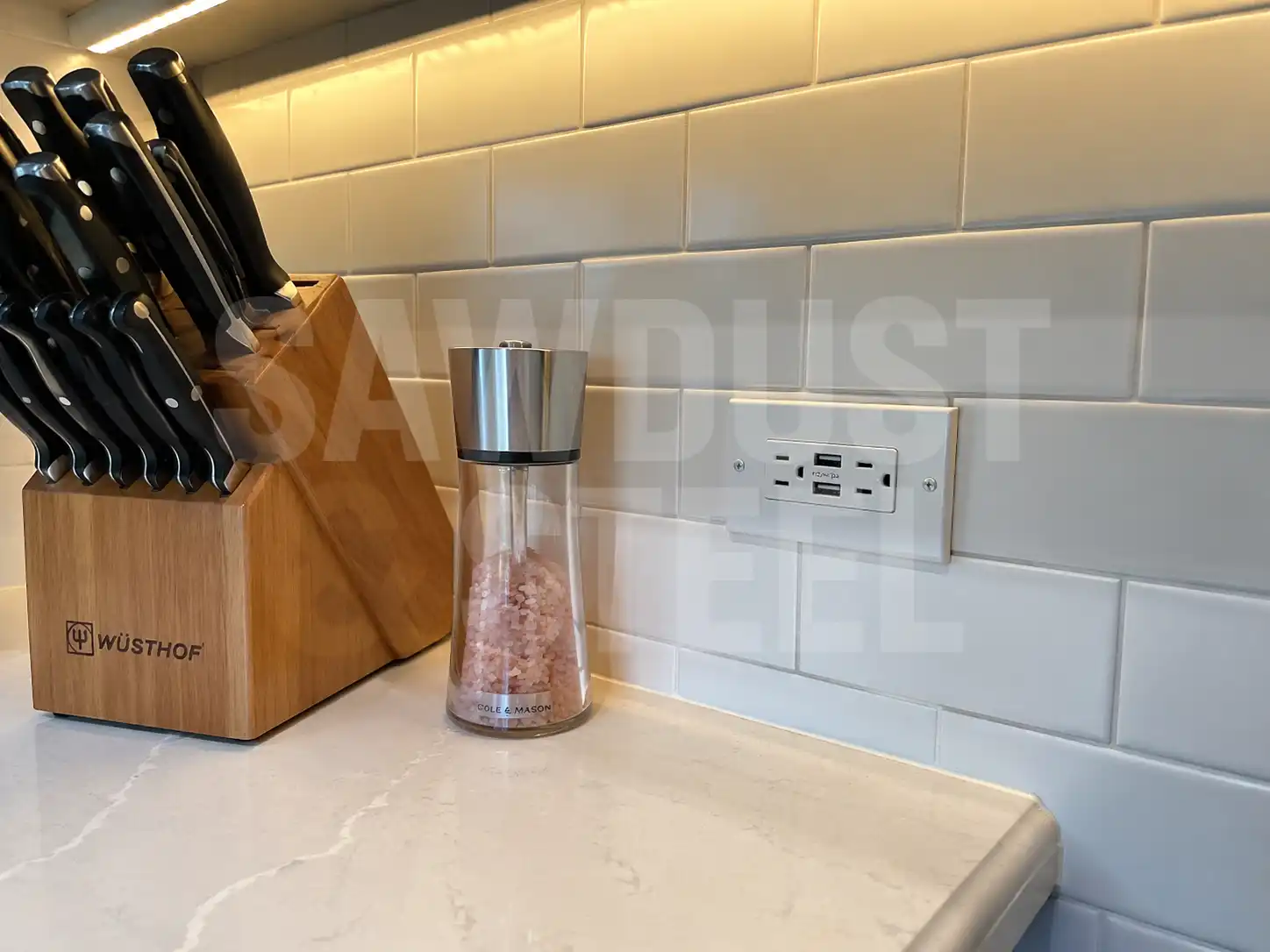
Before working around an outlet, arrange safe electrical isolation and keep material out of the box. If the added thickness changes how a device or cover sits, have the required electrical adjustment handled properly. Do not loosen a live receptacle and tuck decorative material behind it. Our backsplash outlet-layout guide helps you decide where the interruptions belong before installing the finish.
Check whether the product needs edge trims or a particular treatment at the counter. A neat-looking bead added at random can trap a lifted edge or use a sealant the product does not accept. Use the specified details, especially where cleaning water can reach a termination.
The wall behind a range is awkward to access after the appliance returns. Photograph the completed edges and leave the installation instructions somewhere findable. Moving a range may involve electrical or gas connections; do not pull one forward simply because the backsplash job looks small.
Decide whether this is the right place for it
Peel-and-stick can make sense on a compatible low-exposure wall when the instructions support the application and you accept its upkeep. A different finish may be more practical where heat restrictions leave a conspicuous gap, the wall needs substantial repair, or you expect frequent aggressive cleaning.
Consider removal before installation too. Adhesive coverings may lift paint or damage a weak substrate when removed. If this is a rental, permission and the expected wall repair belong in the decision. Removable in a listing is not the same as no repair ever required.
Finish the decision with three items written down: exact stove model, exact backsplash product and the approved layout between them. Then compare the appearance beside your countertop material. The successful budget upgrade is the one that still looks sensible after dinner has been cooked and the wall has been wiped.