
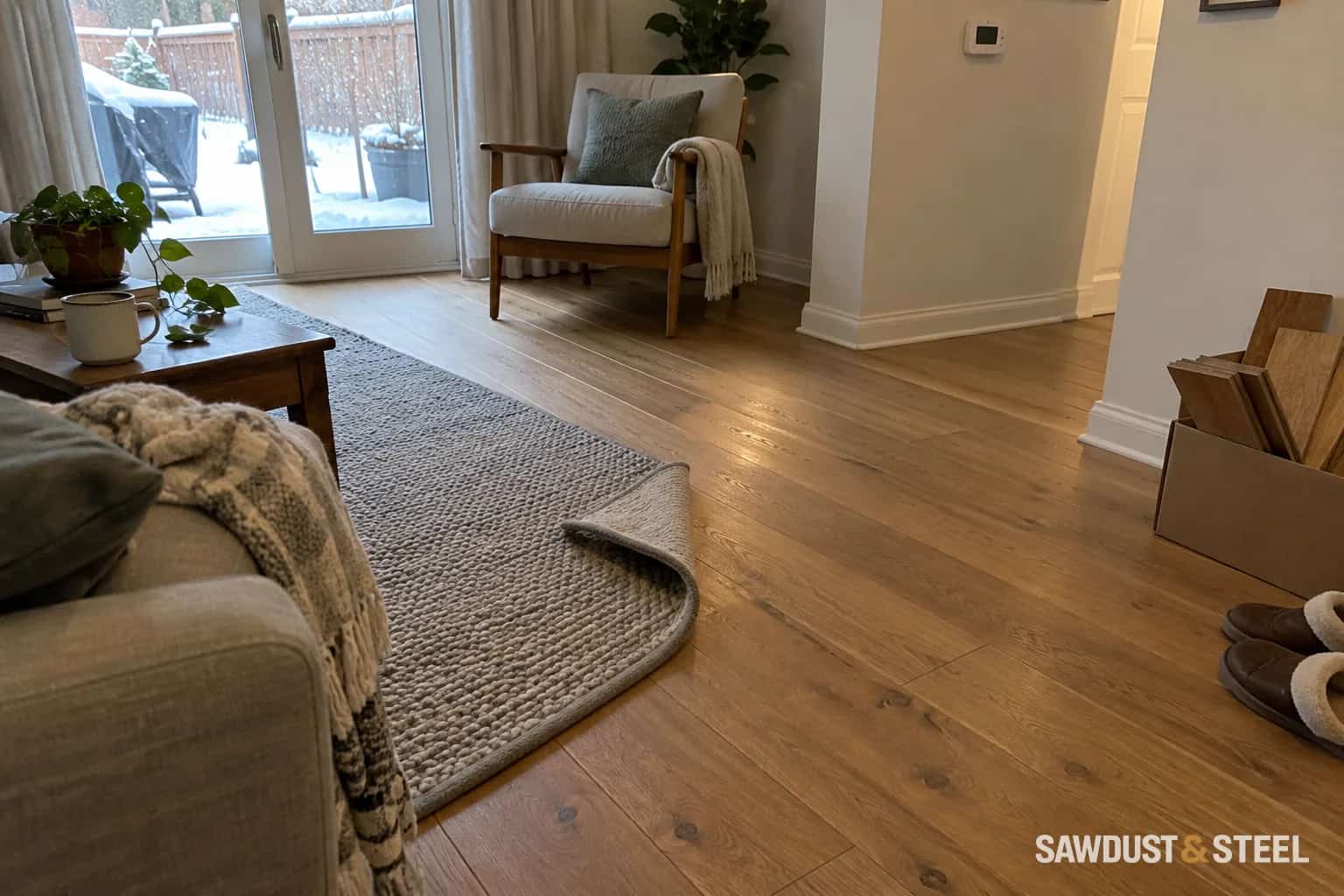
A puppy can find the one corner nobody looks at, usually behind something heavy. The first accident and a patch discovered after weeks of repeat visits are different repair jobs. Start by stopping further wetting, identifying the floor and working out how far the problem extends before promising that a weekend sanding will erase it.
Fresh accident: remove moisture without adding more
Keep people and pets away while you blot liquid with absorbent material. Follow the floor maker's approved cleaning method and the cleaner's directions, including any pet re-entry guidance. Do not flood the joints to chase a smell. A treatment that must remain wet for a long time may conflict with the flooring instructions.
Record the product used and let the area dry under normal suitable room conditions. Avoid combining cleaning chemicals. If the floor finish is unknown, ask the flooring supplier or a floor-care professional which product is compatible rather than assuming an enzyme label approves prolonged contact with every wood finish.
Finish damage and deep staining look different
Look across the surface in side light. Is the finish cloudy, rough or missing? Is the stain concentrated in the joints, or does it extend across the board? Note swelling, raised edges and whether the odour returns after ordinary cleaning. Photographs taken before treatment are useful if the appearance changes.
The NWFA installation guidelines, repairs section identify pet urine among causes of potentially permanent staining and discuss sanding or replacement as possible responses. That supports assessing the depth and condition before choosing a remedy, rather than promising every dark mark will sand out.
| Condition after approved cleaning | Likely next conversation |
|---|---|
| No mark, odour or movement | Monitor and maintain the approved cleaning routine. |
| Surface finish affected | Assess local finish repair or recoating compatibility. |
| Dark seams or persistent odour | Assess deeper penetration and possible board removal. |
| Swelling or damaged substrate | Resolve moisture and supporting layers before replacement. |
Identify the wood floor before pricing sanding
Solid wood and engineered flooring can have different refinishing limits. Find the product, its wear layer where documented, and any history of earlier sanding. A small test cannot justify removing more material than the floor allows. The engineered-floor sanding guide explains that separate eligibility decision.
The floor's coating matters during cleaning too. Bona's floor-care FAQ limits particular hardwood cleaners to specified finish types. Use the actual finish instructions, especially for oiled or waxed floors. Cleaner selection and stain removal are different questions.
When the view underneath matters
A persistent smell concentrated at open seams, a repeatedly soaked area or damaged boards can justify lifting material as part of a planned inspection. Ask what the installer expects to find and how the opening will be made without damaging unaffected boards, heating or concealed layers. Do not drill exploratory holes through the floor.
If contamination or moisture extends below the finish floor, the repair scope needs to address those layers before replacement boards hide them. Ask how dryness and the condition of the exposed substrate will be established. Applying a coating over an unidentified contaminated layer is not automatically an odour solution.
Choose the repair you can actually complete
For a single affected board with matching stock, local plank replacement may be practical. For a larger area, price the access, trim removal, substrate work and appearance match together. A new board can look different even when it came from the original box.
Consider a stain beside a patio door where the surface cleans but the smell persists at two joints. It is worth inspecting those joints and the layers beneath before paying to refinish the entire room. Conversely, a fresh accident cleaned promptly with no lingering change does not automatically justify pulling up a sound floor.
Make the corner easy to check
Keep the affected area visible during the observation period and address the cause of repeat accidents with appropriate pet care. Do not place an impermeable mat over a damp patch to hide it. Save the final cleaning instructions with the flooring information.
Ask the repairer what colour variation may remain and whether the finish needs to extend to a natural room boundary. A clear explanation of that compromise is more useful than a guarantee that old wood will look untouched.