
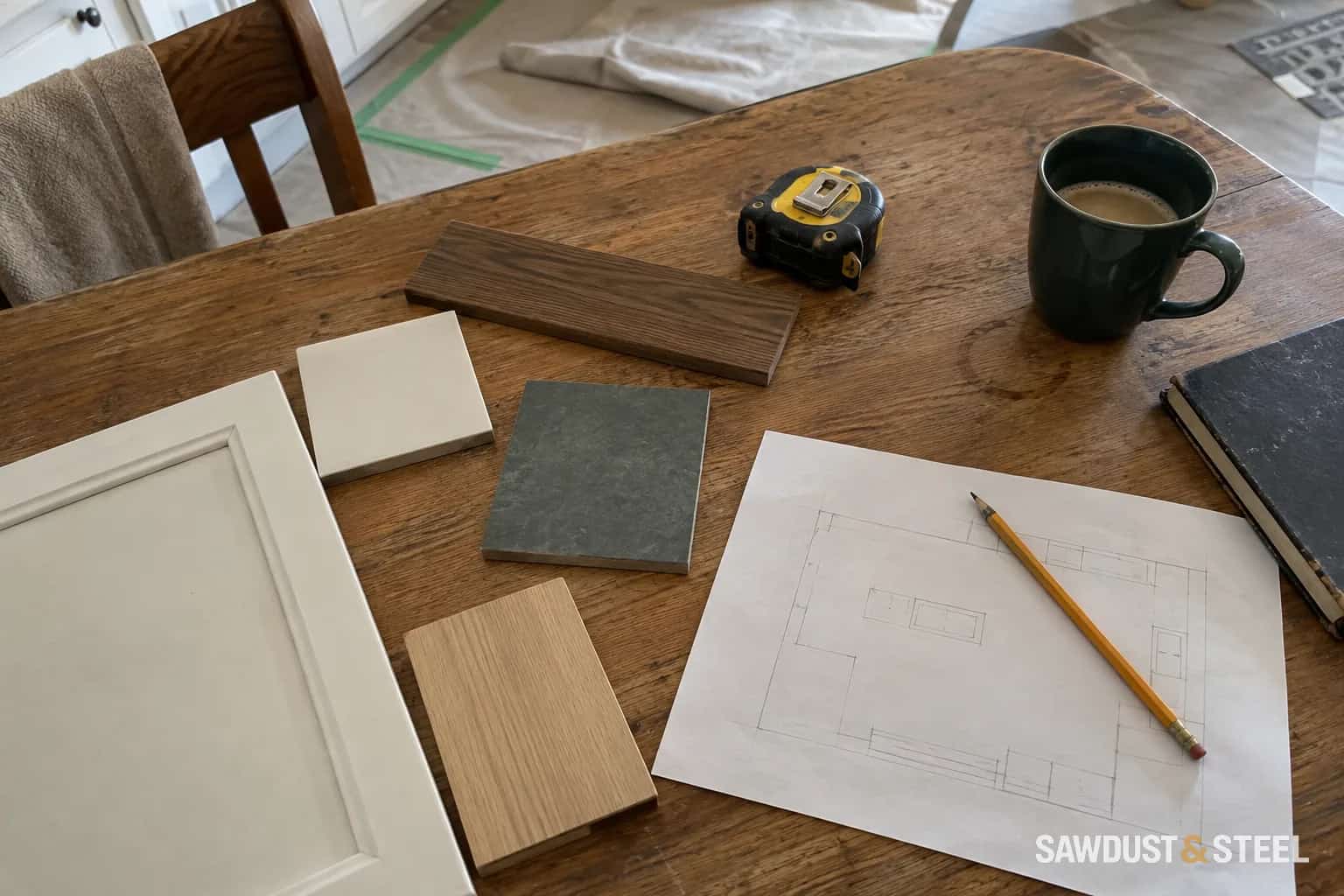
You found the stone. You love the colour. You have held a tiny sample against the cabinet door for an unreasonable amount of time. Now ask to see one more thing: the lines where separate countertop pieces will meet.
A seam is not automatically a mistake
A kitchen can need more than one piece because of slab dimensions, the counter’s shape, or the route into the house. An island that looks wonderfully simple on a drawing still has to pass through doors, hallways, and sometimes stairs.
Caesarstone Canada’s explanation of countertop seams identifies both slab size and access as reasons joints may be needed. It also explains that colour and pattern influence their visibility. The planning lesson is straightforward: discuss the actual layout, not just the sample.
Ask the fabricator to measure the delivery route as well as the cabinets. Do this before deciding that one enormous piece is essential to the design. A slightly different island dimension may offer a worthwhile alternative, but only the fabricator can confirm it.
Put the proposed joint on a drawing
| Ask to see | Why it helps |
|---|---|
| Every proposed seam | You can judge the view from the room’s main entrance and usual seat. |
| Vein direction on each piece | Large patterns can change character sharply at a joint. |
| Sink and cooktop cutouts | Openings affect the remaining material and fabrication detail. |
| Support beneath the joint | The cabinet and appliance layout must work with the installation. |
A digital slab layout or clear marked drawing helps turn “somewhere near the corner” into a decision. If a particular vein matters to you, say so before cutting. Ask what the approval covers and whether the finished slabs are the ones shown.
See a real joint, not an internet promise
Ask to see a completed seam in a similar colour and finish if the fabricator has a sample available. Look from normal standing distance and under lighting similar to your kitchen. A close-up image on a phone can exaggerate a joint; a wide showroom photograph can hide one.
Caesarstone Canada’s installation overview discusses the fitting and levelling work that happens on site. Agree on the seam appearance beforehand, then leave the technical support and installation detail to the qualified fabricator working with the specified product.
Write down what you are agreeing to
- Confirm the proposed number and location of seams.
- Agree on the intended pattern direction and any important matching.
- Ask how the joint will be supported and finished.
- Record any layout change before fabrication, including its cost or delivery effect.
- At handover, raise a rough, open, uneven, or unexpectedly placed joint with the fabricator.
If a seam is already installed and concerns you, photograph it in ordinary room light and compare it with the approved drawing. Ask for a measured assessment rather than a verdict from a dramatic flashlight angle. The goal is a well-made counter you enjoy using, not a lifetime spent hunting for a line you were promised did not exist.