
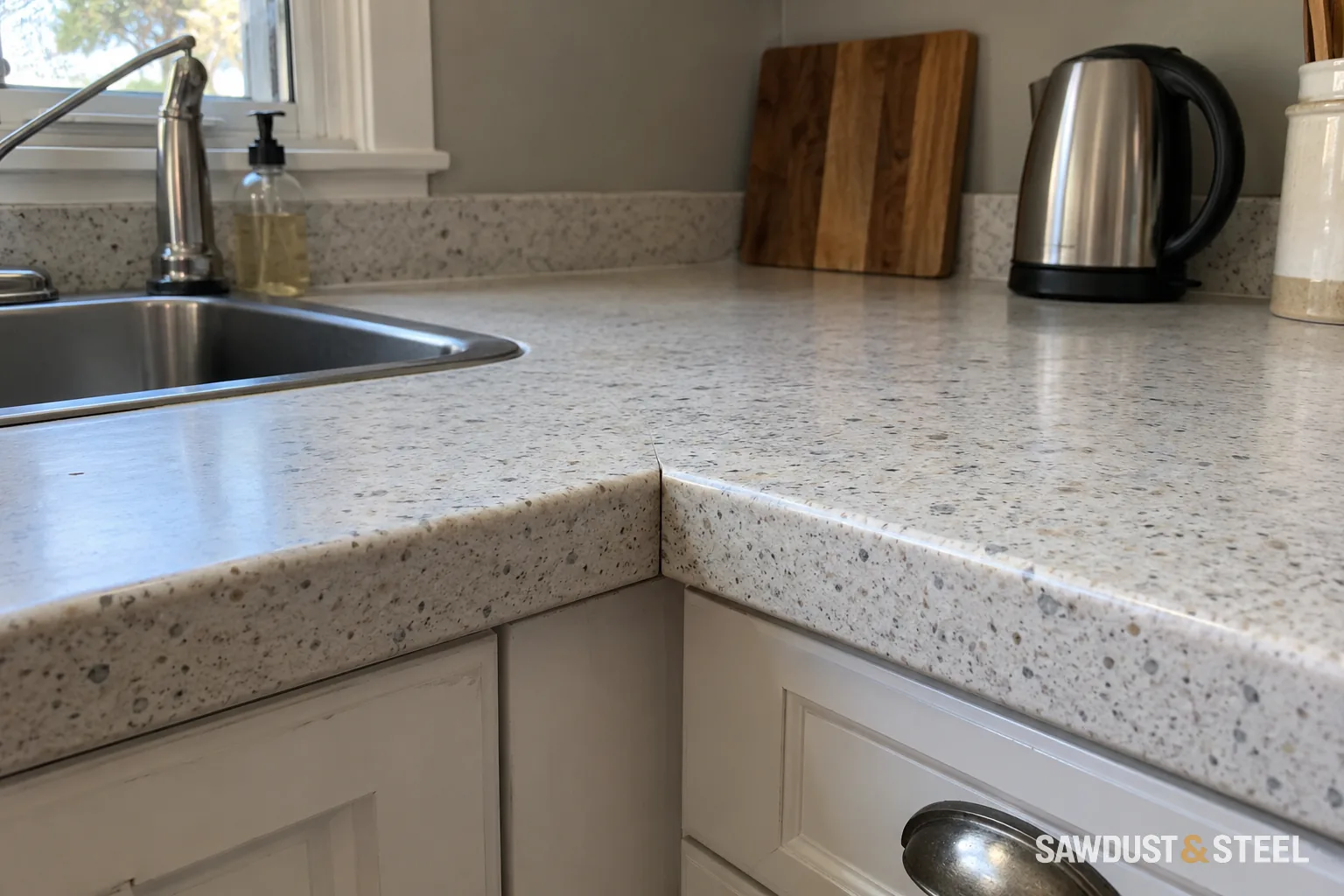
The chipped spot catches your finger every time you wipe the sink edge. It may be a small cosmetic repair, but first look beyond the missing piece. A fine line continuing away from it, movement at a seam or a changing gap asks a different question.
Photograph the edge and its surroundings
Take one close photograph with a ruler nearby and one wider photograph showing the sink, seam or overhang. Record when it appeared and whether there was an impact. Keep any detached piece if you have it. Avoid glue, coloured filler or abrasive polishing until the fabricator has seen the original condition.
Caesarstone Canada: Repairing quartz countertops distinguishes chip and crack repair choices and recommends checking with the supplier about possible warranty coverage before treating a crack arising from normal use. It does not mean every damaged edge qualifies. Have the product name, invoice and installation information ready.
Small isolated chip
Ask about a local repair and the likely visible finish.
Line continuing into the slab
Have the fabricator assess a possible crack before filling.
Movement or unsupported edge
Resolve the support or installation issue, not just the surface.
Ask about texture and sheen as well as colour
A repair on a plain polished surface faces different matching challenges from a veined or textured one. Ask where the repair will be visible under side lighting and whether it will feel different when wiped. A good repair may make the edge smoother and less conspicuous without recreating every grain in the original material.
Ask the repairer what preparation is needed, how long the area must stay unused, and which cleaners are suitable afterwards. Near a sink or food-preparation edge, the chosen product and finished surface need to suit that location. Do not assume any clear glue is interchangeable with a fabricator's repair system.
A repeated chip deserves a layout check
If heavy pans repeatedly strike the same inside edge, review the washing routine and any sink accessories the sink maker permits. Do not add a mat or guard that traps water against a vulnerable adjacent joint. If the damaged area is an overhang, have the support arrangement checked rather than leaning on it to test strength.
Keep loads off any area showing a developing crack or movement until it is assessed. An installer should also investigate a seam that is separating. A cosmetic fill is useful only after the underlying condition is understood; otherwise the next visible mark may simply appear beside the repair.
Separate a chipped edge from heat damage
A missing piece after a pan impact, a line spreading away from the sink and a dull or discoloured patch beneath a hot appliance are different findings. Photograph the mark in ordinary light and from the side, with a wider view showing the location. Tell the fabricator about the event, any heat source and whether the mark changes when the surface is clean and dry. Do not test a stain with progressively harsher chemicals until something happens.
Ask whether the proposed work fills missing material, treats a surface mark or addresses a crack and its cause. The repairer should explain likely colour, texture and sheen differences before starting. A chip repair product is not automatically a treatment for heat damage. Keep damaged areas free of additional load until the installer has assessed any crack or support movement.
For long-running countertop appliances, check both the appliance instructions and the surface care requirements. A trivet suitable for briefly resting a pan is not automatically the right base for hours of heat beneath a cooker. Keep an approved landing spot ready beside the oven and test the route with cold cookware before the next busy dinner.
| Observation | Information for the fabricator |
|---|---|
| Missing edge piece | Impact history, piece retained, close and wide photos |
| Crack or opening seam | When it began, whether it changes, support and installation records |
| Heat-related mark | Appliance/pan involved, duration, surface product and care history |
| Repeated damage | The ordinary movement of pans and adjacent accessories |
Hot pans on quartz: protect the surface before a mark appears
You're holding a hot roasting tray, the oven door is open, and the trivet is somewhere in a drawer. This is when an uncluttered quartz counter becomes very tempting. Give that tray a safe landing spot before dinner, not while you're looking for somewhere to put it.
Read the care guide for the actual surface
Caesarstone's quartz care guidance calls for trivets or hot pads under cookware. Different surface families can have different instructions. A demonstration for porcelain is not permission to treat quartz the same way.
Make the good habit easy
Keep a heat-safe landing place where the pan naturally travels from the oven or cooktop. Try that route with a cold roasting tray and your usual oven mitts. If you need to open a drawer or move the coffee machine before setting it down, the arrangement is asking a lot of you when dinner is burning. Check instructions for appliances that release heat for long periods too. If a mark appears, identify the surface and ask the supplier before trying abrasive polishing, harsh chemicals, or a repair intended for another material.
Before the next hot tray leaves the oven
- Keep the exact surface care guide.
- Choose a reachable heat-safe landing spot.
- Check countertop appliance instructions as well as cookware habits.
Put the trivet where you reached for it in the cold-tray test. Keeping one useful thing on the counter beats discovering a permanent mark after everybody has enjoyed dinner.
If the joint behind the counter is opening too, check the countertop-to-backsplash gap before treating it as the same repair.