
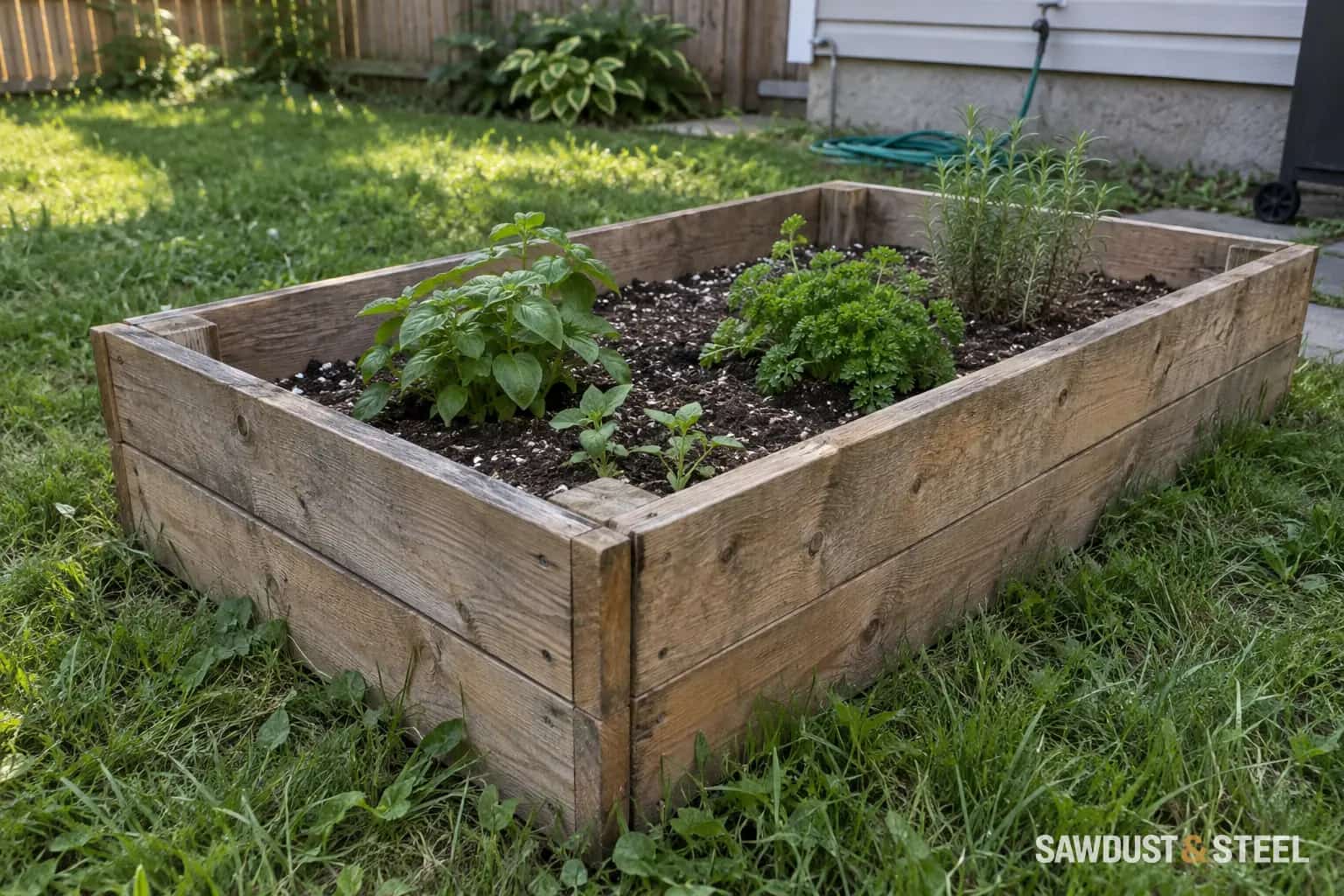
Choose for the use, not just the price per board
A vegetable bed keeps its sides in regular contact with damp soil, quite unlike a fence board drying in the breeze. Separate edible growing from ornamental planting before selecting wood or coatings. Obtain the species and treatment details in writing rather than identifying lumber by its colour. Brown pressure-treated wood and naturally brown heartwood are not the same product.
Edible garden
Use known untreated suitable wood; follow Canadian guidance.
Ornamental planter
Check treatment and finish labels for that application.
Unknown reclaimed wood
Do not guess its chemical history from appearance.
Make the wettest pieces replaceable
Board thickness, corner connections and the length of unsupported sides affect how the bed holds its shape. A tall, long bed needs a design that contains the soil rather than a few screws through board ends. Plan access to fasteners and make lower boards replaceable. Buy straight stock and reject splits at intended connections. A simple bed that can be repaired is often more useful than elaborate joinery buried where nobody can reach it.
Once the lumber is chosen, decide Does a Wooden Planter Need a Liner? before filling the bed or box.
Avoid unknown reclaimed material
Do not use railway ties, mystery pallets or demolition timber simply because they are free. Their previous treatment and exposure may be unknown. For food growing, pick a known material and avoid assuming a plastic liner makes any wood acceptable. Keep any finish within its labelled use and separate exterior appearance from soil-contact suitability. Save the product information for future repairs or another bed.
Health Canada advises against treated wood as edging for an edible garden and says treated wood and sawdust should not go into compost or mulch. Health Canada: staying safe around treated wood.
Before you finish
- Specify species and treatment status.
- Make soil-contact boards accessible for replacement.
- Use known material for edible growing.