
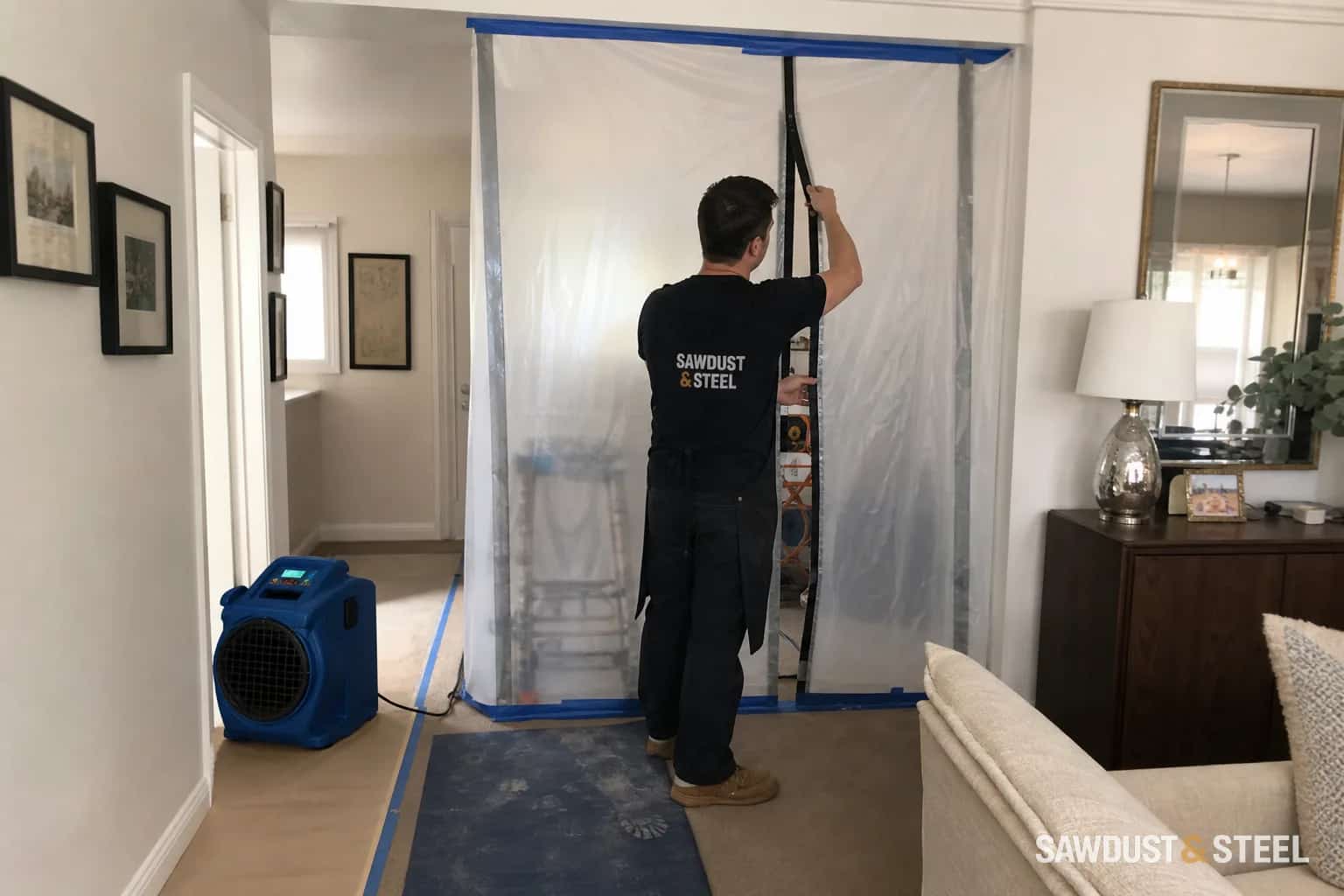
The first thing out of the room should usually be your belongings, not a wall. A clear room makes it easier to see what is staying, what is leaving and where the crew can work without damaging either.
Mark the boundaries before disconnecting anything
Walk the room with the contractor and mark retained doors, cabinets, trim, fixtures and finishes on a simple plan. Confirm who disconnects electrical, plumbing or gas equipment and how isolation is verified. Switching a light off is not the same as making wiring safe for demolition.
Review suspect materials, permits and any structural design before the start date. This is a removal sequence for agreed nonstructural work, not instructions for taking down load-bearing walls.
Clear and mark
Remove belongings and identify every component being retained.
Confirm readiness
Resolve material hazards, services, approvals and structural limits.
Recover reusable pieces
Label and move salvage out of the waste route.
Remove and inspect
Work to the agreed scope and pause at unexpected conditions.
Salvage comes out before the rubble
Identify reusable hardware, doors and trim, and give them a labelled storage location outside the debris route. A cabinet intended for donation needs a recipient and a collection plan. Otherwise it becomes the large object everyone works around for three weeks.
For old profiles, use the trim salvage checklist. Record the room and wall before removal. Retaining a piece is useful only if it survives and someone knows where it belongs.
Plan the path as carefully as the room
Canadian Home Builders' Association: renovation process recommends agreeing on material storage and waste disposal before work begins. Decide which entrance is used, where sharp debris is contained and how the route is kept usable. Separate reusable pieces from material going to the bin while they are still identifiable.
Check waste acceptance before mixing materials. A load containing something the receiver prohibits is not improved by putting ordinary drywall on top. Keep suspected hazardous material out of the ordinary waste plan until qualified handling is arranged.
Leave deliberate stopping points
A sound sequence exposes enough to check the next step before the crew commits to it. Unexpected wiring, a soft subfloor or a different concealed layer should trigger review, photographs and a revised instruction. Do not reward speed by concealing discoveries under the next pile.
At the end of the day, retained spaces need secure boundaries and a clear route, not merely a swept patch at the door. Decide who checks exposed openings and temporary protection. Before rebuilding, document the opened conditions and confirm that the next trade is working from the updated plan.