
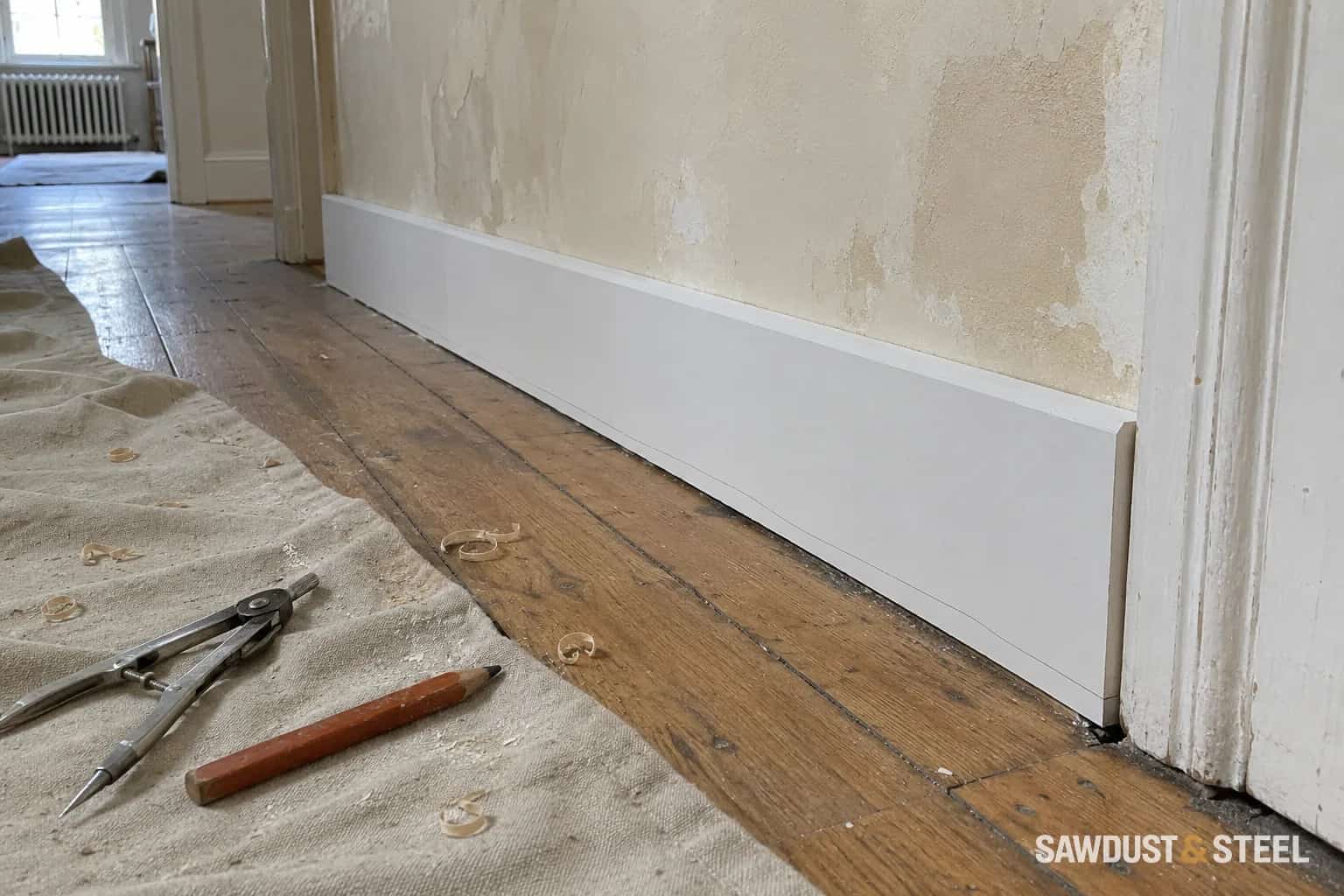
The original casing may have a profile that no current rack of mouldings quite matches. Saving it can be worthwhile. Saving a pile of unidentified splinters is less helpful.
Decide what makes the trim worth keeping
Compare the profile, species, thickness and remaining condition with available replacements. Look for split ends, soft areas, excessive old repairs and short pieces that will not span the new openings. Keep a small sound reference piece even if most of the run will be replaced.
Resolve old coating risks before cutting paint lines or pulling nails. On designated properties, check heritage requirements before deciding that removal is only a cosmetic matter.
Profile and thickness
A reference cross-section helps a supplier match the moulding.
Usable length
Exclude split ends and damaged areas from the available length.
Original position
Room, wall and orientation let the installer reconstruct the run.
New requirement
Compare the revised opening or wall with the salvaged lengths.
Make a simple location map
Assign each room a name and each wall a letter. Photograph the installed trim, then label the back of each recovered piece with that location and orientation. Put associated corner blocks and hardware in labelled bags. Mark a finished face on protective wrapping rather than covering a delicate coating with aggressive tape.
Record the new layout beside the old one. A doorway that becomes wider may need a longer head casing even when its side pieces survive. Saving material does not remove the need for a cut list.
Remove for reuse, not for speed
Have the person doing the work choose a method suited to the material, fastenings and coating condition. Delicate plaster, brittle trim and concealed screws change the job. The goal is to release a piece without using its decorative edge as a pry point.
Put recovered lengths on stable support where they will stay dry and straight. Keep nails and sharp ends from becoming a handling hazard, with appropriate treatment by the crew. Do not stack them across the only passage to the bathroom.
Allow for matching and finishing
Ask who will reproduce missing pieces, repair small losses and finish the assembled work. A new section may take stain differently from the old one. Trial the finish on a compatible offcut and review it next to the retained material under the room's lighting.
City of Toronto: heritage permit guide shows why recording retained interior attributes matters where they are designated. For ordinary trim too, a clear before-and-after record prevents accidental disposal. Include the salvage inventory in the material storage plan and tell every trade which pile is staying.