
The old vinyl floor looks ready to come up in an afternoon. The adhesive underneath is another question. A sensible material check follows everything the job will cut, scrape, drill or break, including the layers you cannot yet see.
Define the work before arranging tests
Give the assessor a marked floor plan, approximate building and renovation dates, and the contractor's proposed removal scope. Include holes for new services, not just complete demolition. A small ceiling opening can disturb a different material from the wall beside it.
Health Canada: asbestos and your health recommends professional testing before renovation where asbestos may be present. Age and appearance can raise a question; they cannot settle the material's content. Do not break off a piece yourself to save an appointment.
Map the cuts
Mark demolition surfaces and new holes for services.
Assess the layers
A qualified assessor identifies appropriate sampling and unknown areas.
Resolve findings
Confirm any specialist work and the handoff before ordinary demolition.
Ask for a usable record
The useful result identifies sample locations and materials, laboratory results, limitations and the next action. Ask how multiple layers were considered and which concealed areas remain unknown. An invoice saying 'asbestos test' is not enough for the person arriving with a demolition tool.
Keep photographs that relate each sample location to the room. If the scope later expands into a second room or another floor layer appears, stop that part of the job and ask whether further assessment is needed. A report describes what was assessed, not every material in the house.
Put the result into the work plan
If asbestos is found, use a qualified asbestos contractor for the affected work. Agree on separation from occupants, waste handling, the handoff condition and the records you will receive. Do not let a normal demolition crew improvise around a finding with household plastic and a shop vacuum.
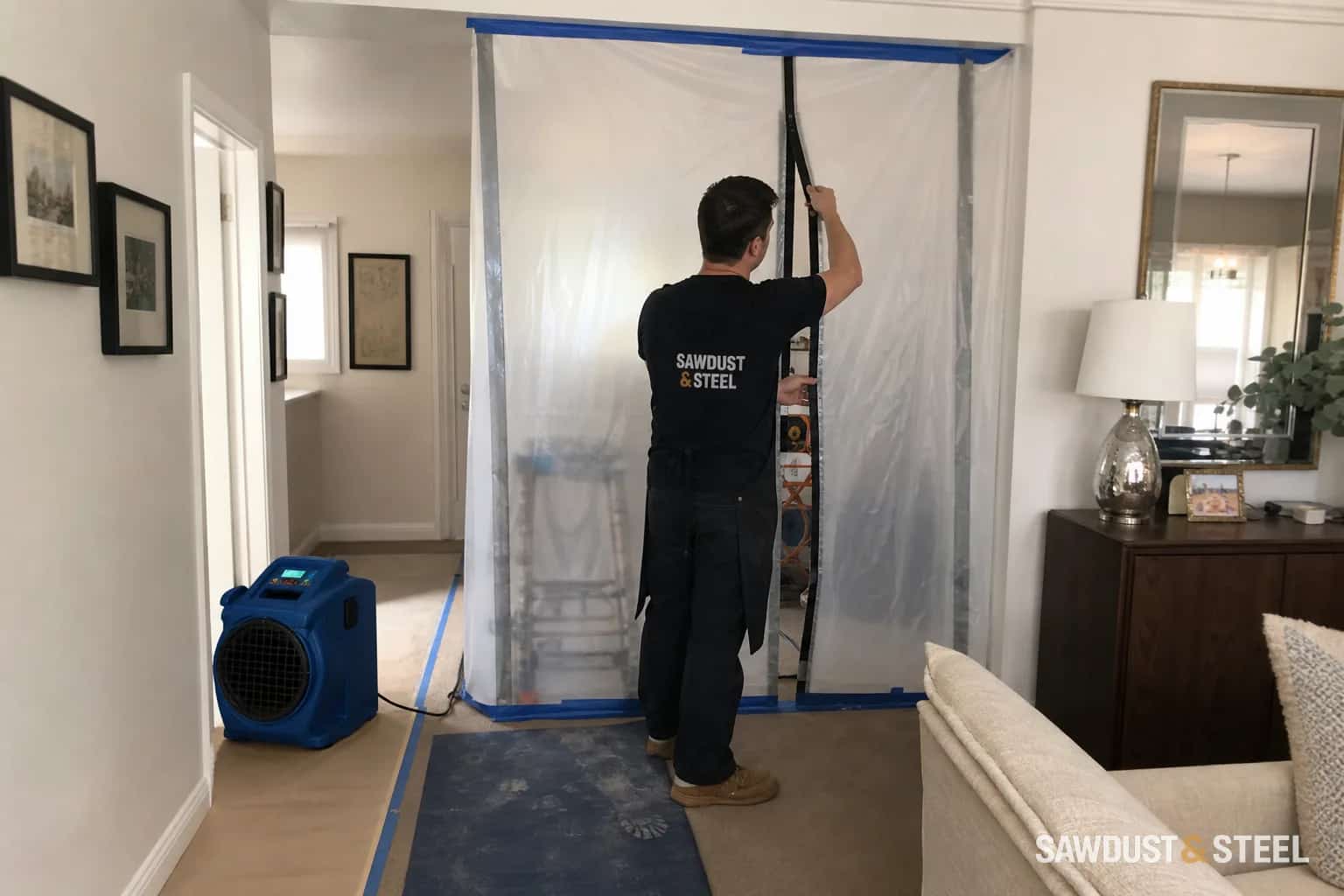
A negative asbestos result does not address every other hazard. Old coatings have their own lead-paint questions, and water-damaged materials may need separate assessment. Ordinary dust containment comes after those decisions, not instead of them.
Avoid a last-minute rush
Arrange assessment while drawings and selections are still being finalized. Tell the contractor which areas remain off limits and keep the report accessible on site. Do not book the waste bin and assume the test can squeeze in between delivery and the first swing of a hammer. A clear start condition is cheaper than a room everyone must stop using.