
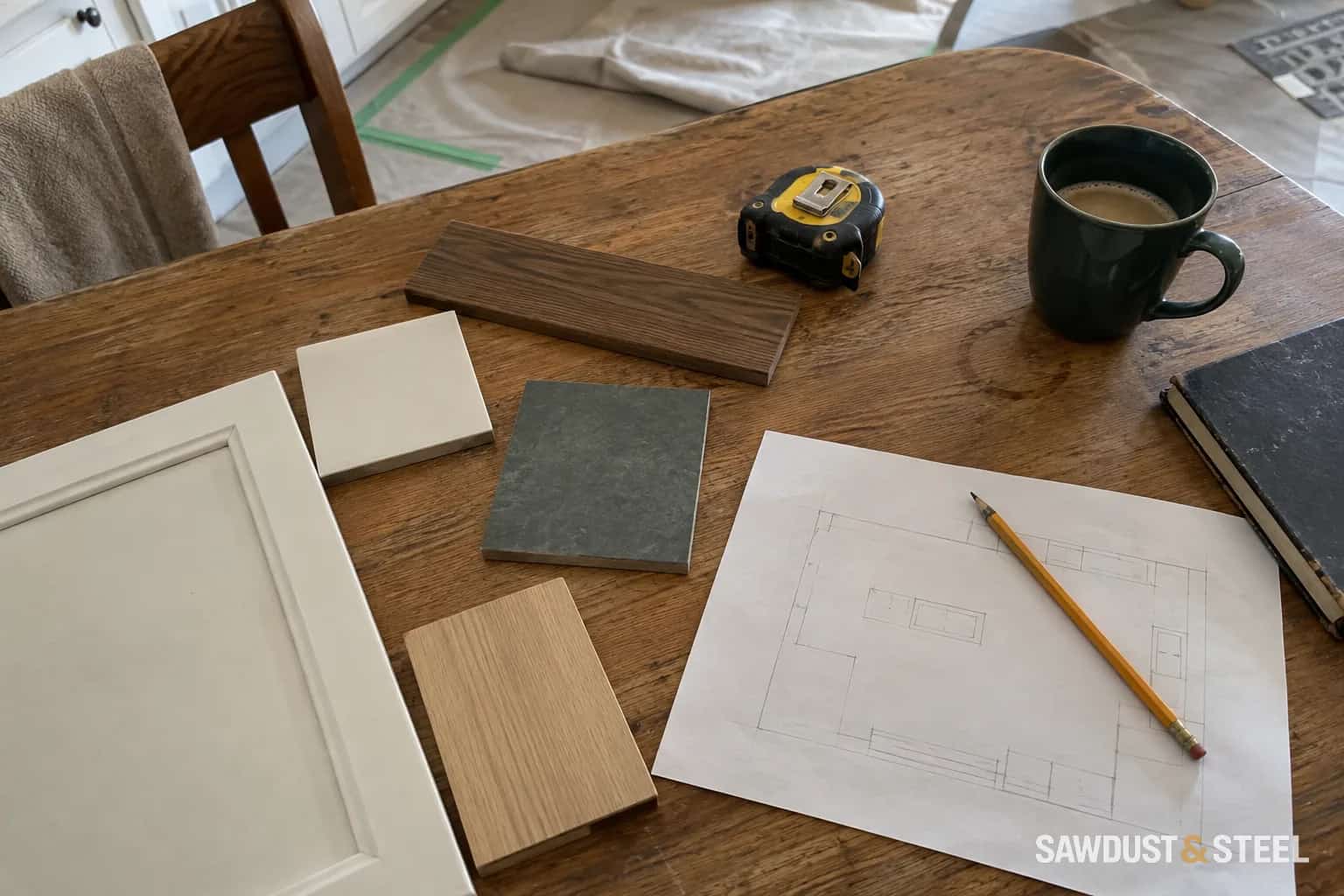
The selected product is backordered. The replacement is available tomorrow and looks similar in a small photo. That may solve the delivery problem while creating a fit problem in the room.
Identify what must stay equivalent
Start with the function of the original selection. A decorative handle needs the right hole spacing and projection. A waterproofing component needs documented compatibility with the assembly. A fire-rated component cannot be exchanged on colour and price alone.
Write down the non-negotiable requirements before comparing candidates. Use the original model number and current technical documents. Words such as 'premium', 'equivalent' or 'same thickness' are not enough to settle every property that matters.
Fit
Dimensions, connections, supports and clearances.
Assembly
Compatibility and any required technical or approval basis.
Use and appearance
Finish, maintenance and the intended daily function.
Agreement
Total cost, timing, warranty and the recorded authorization.
Compare the interfaces
Check dimensions, connections, support, clearances and adjacent finishes. A different sink can change the countertop cutout. A new floor build-up can change a door or stair detail. Ask the responsible installer or designer to review the complete effect rather than just confirming that the replacement fits its own box.
For a condo floor, changing underlay may affect the approved sound assembly. For a shower, mixed components may affect the manufacturer's installation requirements and warranty. Get the relevant written compatibility information instead of treating similar appearance as evidence.
Review appearance with a real sample
Compare colour, texture, sheen and edge detail beside retained materials. Use the sample and mockup approach for anything visually prominent. Record acceptable variation rather than discovering it across a full installed wall.
Confirm quantity, lead time, return terms, maintenance and warranty. A cheaper purchase price can be outweighed by new fabrication or extra labour. Ask for the total change, including any credit for the original product.
Put the decision into the current record
Office of Consumer Affairs: home renovations recommends specifying product identifiers in the contract. Update that information and use the agreed change-order process when scope, cost or timing changes. Obtain any required designer, authority or corporation approval before the replacement is installed.
At delivery, check that the accepted substitute is what arrived. Keep both the original requirement and the final decision in the file so future warranty or maintenance work does not follow the superseded specification.