
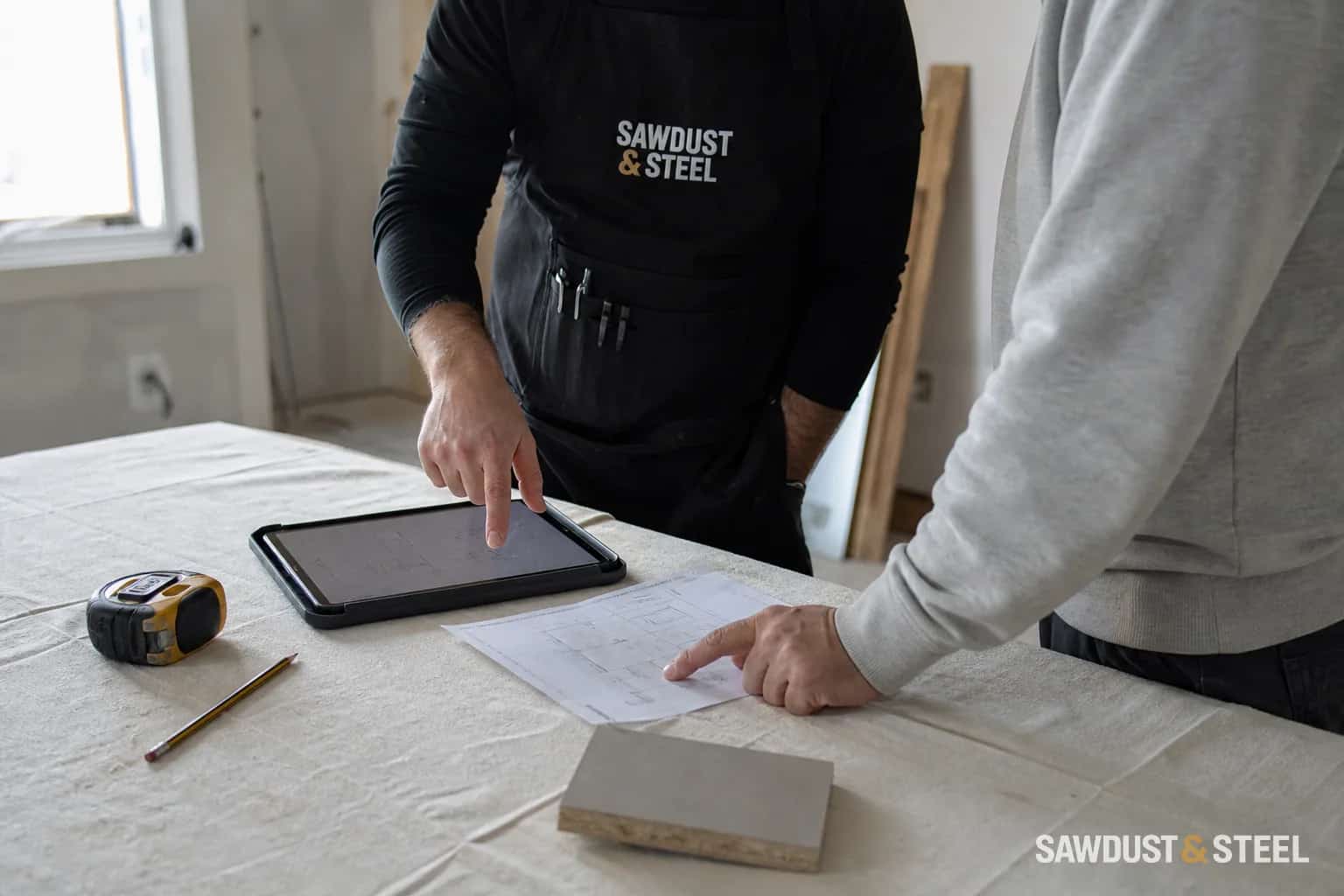
A useful punch list says 'hall cupboard, left hinge: door rubs the frame when opened'. 'Cupboard wrong' leaves three people trying to guess the same problem.
Inspect the room by using it
Open doors and drawers, operate fixtures and check access to service points. Review finishes in normal room lighting and compare them with the agreed scope and reference samples. Ask the contractor to demonstrate anything you are unsure how to use rather than forcing a stiff mechanism.
Keep urgent concerns out of a casual end-of-job list. Active leakage, unsafe conditions or a fixture that cannot be used needs prompt attention and appropriate temporary action. A paint nib can wait for an organized finishing visit; a wet cabinet cannot.
Unsafe or actively damaging
Arrange prompt assessment and appropriate protection.
Not functioning as agreed
Record the exact symptom and responsible trade.
Cosmetic or incomplete
Group compatible repairs into a planned finishing visit.
Requested upgrade
Discuss it as a scope change rather than an assumed defect.
Give every item a clear record
Use one shared list with an item number, location, observation, photograph and proposed next step. Distinguish a defect from an extra feature you now want. If there is disagreement, record it as unresolved rather than quietly changing the description to imply agreement.
A photograph should show both location and detail. If something works intermittently, describe the conditions and capture a short video where useful. Avoid diagnosing a hidden cause you cannot establish; report what actually happens.
Agree the remedy and access
Decide who will do the work, whether a replacement is being ordered and how the area will be protected during the return visit. Give realistic access windows and identify tasks that depend on another repair first. A new drawer front should not be fitted before a water problem behind it is resolved.
Office of Consumer Affairs: home renovations recommends a detailed written scope and clear responsibility for the work. Use those records to settle what belongs in completion. Consult the contract and appropriate advice on payment, holdback or disputed obligations rather than treating a punch list as its own legal rulebook.
Close items only after checking them
Mark an item completed when the agreed remedy has been inspected, not when a visit was booked. Keep earlier photographs and the completion date. If the symptom returns, the record helps the warranty conversation begin with facts.
Finish with the handover documents, care instructions and useful spare materials. Those are deliverables too, but keep them identifiable rather than burying them between paint touch-ups.