
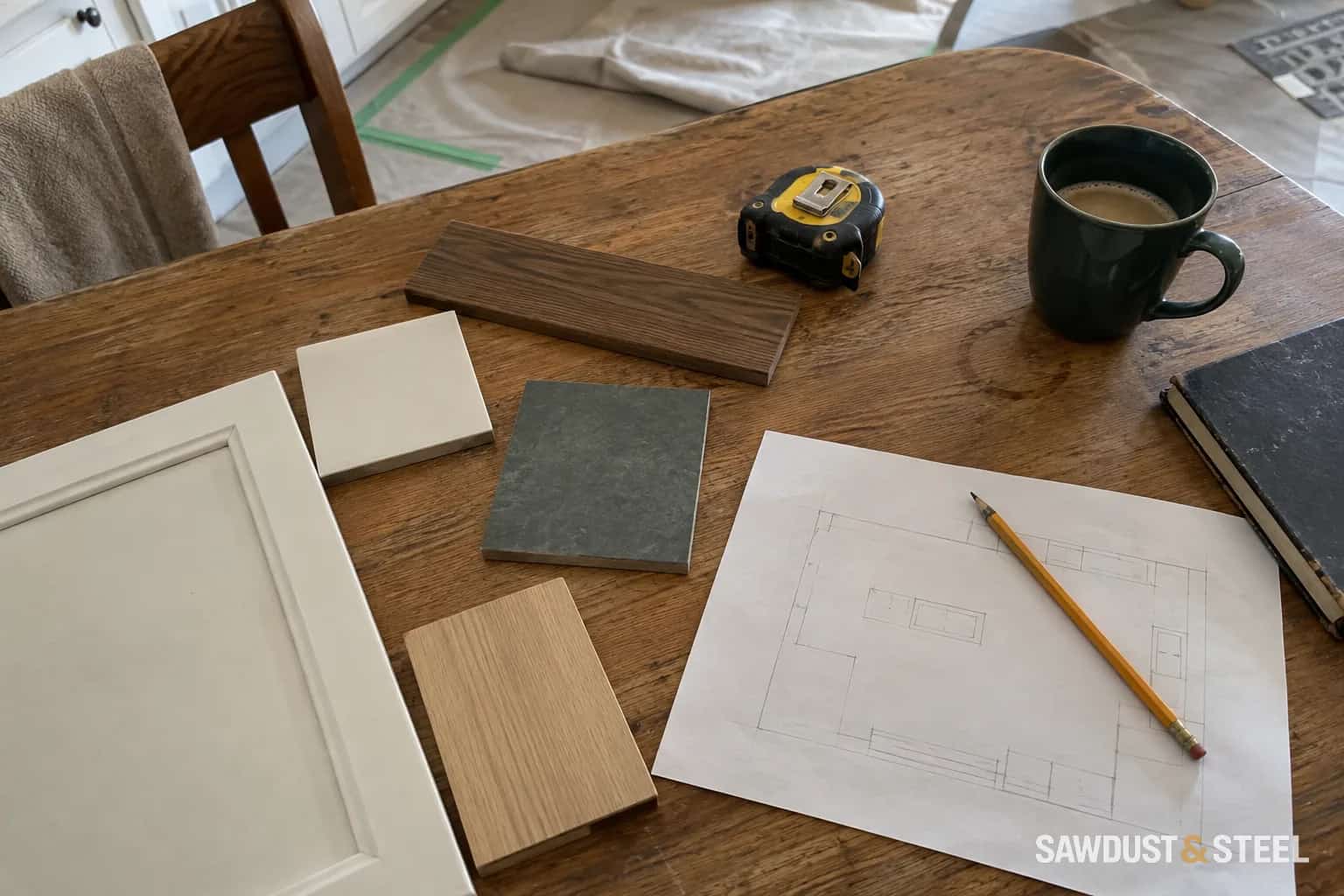
A mystery half-box in the garage is not much of a repair kit. The useful leftovers are the ones you can identify, retrieve and still use when something breaks.
Keep what is difficult to match
Prioritize finish-specific items: tile from the installed batch, unusual flooring, custom trim profiles, cabinet touch-up information and spare hardware. Keep enough useful whole pieces for a plausible repair, agreed with the installer, rather than every narrow offcut.
Daltile: tile and natural stone FAQs explains why matching stock matters when later production differs. Label the spare with the exact product, shade or lot where applicable, supplier and installation location. Photograph the original package label before it becomes unreadable.
Keep the matching piece
Sound tile, trim, flooring and unusual hardware can solve later repairs.
Keep the identity
Save product labels, batch details, receipts and room locations.
Check the shelf life
Opened adhesives, coatings and sealants may not remain usable.
Use the proper route
Dispose of unwanted products according to local acceptance rules.
Separate durable spares from time-limited products
A tile can remain useful long after a partly used adhesive or sealant expires. Read the product's storage and shelf-life instructions, including whether opening the container changes them. Do not keep a chemical product merely because its colour matches the job.
Keep coatings in suitable, secure conditions specified by the manufacturer, with lids sound and labels intact. Never transfer them into food or drink containers. For disposal, use the local waste rules; liquids and hazardous products do not belong in an ordinary mixed renovation load.
Make the storage retrievable
Use sturdy support for heavy tile cartons and protect fragile edges. Keep wood products dry and supported so they do not distort. Do not put a dense pile in an attic or on a shelf without knowing the support is suitable. A storage plan should not create a new loading problem.
Store small fittings in labelled containers grouped by room or fixture. Include the little tool for a concealed aerator or a specific hinge if the manufacturer supplies one. Link the box to digital instructions rather than relying on a folded leaflet that will absorb the first leak.
Hand over an inventory
At completion, walk through what remains and decide what the homeowner actually wants to keep. Note the storage location in the handover documents. Keep the reference sample and receipts with the record, even when no physical spare remains.
For salvaged older mouldings, preserve the location labels as well as the profile. Review time-limited products periodically. The aim is a small useful repair supply, not a permanent obstacle course made of nearly empty containers.