
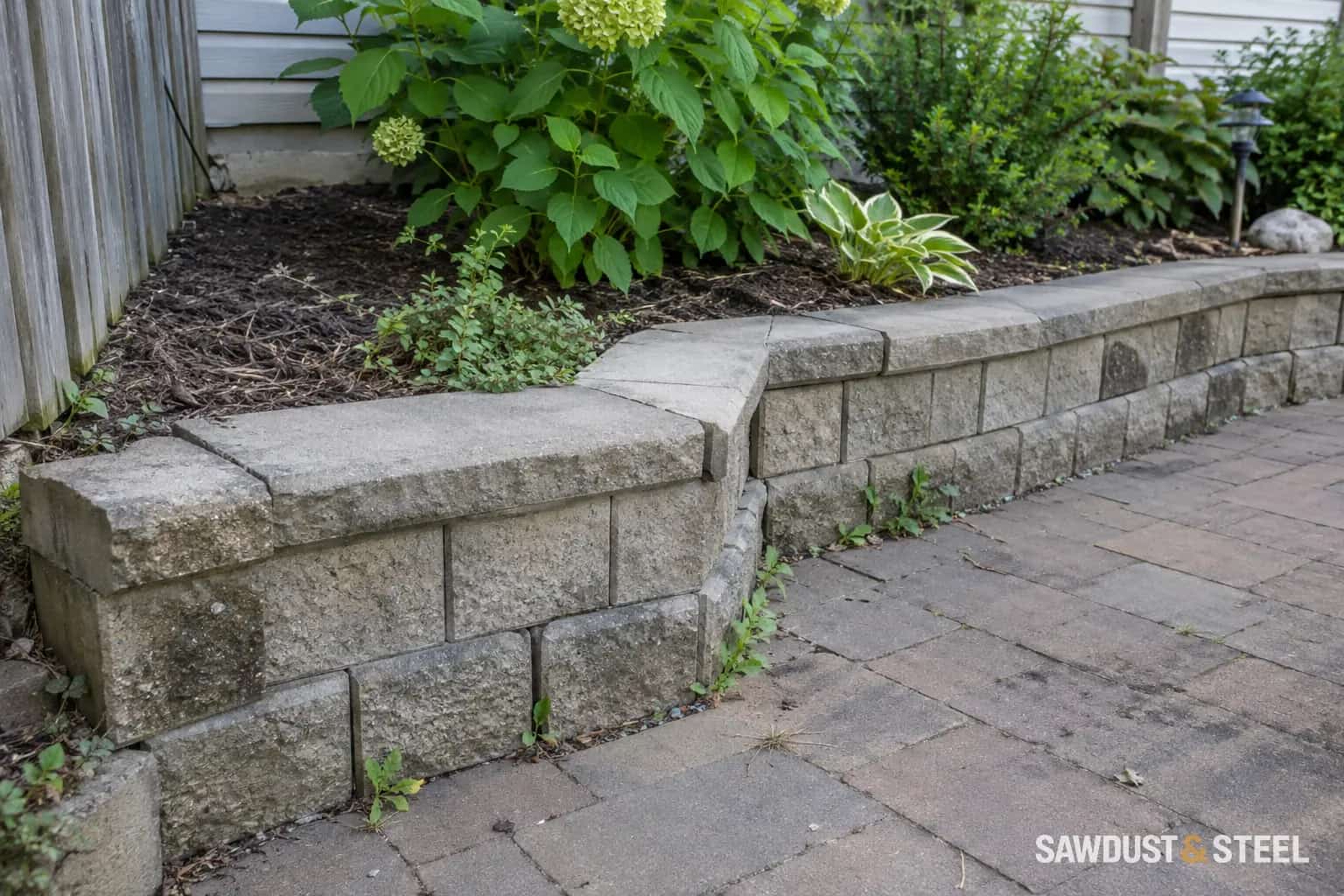
Compare the wall with its intended shape
Some segmental walls are designed to step back into the slope, so an inclined face is not automatically failure. Compare with installation photographs or neighbouring unchanged sections. New bulging, open joints, displaced caps, soil cracking and forward rotation deserve attention. Take photographs from a safe place and note recent rain or landscaping work. Do not stand below a visibly unstable section to measure it.
New rotation or bulging
Have movement assessed before disturbing the wall.
Water or erosion
Investigate the whole drainage route.
Loads, slopes or nearby structures
Include those in the design and approval review.
Look above and below the visible blocks
The retained height may be greater than the exposed face suggests. Note slopes, fences, parked vehicles, sheds and other loads above the wall. Look for water collecting behind it, discharge directed at it and erosion at its toe. An accessible drain outlet does not prove the buried drainage works. A small garden footprint can still contain a consequential wall if its failure affects a path, building or neighbouring land.
If ground preparation for an adjacent outbuilding is part of the project, Pavers or Gravel Under a Small Shed? helps frame that support decision without overlooking the wall.
Repair the cause, not just the face
Have a qualified retaining-wall contractor assess movement and involve an engineer where the wall, loads, soils or consequences require it. Ask the municipality about applicable permits and approvals for the actual wall and repair; a short visible height alone is not a universal exemption. A durable proposal should address bearing, drainage, retained soil, reinforcement where needed and the site above. Cosmetic restacking cannot correct an unresolved pressure or foundation problem.
Allan Block advises professional assessment for significant forward movement or rotation and identifies drainage and erosion as causes of wall movement. Allan Block: caring for a retaining wall.
Before you finish
- Keep people clear of unstable sections.
- Record changes from a safe fixed viewpoint.
- Include the slope and loads above in the repair scope.