
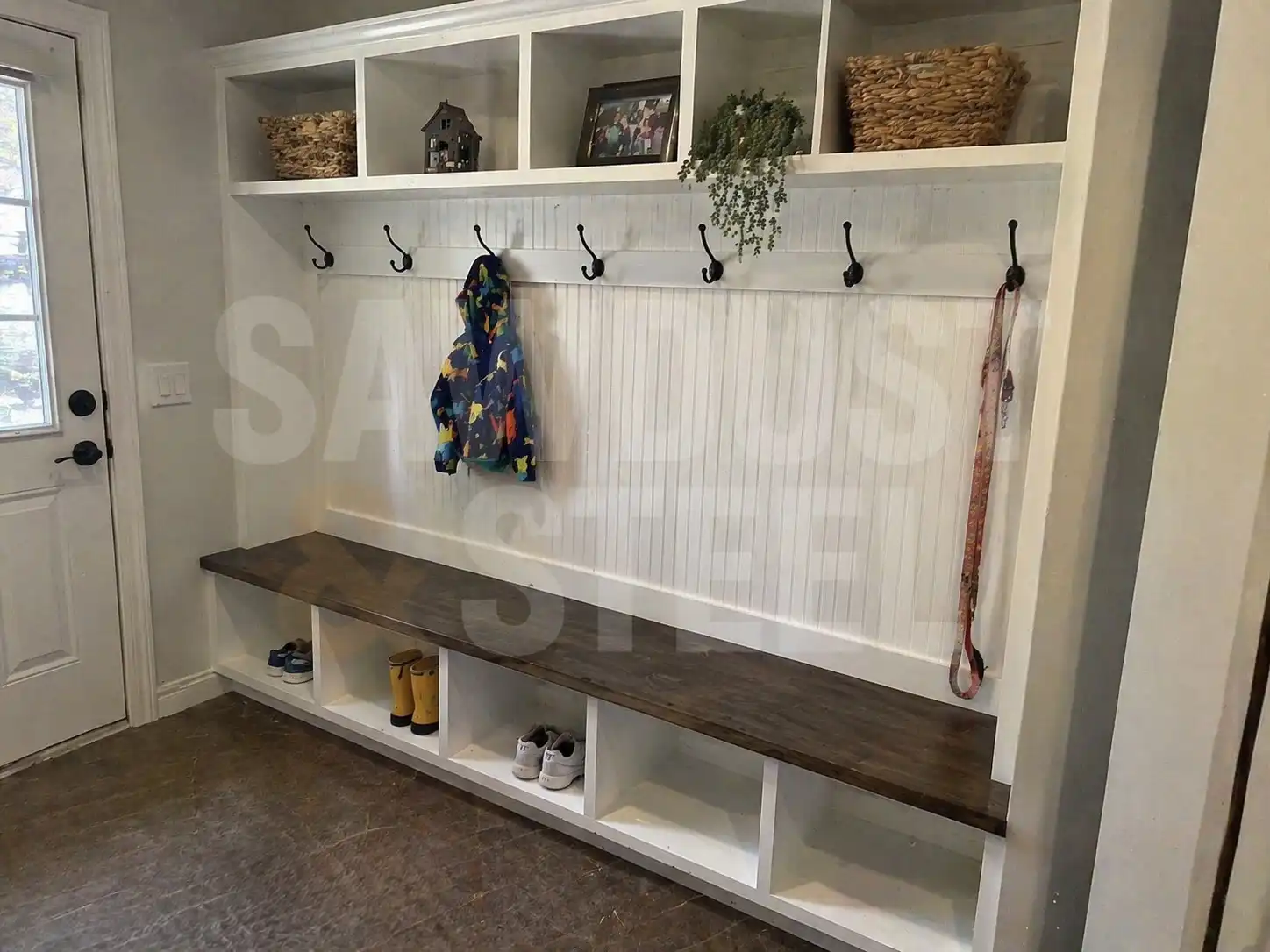
A mudroom earns its space in February, when boots arrive carrying snow, salt and half the driveway. Design around that day. Summer shoes are forgiving; a tall wet boot that has to fold under a shelf is not.
The tray takes space too
Stand the largest pair of boots on the tray you intend to use. Include its raised rim and the hand movement needed to lift a boot without scraping the shelf above. Measure the boots as they stand naturally rather than compressing the shafts. Check width with two boots side by side, because heel-to-toe packing is rarely how a child puts them away.
Vertical space
Boot plus tray
Measure from the bottom of the tray to the top of the tallest standing boot.
Usable width
Pair plus hands
Check room to set down and retrieve both boots without knocking the divider.
Cleaning path
Tray removal
Pull the tray out level, including its rim and handles.
Wet boots need somewhere to dry
Treat the arrival spot and long-term shoe storage as different needs. A removable tray catches drips, but standing water still needs emptying and the tray needs drying. Do not let a deep fixed enclosure hide a wet corner for days. Avoid covering a heating register with a tray or building footwear storage around a heater without its required clearances.
Choose surfaces and edge details for repeated cleaning. MEDITE's moisture-resistant MDF guidance still says the material should not be wetted. A moisture-resistant label is not a promise that an unsealed panel edge can sit in melted snow. Keep the tray removable and the vulnerable edges out of the puddle.
Do not create a brush-proof corner
Fixed dividers give each pair a place, but they multiply corners where grit collects. Removable dividers or a few wider bays can be easier to clean and accommodate larger boots later. Test a brush and cloth in the mock-up. If your hand does not fit beside the tray, neither will the cleaning routine.
Keep the floor underneath inspectable. If an existing bench has a damp smell, lifting tray and contents is the first check; sealing the front more tightly can conceal the problem. Where the lower board has already expanded, use the swollen MDF guide to understand why drying does not necessarily restore its shape.
Plan the rest of the landing zone
Leave sitting space for taking boots off, and place hooks so coats do not hang into the wet tray. Heavy school bags need a sound hook attachment, not just a decorative board. If the seat opens for storage, keep the boot-removal routine clear of the lid and its pinch points.
Before committing to all the openings, mock up one with scrap cardboard and use it for a few days. Include the ski boots, rain boots or work boots that only appear occasionally. A flexible tall bay is often more useful than perfect symmetry that fits only half the household.