
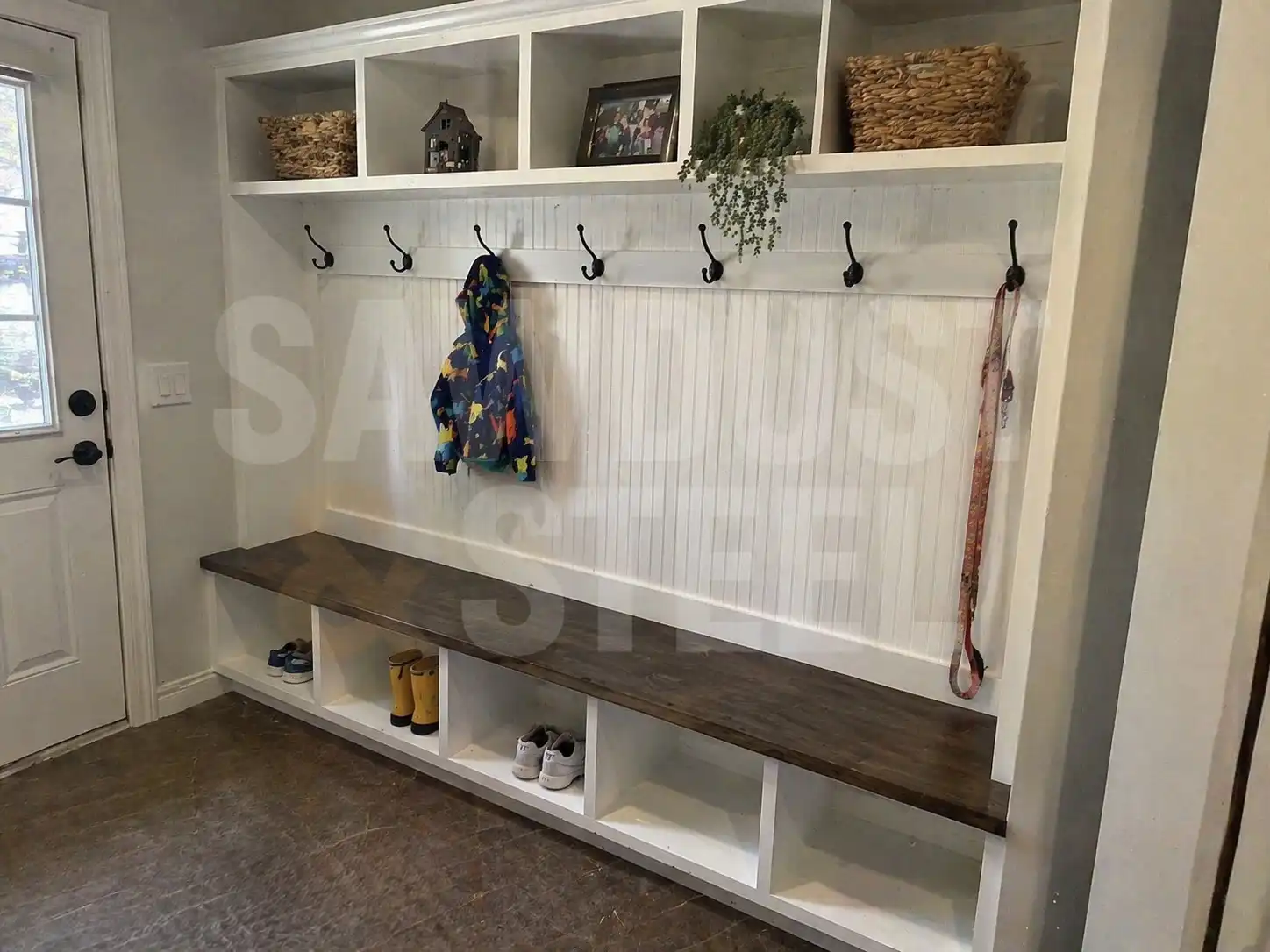
A hook advertised for a coat often becomes the family bag station. Wet parkas, a laptop bag and someone tugging a sleeve free all work on the same small attachment. If the hook rocks or the board lifts from the wall, take the load off before the damage spreads.
Check the hook and the board separately
Watch which component moves with the rack unloaded. If the hook moves against a firm board, its screws, the hook itself or the board material may have failed. If the whole board moves, inspect its connection to the wall. Decorative pin nails and caulk can make a board look fitted without providing a suitable attachment for loaded hooks.
Hook
The hook and its mounting holes need to suit the items being hung.
Backboard
The board needs sound material and sufficient support for the hook fixings.
Wall attachment
The board or rack must connect through the finish to an appropriate fixing system.
Backing
Confirm the wall construction and usable support before choosing screws or anchors.
Use the backing to set the layout
The KUBBIS assembly instructions make wall-fixing selection dependent on wall material. The same principle matters for a custom rack: identify the actual wall and suitable support rather than relying on the packet of screws left in the kitchen drawer. Check for hidden services before drilling, especially near switches, outlets and plumbing.
A properly designed backboard can let you place hooks between the wall attachment points. Its thickness, material and connections still matter. Do not assume a thin MDF trim strip performs like solid backing inside a wall. Where heavy use is expected and the wall is already being opened, plan backing before the finish goes on.
Do not reuse a hole that has lost its grip
A damaged plasterboard hole is not restored by hiding it behind a larger hook. The suitable repair may involve moving to sound material, using an approved fixing arrangement or repairing the wall and adding backing. Masonry, plaster over lath and metal-stud partitions need different decisions. If you cannot establish what the fixing will engage, get the attachment assessed.
Likewise, screws torn from a crumbling backboard call for a board repair or replacement. Keep screw length compatible with the hook, board and backing, and do not drill deeper blindly. Once secured, check that the rack sits firmly without rocking, but do not hang from it as a test.
Give bags their own place
Separate bulky bags from coats where possible, and leave enough spacing that removing one item does not drag three others. Place lower hooks for the people using them rather than making everyone pull downward on a high hook. Coordinate the arrangement with boot storage below so hems do not sit in a wet tray.
Keep the installed product's limits and attachment instructions. If the household needs more storage, add suitable capacity instead of layering more bags on the same rack. The curtain bracket guide covers a related fault where projection from the wall adds strain to small fixings.