
Find the first wet spot
Dry the outside floor and inspect the sweep with the shower off. Look for a torn lip, a shortened end, a section pulled off the glass, or a door that no longer sits evenly. If water has reached the room below or adjacent wall, stop using the shower and have the leak assessed rather than continuing repeated splash tests.
For a minor surface leak with no damage signs, observe ordinary use from outside the enclosure. Water crossing directly under the moving panel is different from water running down the wall jamb and appearing at the corner. Photograph the first wet point, not only the final puddle.
Kohler’s Prevail instructions show a specific threshold-seal orientation. The example is useful because a seal can look plausible while fitted incorrectly; it is not a direction to copy that profile onto another door. Kohler: Prevail shower door seal orientation.
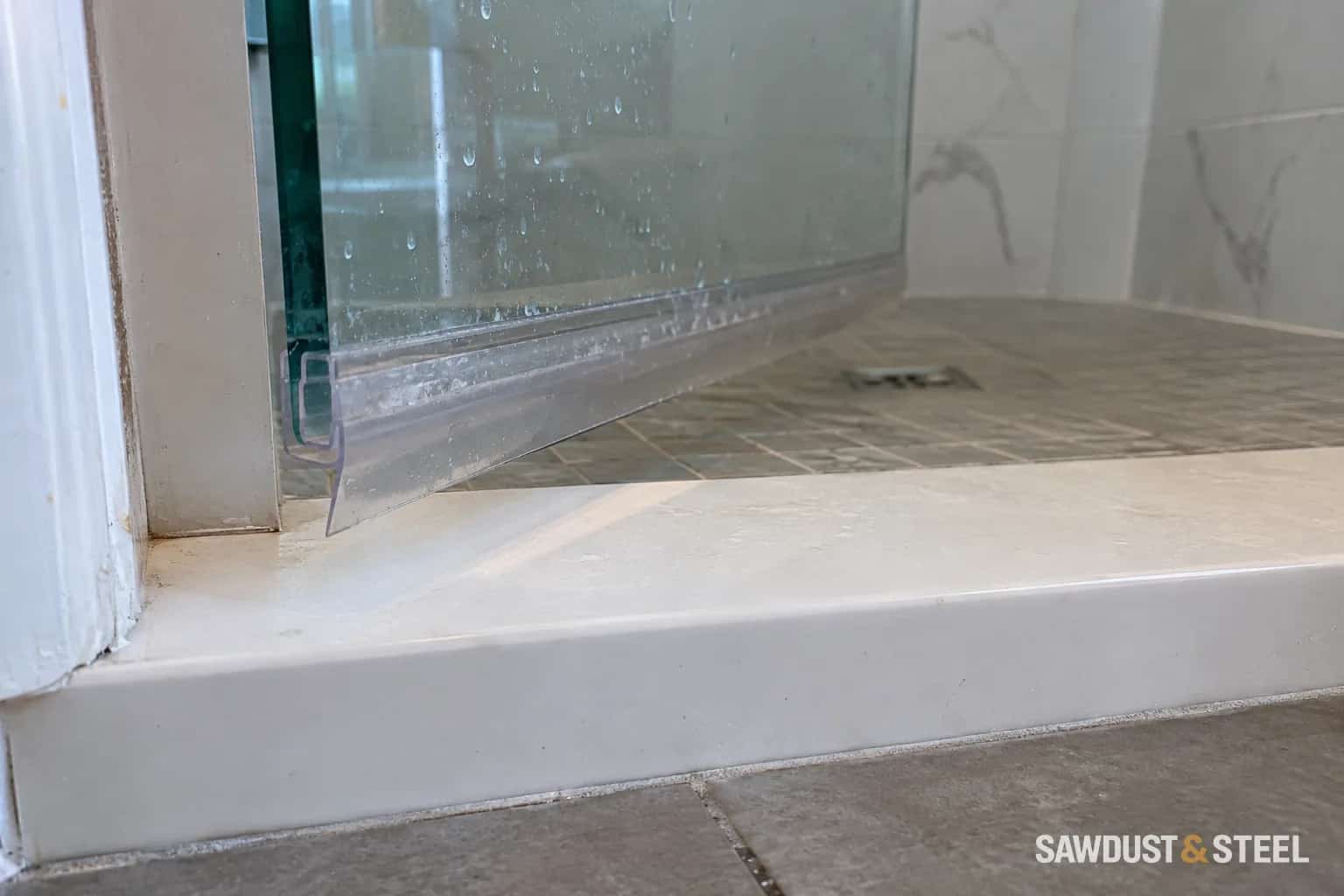
Side view at the bottom of the door
The deflector lip projects toward the wet side. It guides water from the glass back toward the shower.
Check the whole path
A new sweep cannot correct a misaligned door or water escaping at a different joint. Observe the first wet spot before adding sealant.
A deflector-style sweep is shown. Match the profile, orientation and glass fit to the door manufacturer's instructions. Deflector sweep installation example (step 11).
Torn or missing sweep
Match a replacement to the door, glass and intended gap.
Uneven gap under the panel
Check door alignment before changing seal thickness.
Water at a fixed corner
Inspect the specified perimeter sealing and track drainage.
Only with direct spray
Review showerhead direction and enclosure design.
Buy the profile, not just a strip of plastic
Replacement seals need the right glass fit, lip shape and intended clearance. A thicker sweep can drag, fold over or make the door difficult to close. Save the old profile and model label, and confirm whether it is meant to be pushed on, clipped or otherwise retained. Do not glue it permanently unless instructed.
Keep the designed drainage paths open
Many framed doors manage water within their tracks. Sealing the wrong face or blocking openings can send water out into the room. Follow the exact installation drawing for sealant placement. If the instructions are missing, obtain them from the maker before adding another bead.
A sweep cannot correct a door that is striking tile or slipping in its hardware. Stop using that door and read the sagging-shower-door guide. Once the cause is corrected, check the enclosure under normal use and dry the outside floor promptly.