
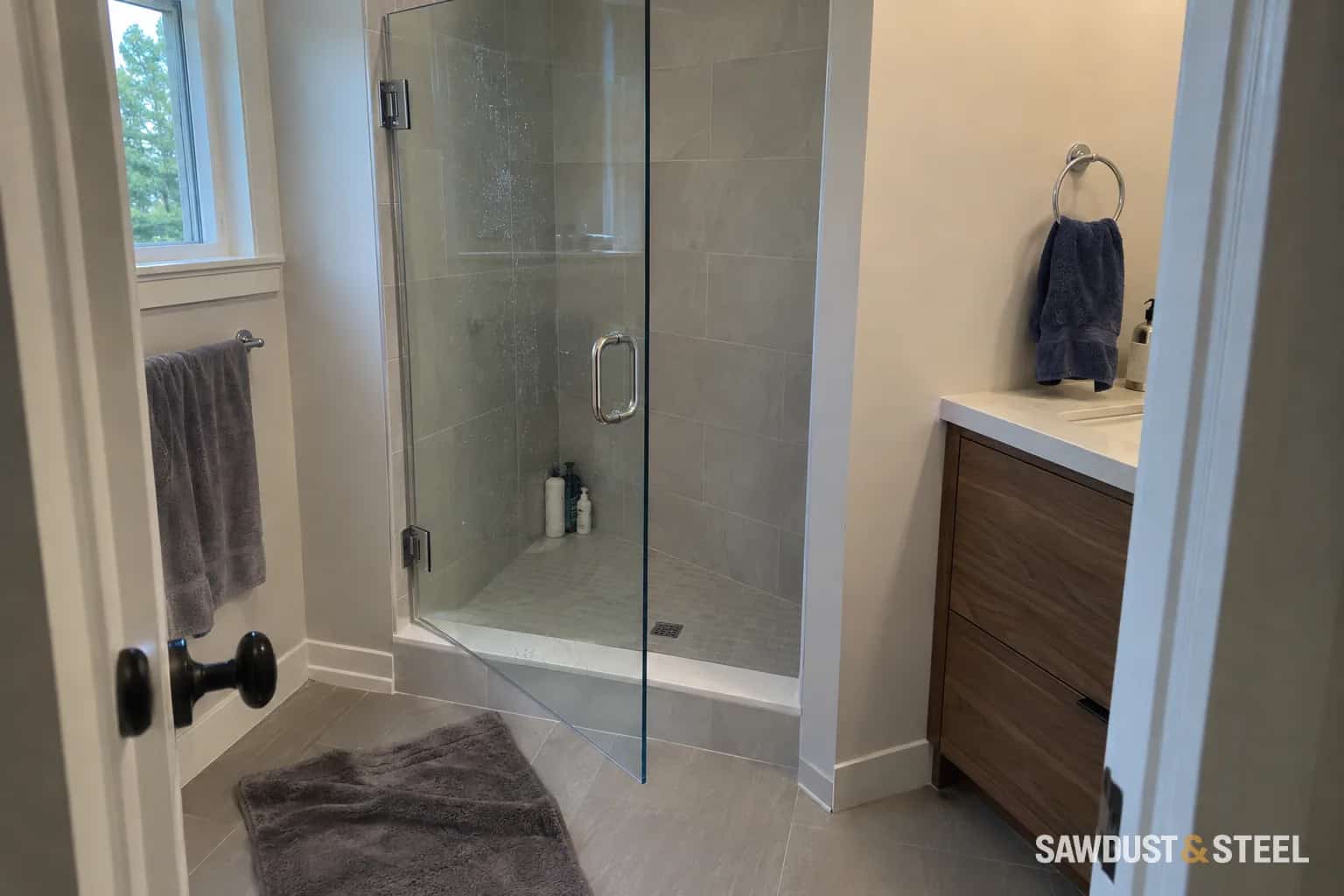
Look without forcing the door
Note whether the flexible seal drags or the glass edge actually approaches the curb or floor. Look for a changed gap at the top, a crooked meeting edge, loose hardware covers or movement where a hinge meets the wall. Do not repeatedly open and shut a door that catches to show someone the noise; photographs of the gap are enough.
Kohler’s shower-door instructions warn that glass panels can shatter and call for inspection of damage, missing parts and loose parts. The specific adjustment procedure belongs to the particular door, including whether it is hinged or sliding. Kohler: Shower door installation and care.
Only the flexible sweep
Confirm the correct seal and its fitted position.
Glass near tile or another panel
Stop use; have alignment and hardware assessed.
Hinge plate moves at the wall
Investigate fixing support, not merely hinge adjustment.
Chip or damaged glass edge
Keep clear and arrange specialist replacement assessment.
A sagging panel has more than one possible cause
A clamp may have slipped, a fixing may be loose, a wall may have moved, or the door may have been installed out of alignment. Some hardware permits adjustment, but that does not mean the glass can safely be supported without the installer’s equipment and procedure. A towel under the edge is not a support plan.
Record the door brand, hinge markings, approximate panel size and installation date for the installer. Explain whether the change was sudden or gradual. If the unit was recently installed, give the original installer a chance to inspect it before altering hardware or seals.
Ask for the cause, not just a lifted panel
The repair should explain why alignment changed and whether the support behind the tile is adequate. Repositioning glass without correcting a slipping clamp or failing wall fixing can leave the same problem waiting to return. Replacement screws and gaskets must suit the hardware; mixing parts because the threads fit is not enough.
After repair, confirm smooth travel, intended clearances and seal contact. Then check for water escape under normal use. The bottom-sweep guide helps separate a remaining water-management issue from the structural movement that brought the door down.