
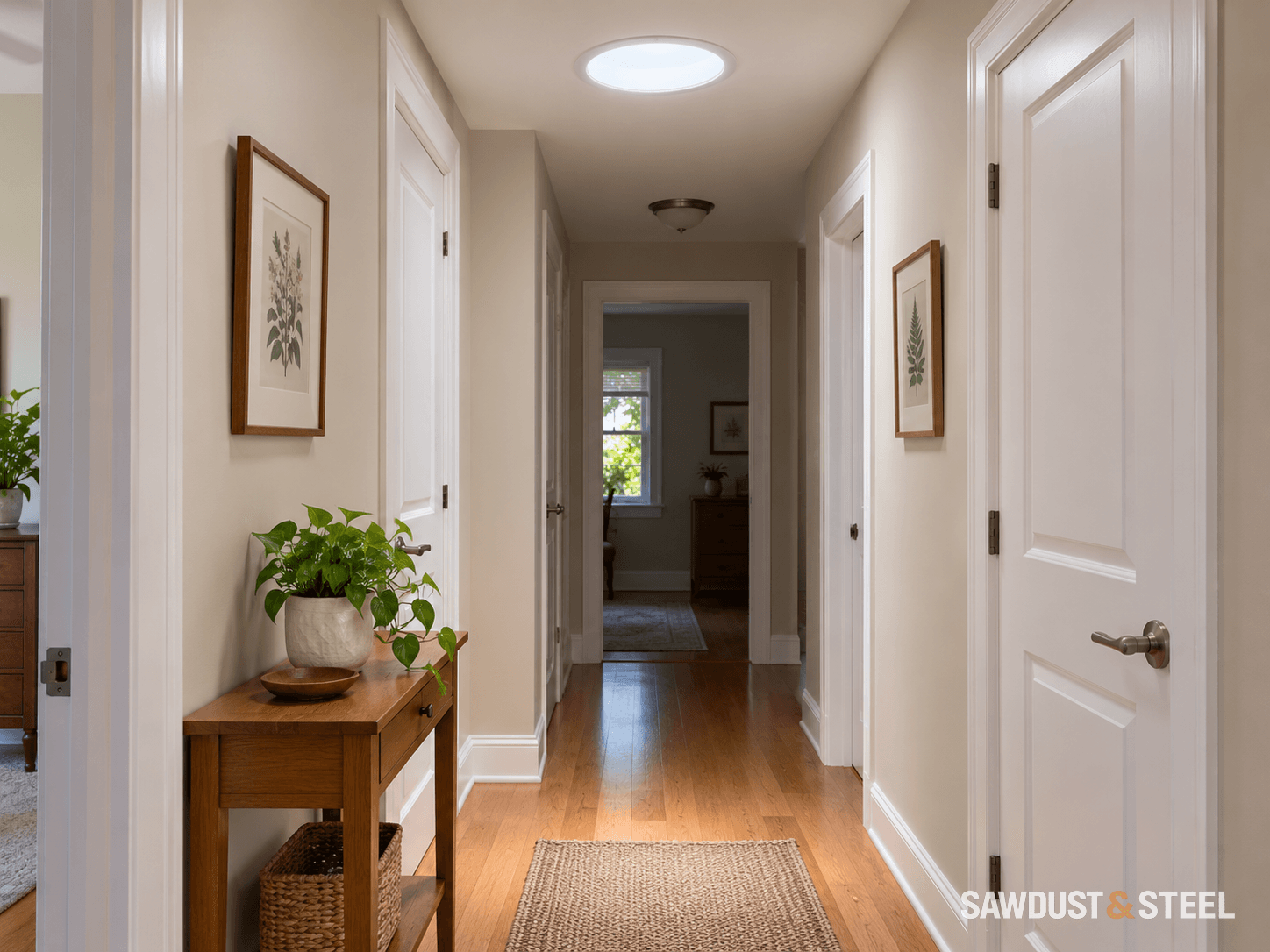
The hallway light is on at lunchtime again. A round daylight diffuser looks like a modest addition to the ceiling, especially compared with a full skylight shaft. It may be a useful option, but its position depends on more than the darkest patch of floor.
Understand the three parts of the system
A roof collector admits daylight, a reflective tube carries it through the roof space, and a ceiling diffuser spreads it into the room. VELUX Canada's rigid-tube overview describes that arrangement and several roof-side forms. The ceiling disk is not a roof window with a view, and an ordinary daylight tube does not provide opening-window ventilation.
Decide what improvement matters: seeing the hall during daytime, brightening a landing, or reducing a gloomy patch beside a closet. Describe the time of day and season when the problem is most noticeable. That gives the installer a better target than asking one unit to make every part of a long corridor equally bright.
Check the route before choosing the ceiling centre
Have the installer survey the roof and ceiling positions together. The route may encounter rafters or trusses, wiring, ducts, plumbing or limited roof-space height. Do not cut a structural member to preserve a preferred ceiling spot. Moving the diffuser or collector, choosing a permitted tube configuration, or abandoning that location can be the better answer.
| At the roof | Through the space | At the ceiling |
|---|---|---|
| Pitch, roofing material and condition | Tube length and permitted bends | Diffuser location and trim size |
| Collector orientation and shading | Structure and service conflicts | Existing lights and nearby doors |
| Compatible flashing arrangement | Air sealing and insulation detail | Cleaning access and finish repairs |
The 2025 VELUX Canada catalogue lists different tube lengths, roof forms and accessories by model. A kit diameter does not tell you its permitted installed length or every roof it suits. Ask the installer to identify the exact model and extensions against the measured route using current instructions.
Compare rigid and flexible routes for this house
Rigid and flexible systems solve different routing constraints. VELUX's flexible-tube range offers another configuration, while its rigid range uses reflective tube sections and adjustable components. Get a comparison for the actual length and bends rather than choosing solely because one installation seems easier.
Ask what daylight distribution the installer reasonably expects given orientation, nearby shading, tube route and room shape. Request the basis of any coverage estimate. A bright product photograph does not establish the result in a shaded north-facing location or a hallway with several turns. Compare more than one diffuser position where the room is long.
Keep the roof and ceiling details complete
Include the model-compatible roof connection, underlayment or other specified weather details and the work needed around the opening. Ask who assesses the existing roof condition and repairs any unsuitable substrate. If reroofing is already planned, coordinate access and responsibility using the skylight-and-roof scope guide.
At the ceiling, confirm how the air barrier and insulation meet the new assembly and which components the manufacturer requires for the installation and climate. Keep attic ventilation routes clear. A neatly painted ring does not show those concealed details; request photographs before they are covered. Existing winter moisture concerns belong in the assessment before the opening is made.
Choose the visible finish and the nighttime plan
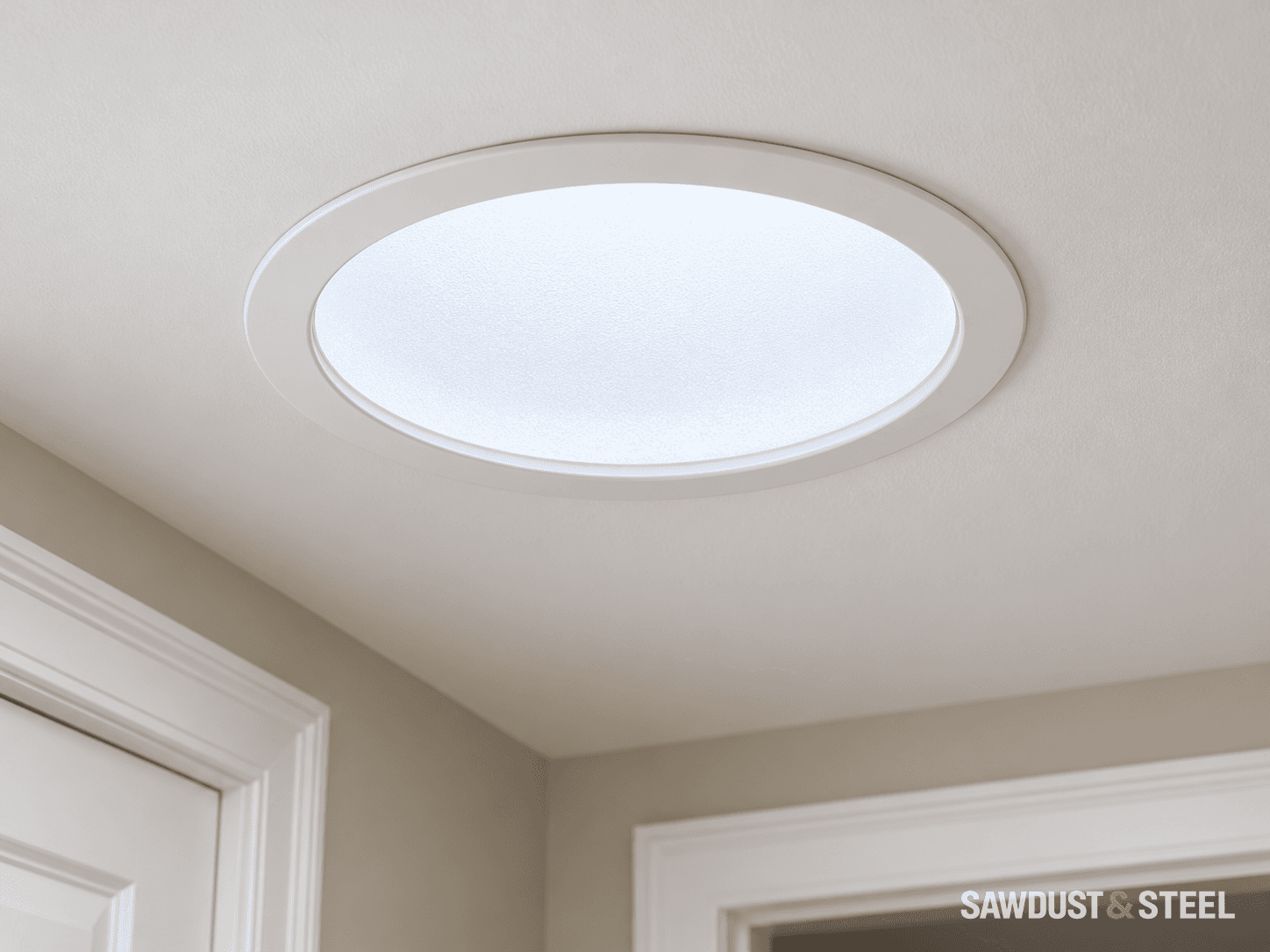
Look at the diffuser texture and trim in person if possible. Check the visible size against the hallway, nearby light fittings and ceiling features. Ask how the room-side parts are removed for cleaning and how they reseal. Keep access practical rather than placing the only serviceable part over an awkward stair position.
Retain useful electric lighting. Some systems offer compatible light or night-light accessories, but confirm their function and electrical requirements separately. Natural daylight varies with weather and disappears at night; a brighter afternoon does not establish that the route is adequately lit after everyone has gone to bed.
Agree what the finished job includes
The quote should name the model, collector, tube components, diffuser, weather and enclosure work, indoor repairs and any electrical addition. Keep product identification and concealed-work photographs. Check the finish and the room's ordinary daytime use, then report leaks or condensation promptly. A useful result is a hallway that feels better to use, with its roof and ceiling details properly accounted for.