
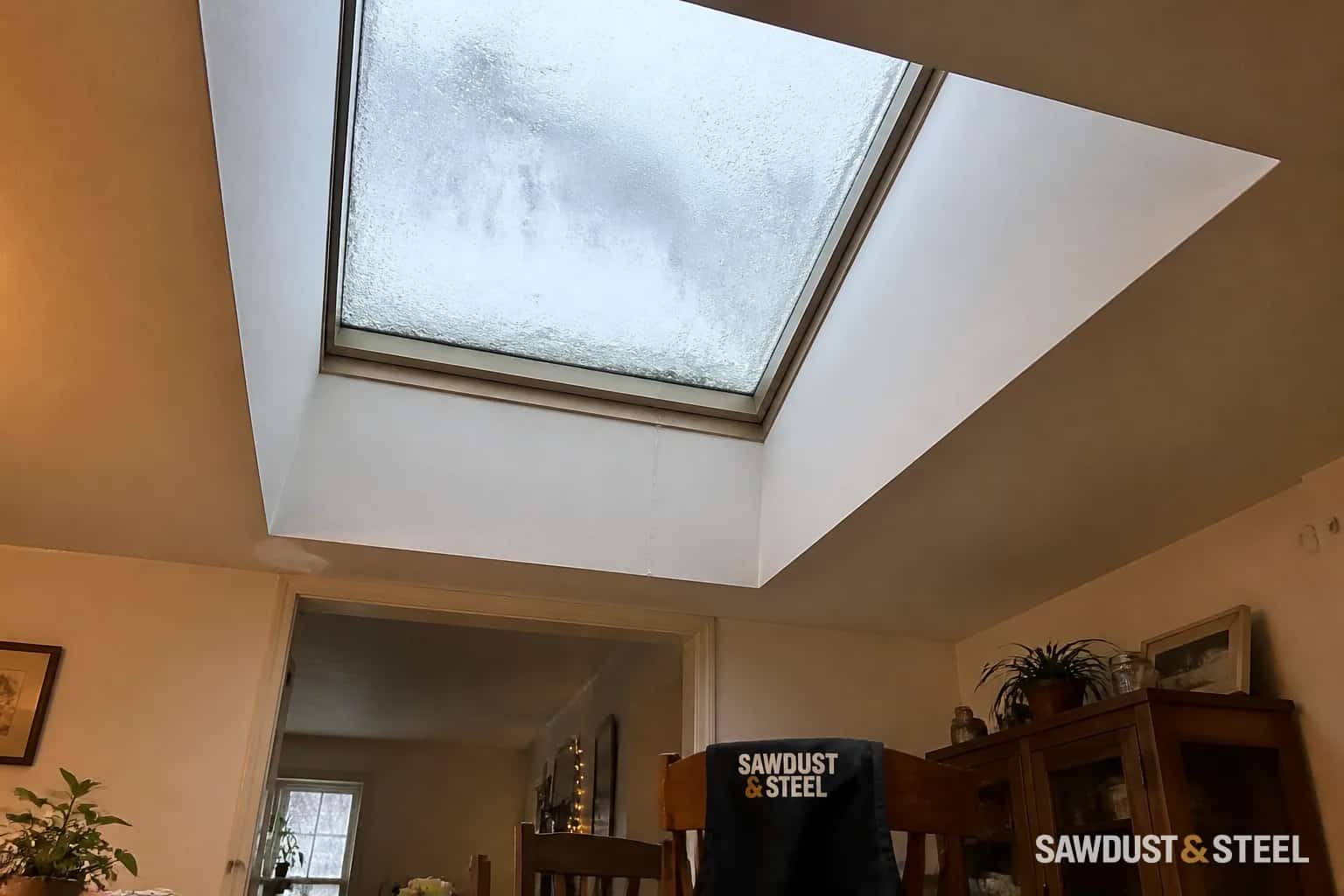
A drip lands on the kitchen table and everyone looks up at the skylight. Fair enough. But before ordering a replacement, find where the water starts: on the glass you can touch, between the panes, or in the surrounding drywall. Those three locations lead to different repairs, even when they end with the same wet table.
Find the water before naming the problem
| What you see | First suspicion | What to record |
|---|---|---|
| Beads on the room-side glass | Indoor condensation on a cold surface | Indoor humidity, outdoor temperature, cooking or shower timing |
| Fog or droplets sealed between panes | Insulated-glass seal failure | Whether the haze can be wiped from either exposed surface |
| Stained or soft shaft drywall after rain | Roof, flashing, or skylight interface entry | Rain timing and where the stain starts |
| Drip during a thaw or snowmelt | Melting frost, exterior drainage, or flashing path | Earlier frost, snow cover, ice, and the first wet location |
VELUX Canada's skylight FAQ says clouding or fogging between panes occurs when the inner seal of the insulating glass unit breaks. That is different from droplets you can wipe off the room-side glass, and different again from water tracking through the surrounding shaft.
When room-side condensation is the better lead
Warm indoor air can hold moisture. When it reaches cold skylight glass, that moisture can condense and run to the lower frame. Natural Resources Canada's condensation guide uses moisture location to separate interior-surface condensation from moisture between panes and exterior condensation. Its broader window and door guidance also treats condensation as a clue to humidity, air leakage, ventilation, and window performance rather than one automatic diagnosis.
- Check indoor humidity with a reliable hygrometer and compare it with the outdoor temperature and condensation timing.
- Use kitchen and bathroom exhausts that actually discharge outdoors, and keep interior airflow from being blocked at the skylight opening.
- Look for cold shaft surfaces, missing insulation, or air leakage as part of the inspection. Turning down humidity may manage a symptom without fixing a cold assembly.
VELUX's maintenance page likewise treats glazing condensation as a ventilation and indoor-humidity warning. On a kitchen call, beads returned along the lower room-side glass after cooking, while the shaft stayed dry through rain. We recorded the humidity and checked the exhaust route before proposing roof work. On the return visit we still looked at the shaft insulation: reducing indoor moisture does not excuse a poorly insulated opening. If the glass is beyond safe reach, leave the wiping and close inspection to someone equipped for it.
When the roof side deserves first attention
Move roof or flashing entry higher on the list when the moisture follows rain, wind-driven rain, or a thaw; begins at stained shaft drywall or the frame perimeter; or returns at one exterior detail. The manufacturer notes that roof pitch and roofing material determine the correct flashing system, and that leaves and debris should be cleared from around flashing so water can drain. Those details need a safe exterior and interior inspection, with appropriate roof access and fall protection.
What can you do today?
- Dry the visible surface, then photograph where moisture returns first. Marking the edge of a stain lightly with pencil can show whether it grows.
- Write down the outdoor temperature, last rain or thaw, indoor humidity, and recent shower, cooking, or laundry activity.
- Check whether haze is on an exposed surface or trapped between panes. Find the product label or serial number without forcing the unit.
- Photograph the roof area only from a safe ground location. Send the weather notes, interior wide shot, close-up, and product information with the service request.