
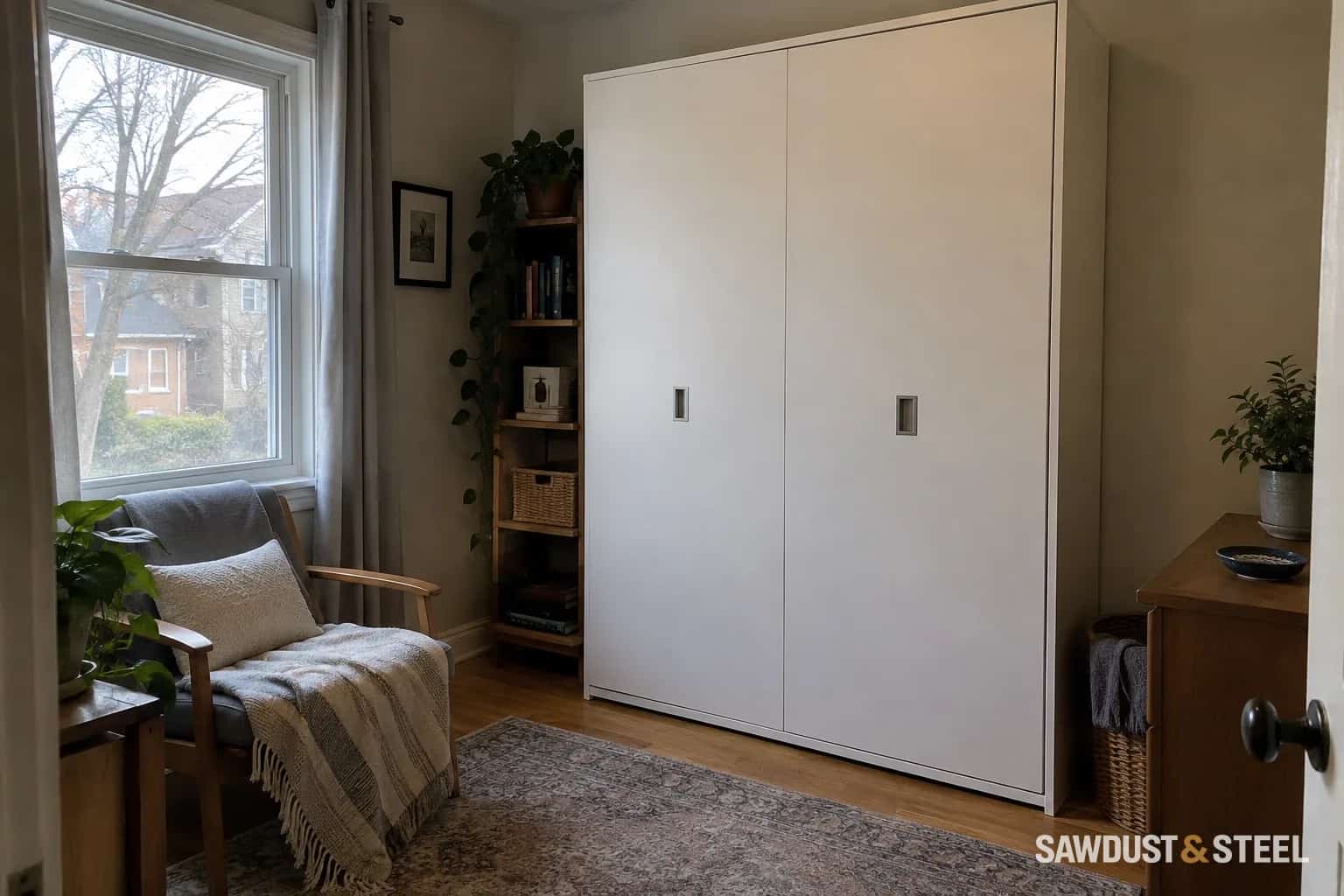
A wall bed makes a spare room useful twice, provided the installation is right. The cabinet is not simply a tall bookcase with a mattress inside. Opening the bed changes the forces on its hardware and attachments, so the original mounting arrangement matters.
If you have inherited one with a house, bought it second-hand or lost its instructions, begin by identifying it. Do not start with a pull on the handle to see whether it feels sturdy.
Find the exact model and its history
Look for accessible labels, purchase documents or the installer's records. Photograph the maker, model and serial information without dismantling the mechanism. Ask the manufacturer for the complete instructions for that version, including the mounting, mattress and maintenance requirements. A similar-looking cabinet on a retailer's website is not an adequate substitute.
Check the manufacturer's notices and Canada's official recalls and safety alerts database using the identifying information. A clear search result does not certify the installation, and a recalled product needs the specific remedy in its notice. Keep the information with the bed so the next person is not starting over.
For a used bed, ask whether it has been moved or disassembled. Fasteners and brackets left over from the previous wall do not establish suitability for the new one. Missing mounting parts, homemade substitutions or unexplained holes warrant a conversation with the manufacturer or installer before use.
Establish what the anchors connect to
Health Canada's foldaway-bed guidance says the bed should be properly anchored to wall studs or other structural components, with the manufacturer's assembly, installation and maintenance instructions followed. It also recommends a locking feature and regular inspection, and says to stop use when problems appear.
Compare the specified mounting locations with the installation records and accessible connections. The number of visible screw heads is not enough. What sits behind them, the fastener specification and the condition of the cabinet attachment all matter. Avoid guessing at an anchor type through the gap beside the cabinet.
Model and instructions available
Compare the installation with its own required mounting and operating details.
History or attachment uncertain
Arrange assessment before operation; keep children and other users away.
Movement, damage or failed latch
Stop use and obtain the maker's repair guidance or professional repair.
Installation confirmed
Follow the prescribed operation and ongoing inspection routine.
Do not add random screws through the cabinet back as an upgrade. The back may not be a structural mounting point, and hidden services may lie behind it. A wall-bed support detail also should not be copied from ordinary bookcase support and anchoring. The two installations solve different problems.
Check the mechanism without creating a new risk
Follow the manual's inspection procedure and keep people clear of the movement area. Do not remove a spring, strut, pivot or retaining part to investigate a noise. These components may be loaded even when the bed looks stationary. Do not force stiff operation or try to rebalance a bed by adding weight.
Record the symptom rather than repeatedly recreating it: where a gap has appeared, which part seems loose, when the sound occurs and whether anything has changed. A photo from a safe position and the product identification are more useful to the repairer than an improvised demonstration.
Use only the mattress configuration and operating method specified for the model. The mattress is part of the system's intended use, not an unrelated decorating choice. Check the instructions before replacing it with a much different product.
Make the room work around the bed
Once the installation is confirmed, keep the full opening area clear. A bedside table, desk chair or rug folded under a moving component can make an otherwise simple operation awkward. Make sure an adult can reach the controls and manage the movement as instructed without stepping over stored items.
At one guest-room layout, we moved a narrow drawer unit before discussing any cabinetry changes. It had occupied the exact place the person opening the bed needed to stand. Storage that must be dragged across the room every evening rarely stays out of the way.
If the room also needs a work surface, compare the operating spaces for a fold-down desk before putting both mechanisms on the same wall. For a separate tall wardrobe, check assembly and ceiling clearance. Plan each moving item in its open position, with an actual person beside it.