
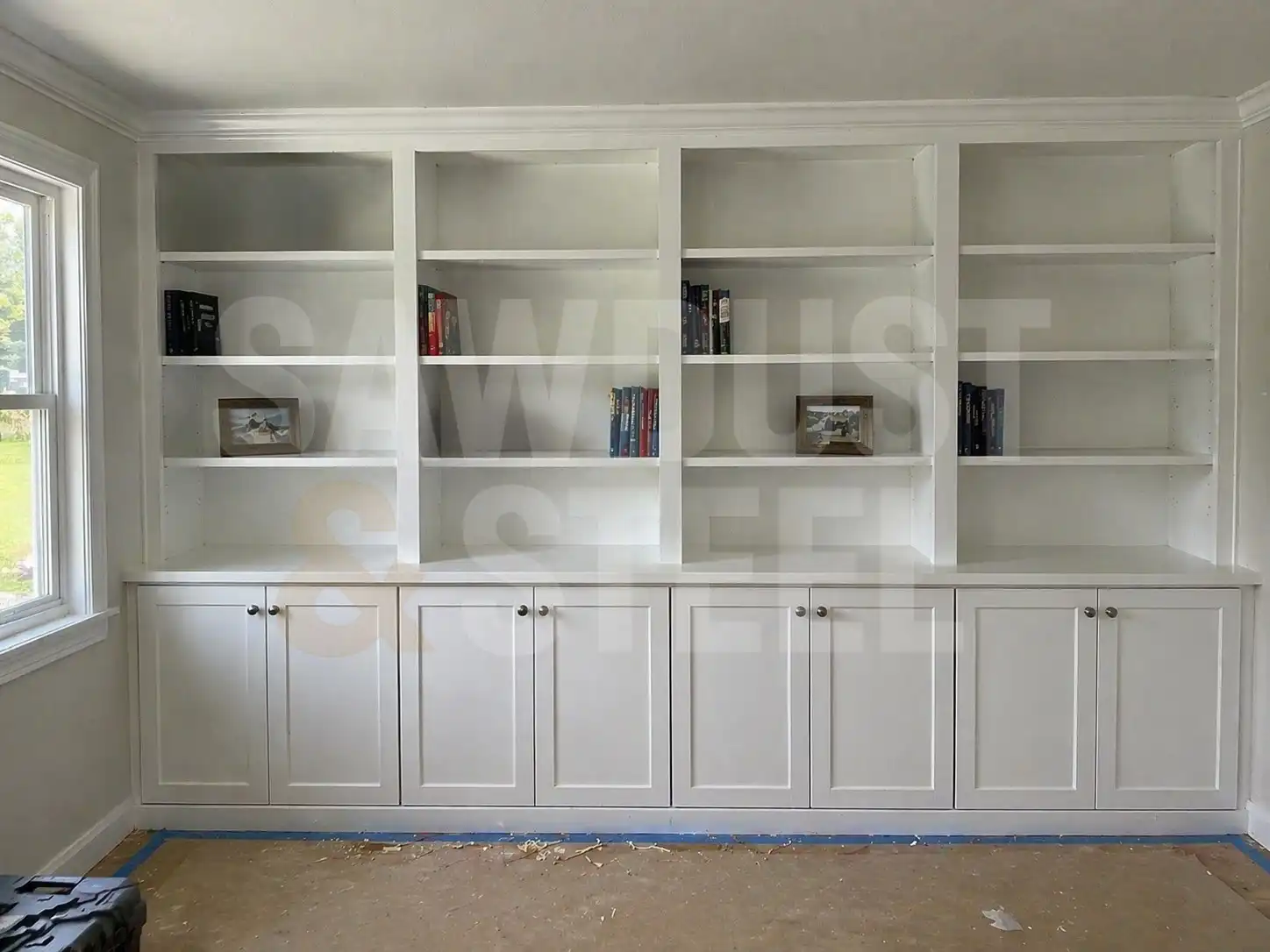
A shelf holding a photograph and a small vase is a different project from a shelf holding dinner plates. They may look identical from the sofa. Before choosing the finish, list the intended contents and consider where they will sit, especially heavy items near the front edge.
Follow the weight all the way into the wall
A concealed bracket usually includes projecting rods or arms and a plate fixed to the wall. The shelf must fit and engage those supports properly. The fixings must connect to a suitable substrate. A large number on the bracket listing cannot compensate for a shelf drilled incorrectly, a damaged wall or the wrong fasteners.
Contents and shelf
Include the shelf itself and the heaviest realistic arrangement of stored items.
Hidden bracket
Match the exact shelf depth, thickness and engagement to the bracket design.
Fasteners
Use the specified fixing arrangement for the identified wall construction.
Wall support
Confirm suitable studs, blocking or a manufacturer-approved masonry detail.
Shelfology's Aksel HD specification ties the bracket to a defined range of shelf depths and thicknesses and supplies model-specific installation information. Those specifications belong to that product. Do not borrow its capacity for a different bracket, or assume every hole filled with a plasterboard anchor reproduces a stud-mounted test.
Check the wall before ordering a custom shelf
Mark the desired position with removable tape, then establish the wall construction and suitable fastening locations. Do not assume framing is perfectly regular in an older house. Check for services before drilling; a stud finder alone is not a complete clearance check. If the layout misses the required backing, change the position, add appropriate backing as part of planned wall work, or choose a different shelf system.
Measure the shelf projection from the wall, not just its length. A deep shelf puts stored items farther from the support. If a supplier asks for the intended load and depth, provide them rather than choosing the most flattering catalogue number. Masonry, wood studs and light-gauge metal framing may need different verified attachment details.
Sagging and a loose bracket are different faults
Unload a shelf that droops, rotates away from the wall or has widening cracks around its fixings. A shelf panel bending between supports differs from the whole bracket tilting. Do not add weight to test how much more it can take. The fixed-versus-adjustable shelf guide explains why shelf arrangement and cabinet rigidity are separate choices.
Once installed, follow the retention method that keeps the shelf on its bracket. Check that it cannot simply slide forward in normal use. Keep the rated documentation with the project records and tell the next person what the shelf was designed to carry. The styling can change in an afternoon; the hidden support does not change with it.