
Decide whether the goal is colour or protection
A lightly pigmented stain, a solid-colour coating and leaving cedar to weather are different maintenance commitments. Identify the existing finish before choosing another. A penetrating stain applied over an intact film may not absorb as intended. Test the proposed system on a discreet prepared area and judge it after drying, not while it looks conveniently rich and wet.
Sunny side
Assess weathering and surface dryness.
Shaded side
Check persistent damp and vegetation contact.
Edges and joints
Follow finish instructions where pieces overlap.
For a new fence that will receive a protective finish, plan to coat both exposed faces and the accessible edges and ends according to that finish system. Staining your face alone changes its appearance but leaves the other face with a different exposure and maintenance condition. Real Cedar recommends prefinishing cedar on all six surfaces. That is a cedar finishing recommendation, not a rule that every existing fence must be dismantled or that staining one accessible side automatically damages it.
| Finish choice | Both-side planning | Maintenance implication |
|---|---|---|
| Penetrating semi-transparent stain | Use the same compatible system where access allows | Weathered faces may absorb differently; test both |
| Solid-colour stain or paint system | Check preparation and primer requirements on each face | A failing old coating needs preparation, not another colour over it |
| Natural unfinished cedar | Agree that colour will weather unevenly | Do not promise matching silver-grey on sunny and shaded sides |
Treat the two faces as different exposures
The sunny face may be dry while the shaded face remains damp. Check each side, the bottom ends and the top of rails before coating. Follow the product's surface-moisture, temperature and rain window instructions. Do not force a two-sided application into one afternoon when conditions differ. Where a new fence is being assembled, discuss prefinishing accessible surfaces before overlapping pieces hide them.
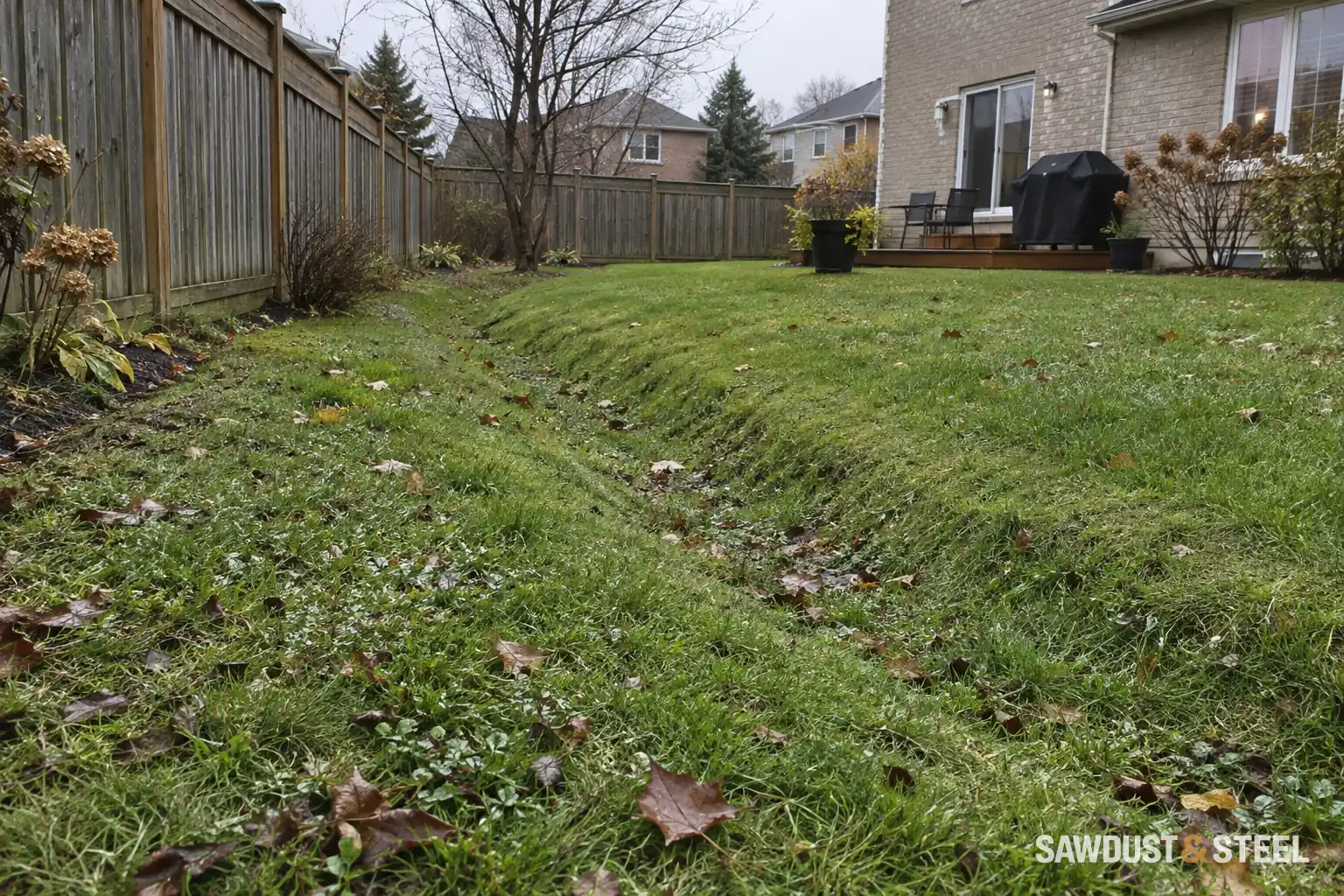
Where the lower edge stays wet, check soil contact and fence drainage before investing in a new finish.
Work in sections without spraying the neighbour
Arrange access and protect plants, paving, vehicles and neighbouring surfaces. Brushes and rollers offer more control in a tight side yard; spraying requires careful containment and product approval. Keep a record of brand, colour, batch and preparation. Future touchups should start with that record instead of a guess from the half-empty can that has spent four winters behind the shed.
Real Cedar says application, substrate condition and weather influence finish performance; follow the selected coating system for coverage and recoating. Real Cedar: choosing an outdoor finish.
For shared work, put the colour, preparation, access times and responsibility for plants in writing. The shared-fence agreement guide helps settle those practical permissions. Check the drainage beside the fence before treating recurrent dampness as a coating problem.
Before you finish
- Get access permission before working across the boundary.
- Test compatibility with the old finish.
- Do not coat damp wood just to finish both sides together.