
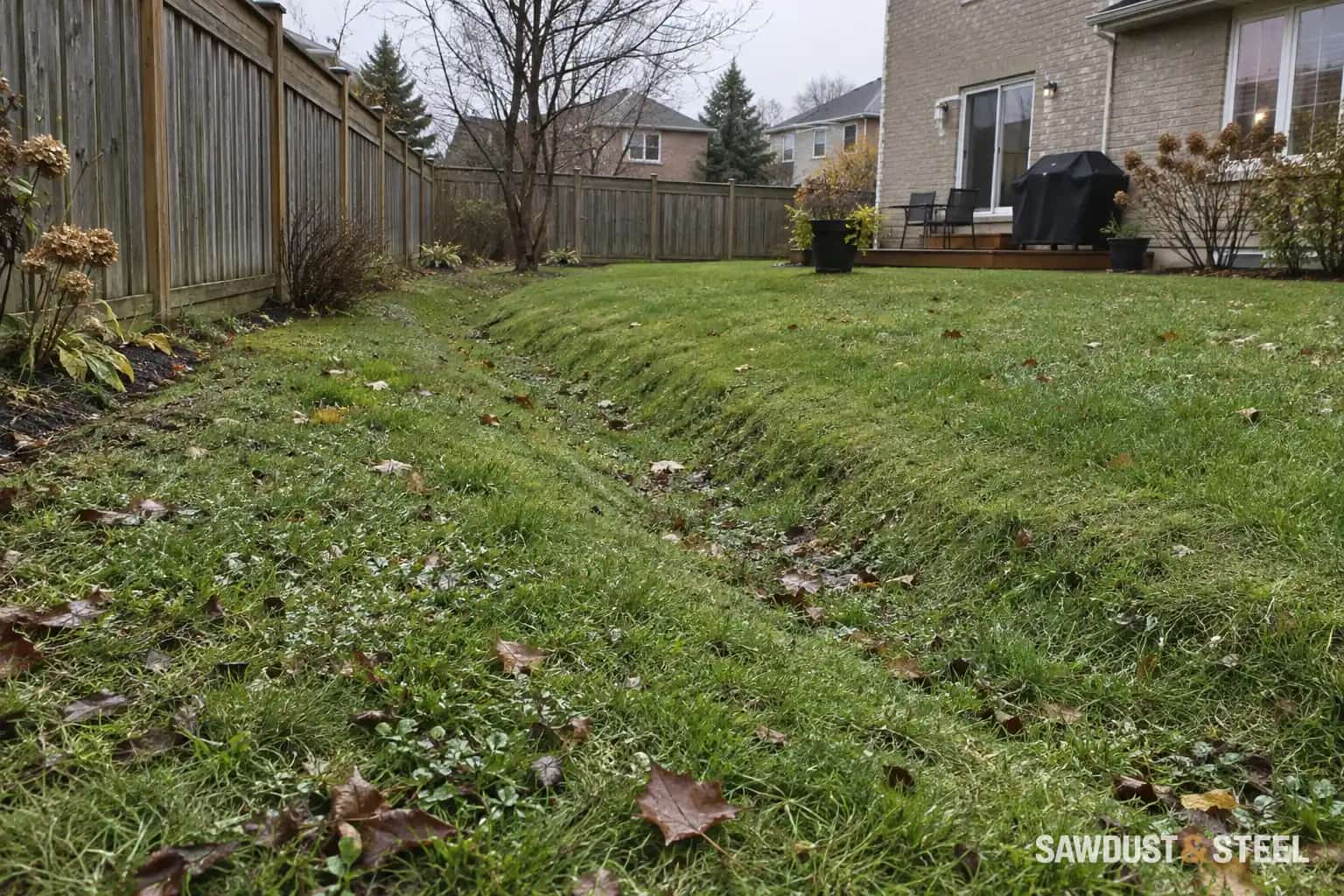
The narrow strip beside the fence never looks quite as tidy as the rest of the lawn. It is lower, awkward to mow and seems like the perfect place for a raised bed. It may also be the route that keeps several backyards from becoming one shared pond.
A swale is a shallow surface channel that carries water. Some are obvious; others look like an ordinary dip in the grass. The first task is to find out what the low area does, not decide what to plant in it.
Read the ground during rain
From a safe place, watch where water enters the strip, which direction it moves and where it leaves. Photograph both ends and any places where it ponds. Look for flattened grass, sediment lines or eroded patches after the rain has stopped. These clues help explain the route but do not replace a grading assessment.
Raised bed
Will its edge dam the flow?
Fence base
Is the drainage opening preserved?
Paving or shed pad
Will the new level divert water?
Planting
Will maintenance keep the route open?
Use these checks with the site and product details described below.
Find any lot-grading plan or drainage information available for the property. Ask the municipality about records if the intended route is unclear. A fence line does not necessarily coincide with the centre of a drainage channel, and the apparent low spot may have changed after years of gardening.
Small barriers can change the route
A continuous timber board along the fence base, soil piled against a new bed, a shed pad or a small paving hump can interrupt surface flow. The obstruction may be modest enough to miss on a dry afternoon. During rain, water only needs to reach that slightly higher edge before it starts looking for another route.
Public Safety Canada's flood-wise landscaping guidance emphasizes runoff routes and erosion checks. Apply that thinking to the whole property: the inlet and outlet matter as much as the patch you want to improve.
Do not correct a wet section by simply adding soil until it looks level with the lawn. That can move the problem toward a window well, garage or neighbouring yard. Where a patio is also involved, review paving that falls toward the house before treating the fence strip as an isolated landscaping issue.
Draw the proposed landscaping on the drainage plan
Show bed edges, fence posts, gate thresholds, paving, shed bases and the route used to bring materials into the yard. Keep the final ground levels explicit. A contractor installing a fence and another installing landscaping need to work from the same levels, rather than each making their portion look tidy independently.
For a sloping fence, compare stepped and racked layouts without using soil to conceal every bottom gap. Drainage and enclosure requirements need a coordinated detail. A loose pile of decorative stone against the boards may still obstruct flow or collect debris.
Do not turn a conveyance route into an infiltration project by accident
A swale moves water along a surface route. A rain garden or soakaway aims to store or infiltrate some of it. Those functions can be combined in a designed system, but digging a pit into the low strip changes how it operates.
Ontario's stormwater planning guidance considers the interaction between infiltration, groundwater and nearby structures. Obtain appropriate design advice before converting an established route, particularly where several properties or a regulated area are involved. The existence of a low spot does not establish permission to receive or redirect additional water there.
Keep maintenance simple and visible
Once the intended route is confirmed, keep it free of dumped soil, leaf piles and stored materials. Repair erosion using the agreed drainage detail rather than narrowing the channel with whatever material is left over from another job. Check the outlet after seasonal cleanup and snowmelt.
Take photographs before and after any authorized work and again during rain. Those records help distinguish a new obstruction from an older problem. A swale does not need to look like a ditch to do useful work; a neat, maintainable surface route can sit quietly within the garden while continuing to carry the water where it belongs.