
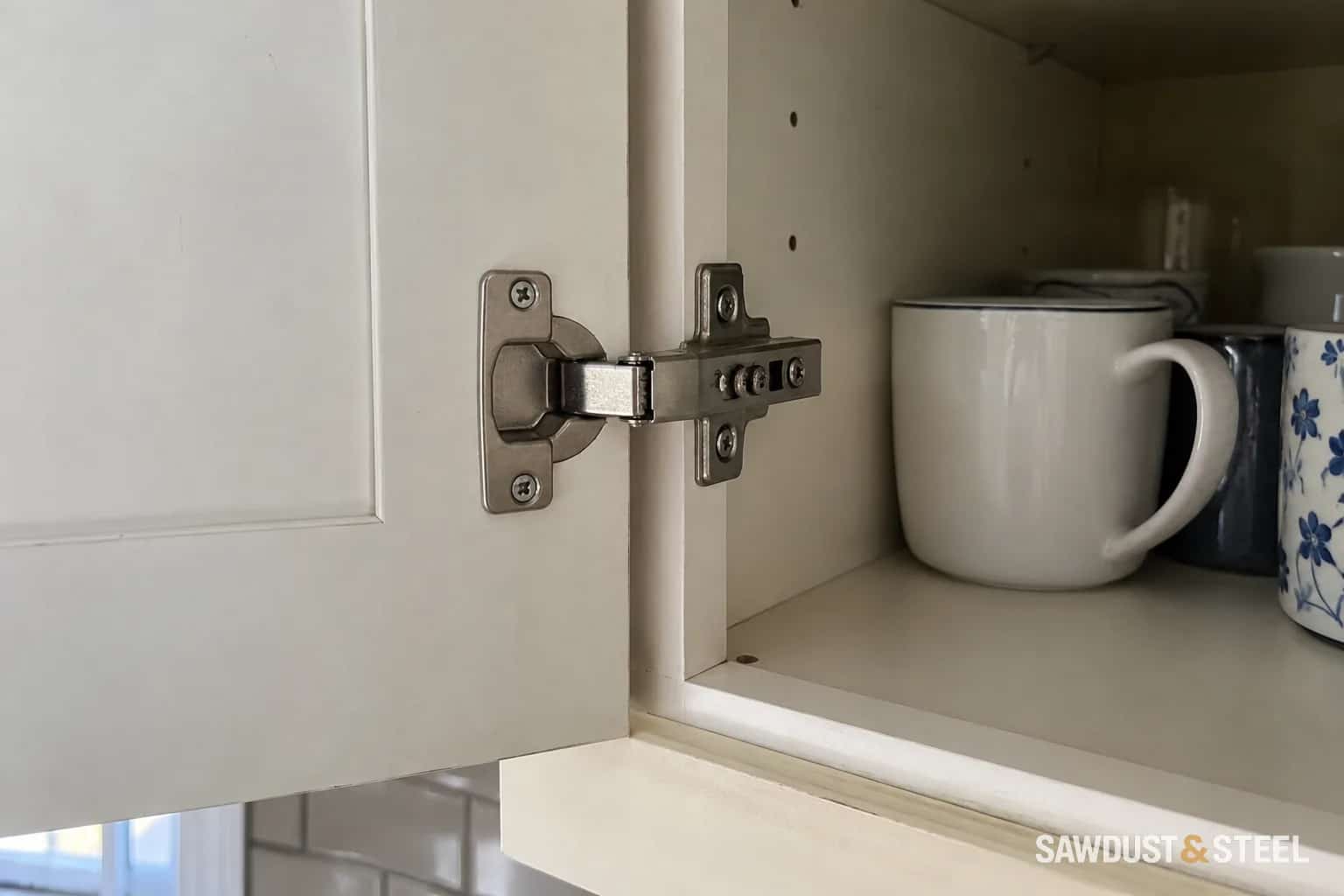
The door that wakes everyone when you shut it deserves attention. It may not need a new kitchen, or even new hinges. It does need hardware that matches what is already there.
Soft close slows the final part of the door's travel. It does not correct a twisted cabinet, a rubbing door or stripped fixing holes. Start with a door that swings properly; otherwise the new damper may simply make the existing fault quieter and harder to diagnose.
Identify the hinge family
Photograph the hinge cup in the door, the arm and the mounting plate inside the cabinet. Look for the maker's name and stamped part numbers. Record whether the door covers the cabinet side completely, shares a side with another door or sits inside the opening. These arrangements are commonly called full overlay, half overlay and inset, but names alone do not identify the correct part.
Blum's BLUMOTION overview describes clip-on soft-close retrofits for compatible hinges without integrated damping. Compatibility is the important word. That does not mean a clip made for one Blum family fits every Blum hinge, much less an unmarked hinge from another supplier.
Take the photographs and part numbers to the supplier. Ask for an exact compatibility match, including any hinge exclusions, door-size limits and instructions for the number or setting of dampers. A packet labelled universal still needs its dimensions and installation method checked against your cabinet.
Choose between an attachment and new hinges
| Option | What to confirm |
|---|---|
| Matching clip-on damper | The original hinge family accepts it and the specified installation suits this door. |
| Separate cabinet-mounted damper | The contact point, fixing surface and closing geometry match its instructions. |
| Replacement soft-close hinges | Cup drilling, mounting plate, overlay, opening angle and door suitability all match. |
Replacement hinges are often less simple than they look. Two cups can fit the same round hole while their arms position the door differently. A changed opening angle can make the door hit a wall or prevent an internal drawer from clearing. The mounting plate height and screw pattern matter too.
Keep the original parts until the trial is successful. If removing a door, support it properly and label its position. Do not leave it hanging from one hinge while searching for the missing screwdriver. This is a small job that becomes an irritating repair when the last screw tears out of an unsupported door.
Fix the ordinary problems first
Check loose screws and damaged fixing areas. Open and close the door slowly to locate rubbing, binding or contact with an adjacent handle. Follow the hinge's adjustment instructions rather than turning every screw experimentally. Our cabinet-door alignment guide separates hinge adjustment from seasonal movement.
A door that will not remain shut may have a damaged hinge, an obstruction or an incompatible closing mechanism. Adding resistance is unlikely to cure it. Likewise, a door that drops suddenly when released needs attention before an accessory is installed.
At a small kitchen refresh, the noisy corner door turned out to be catching the neighbouring handle. We corrected that first and tried the soft-close part afterward. The hardware was useful, but the clearance was the part that made the kitchen pleasant to use.
Trial one representative door
Choose a typical door and follow the manufacturer's instructions for the damper count and adjustment. Test a gentle close and an ordinary everyday close. The door should complete its travel without needing a shove, stop without a bang and align with its neighbours. It should also reopen comfortably.
Then try the unusual doors separately: a narrow light door, a tall heavy door and a corner arrangement may not behave like the first sample. Do not add dampers indiscriminately until every door feels slow. Excess resistance can leave a light door standing open; too little damping can leave a heavier door slamming.
Check the result again after normal use. Confirm that attachments remain seated, contact surfaces are not marking and fixings remain sound. Save the product number with the kitchen records so a later replacement is straightforward.
Drawer runners are a separate system. If you want the same improvement below the counter, first work through replacement drawer measurements. If the drawers already have soft close but misbehave, use the drawer closing fault guide instead of ordering a kitchen's worth of new slides.