
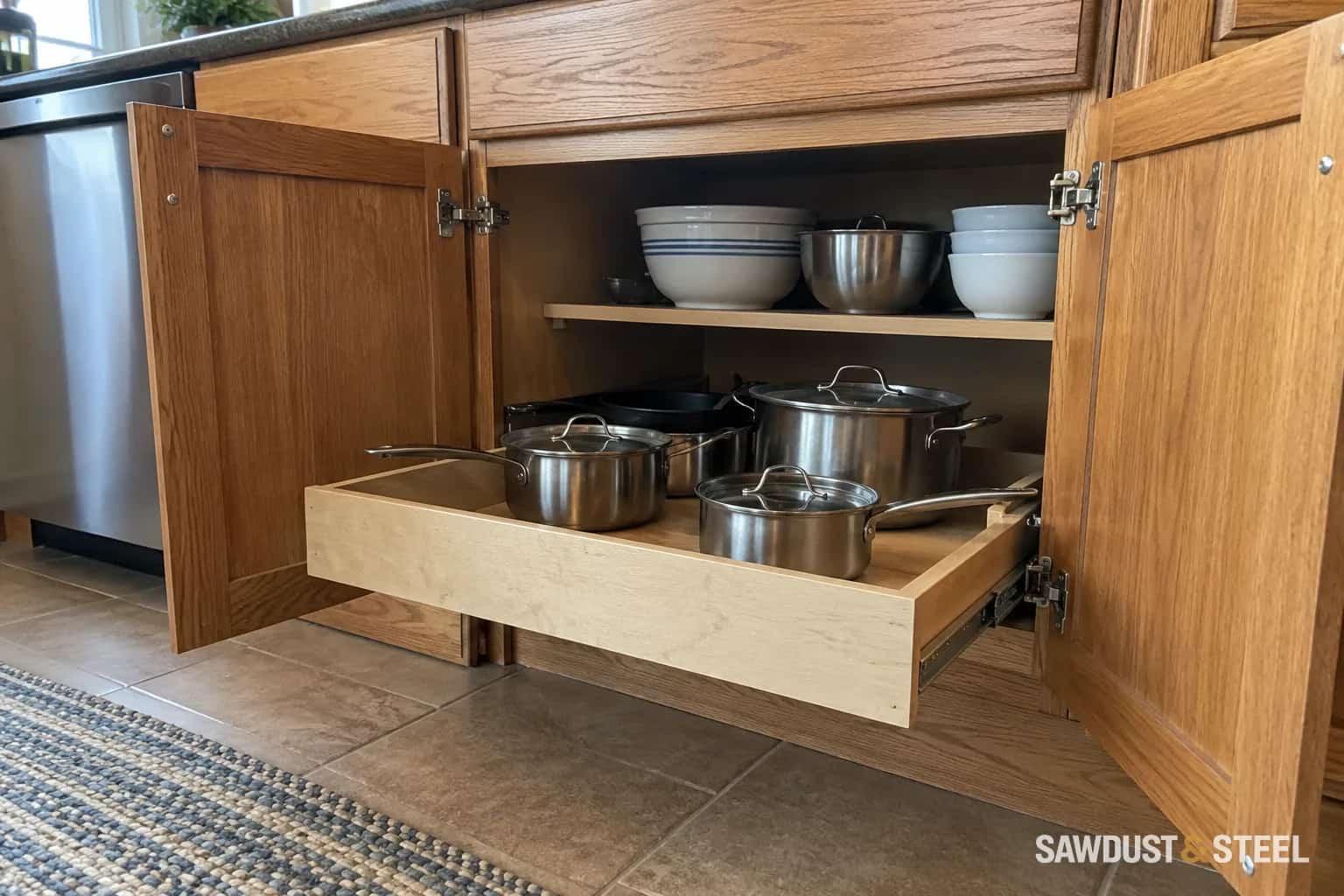
A quiet, fully extending drawer is a lovely upgrade. Discovering that its new runners need a narrower box is less lovely, particularly after you have ordered twelve pairs. Start with the existing drawer and cabinet. A slide's advertised length is only one dimension in the fit.
Identify what is there before buying its replacement
Empty one representative drawer. Follow its removal method, support the box and photograph the hardware on both sides and underneath. Record markings, runner length, mounting position and the way the drawer is retained. A side-mounted telescopic slide, an under-mounted concealed runner and an older roller runner use different space.
Blum's TANDEM assembly resources separate assembly, adjustment and locking-device information for that system. The useful lesson is to use the drawing for the exact runner and accessories. A familiar brand name does not establish that a new generation fits the old box. If the present hardware merely refuses to finish closing, try the soft-close fault checks before replacing everything.
Measure the box and opening separately
Take off the decorative front only if the system permits it and you can refit it correctly; usually you can measure the underlying box without removal. Record the outside width near the front and rear, box length, side thickness and bottom position. Then measure the cabinet's clear opening and usable internal depth. Include face frames, hinges and rear obstructions.
| Measurement | Why it matters |
|---|---|
| Box outside width and cabinet opening | Establishes the space available for the runners and any spacers. |
| Box length and cabinet depth | Checks both travel hardware and rear fixing clearance. |
| Bottom recess and side thickness | Some concealed systems require a particular drawer construction. |
| Front position and closing gap | Determines whether the front clears surrounding cabinets and engages the closer. |
| Rear construction | Notches, hooks or brackets may need an exact supported detail. |
Here is a fit example, not a runner specification. An opening measuring 500 mm with a 474 mm-wide box leaves 26 mm in total, or 13 mm on each side when centred. That tells you the existing space. It does not tell you whether a chosen runner permits 13 mm, whether the opening stays parallel or whether the rear attachment fits. Compare every figure with the manufacturer's drawing rather than rounding to a convenient fraction.
A different runner may mean a different drawer
An under-mounted conversion can need a recessed bottom, suitable side thickness and prepared rear corners. A box with its bottom flush to the underside may not be a sensible conversion candidate. Cutting notches into a weak back or trimming a drawer side until it clears can damage the very piece you hoped to save.
Ask the cabinet maker to price three alternatives: like-for-like hardware, an approved conversion retaining the box, and a new box retaining the existing front. The third option is often overlooked. Keeping a matching visible front can matter more than keeping a worn hidden box.
At a kitchen repair, the narrow utensil drawer accepted the replacement system while the wide pot drawer did not. The cabinet openings looked alike from outside, but the older wide box had different bottom construction. We kept its front and replaced the box. Measuring the easiest drawer alone would have supplied the wrong answer for half the kitchen.
Trial one complete installation
Choose a representative drawer, including its usual contents. Have the mounting substrate and existing holes assessed before fixing new hardware. Follow the approved screw positions, not whichever old hole happens to line up. A spacer needs a sound attachment too; it is not simply loose packing behind the rail.
Empty fit
Check parallel travel, retention and front clearance.
Closing action
Confirm both sides engage without lifting or pushing sideways.
Ordinary loading
Use the intended contents within the completed drawer's limit.
Service removal
Confirm the drawer can still be released as designed.
Check the finished drawer's weight capacity, including whether its own weight counts. Stronger runners cannot repair a bowed bottom or failing joints. If several openings are different, make a small schedule for each size rather than multiplying the trial order blindly. Keep the successful runner code, box measurements and fitting notes together. The second drawer should benefit from everything learned on the first.