
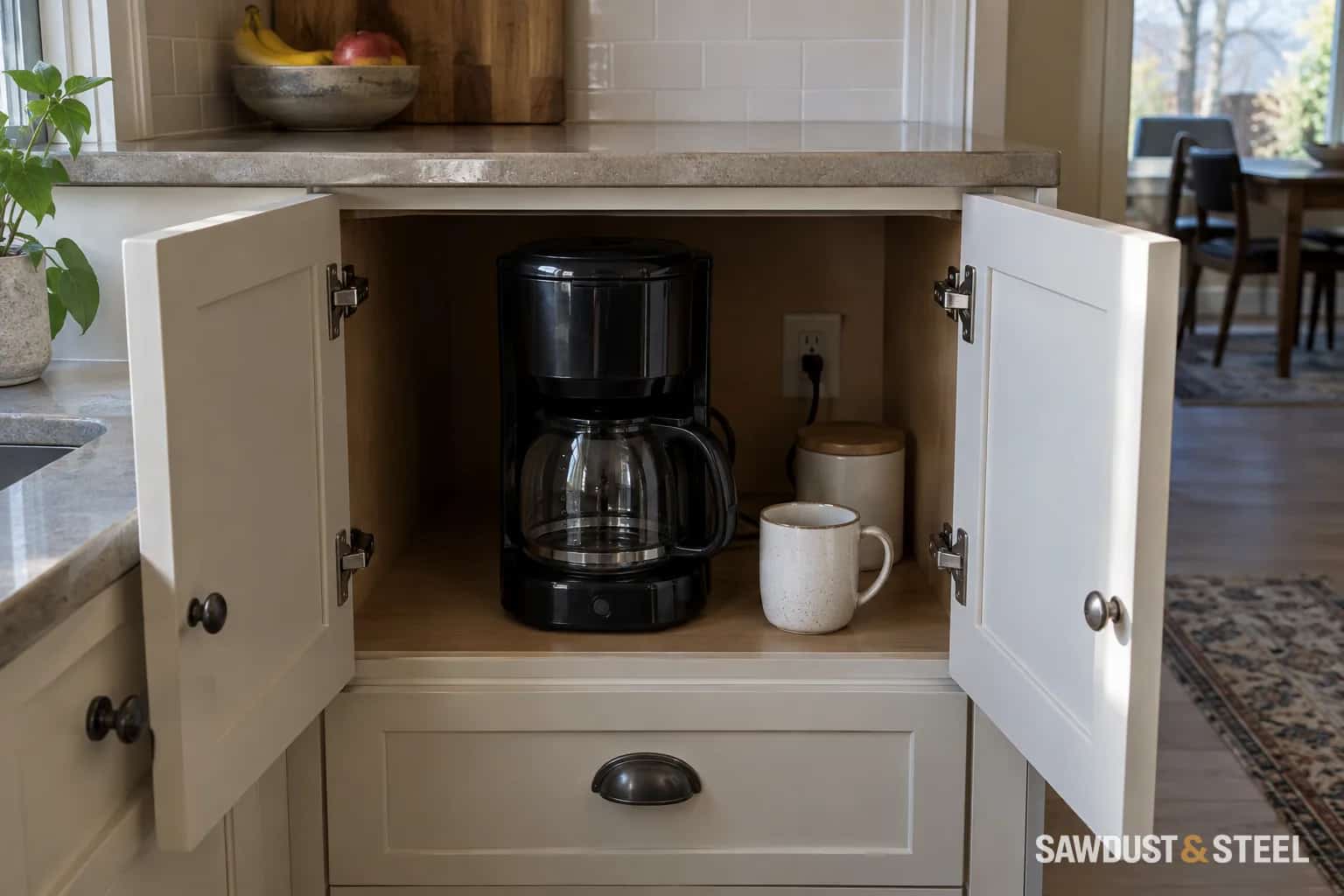
A coffee station looks wonderfully organized with its doors shut. Morning use is less tidy: the reservoir comes out, a lid flips up, steam escapes and a wet drip tray needs somewhere to go. Draw that version before ordering the cabinetry.
Measure the machine while it is being used
With the machine cool and disconnected, test the complete filling and cleaning routine. Measure the reservoir's removal path, bean-hopper lid, filter basket, portafilter movement and the space to lift a mug. A cabinet that holds the machine but requires dragging it out by the cord every morning is not finished planning.
Breville: Oracle BES980 instruction manual describes both top filling and removal of the rear water tank on the Oracle BES980. That model example shows why the closed box dimensions are incomplete; it does not approve operating the machine inside a cabinet. Use the chosen model's placement instructions to establish its operating position.
Above
Lids, hopper access and the appliance's heat and steam clearance.
Behind
Tank removal and cord routing without pinching.
In front
Cups, controls and tray removal.
At the sides
Door hardware and any milk-wand movement.
A washable panel does not approve an enclosure
KraftMaid: Cabinet care and cleaning advises avoiding excessive moisture and drying cabinetry. Repeated condensation on a shelf edge is a reason to change the setup, not simply wipe it more often. A tiled back panel protects one surface; it does not make adjacent wood, hinges or electrical fittings suitable for trapped heat and moisture.
If the manual rules out enclosed operation, plan a separate open-counter location. An open garage door does not necessarily remove the side walls or overhead obstruction. A pull-out shelf also needs suitable load capacity, stability and an operating position approved for the appliance; do not treat any drawer slide as an appliance platform.
Leave the wet jobs reachable
Plan where a full reservoir will be carried, where a drip tray will be emptied and how the counter behind the machine can be wiped. Keep cords clear of spills, hinges and moving fronts. Have the electrical arrangement designed for the location and appliance rather than hiding a power strip behind the beans.
Test the doors with neighbouring handles and leave a clear landing spot for hot drinks. For a toaster sharing the cabinet, read the separate toaster placement checks; its heat restrictions are not interchangeable with the coffee maker's. The cabinet should make the routine easier, including the five minutes after brewing.