
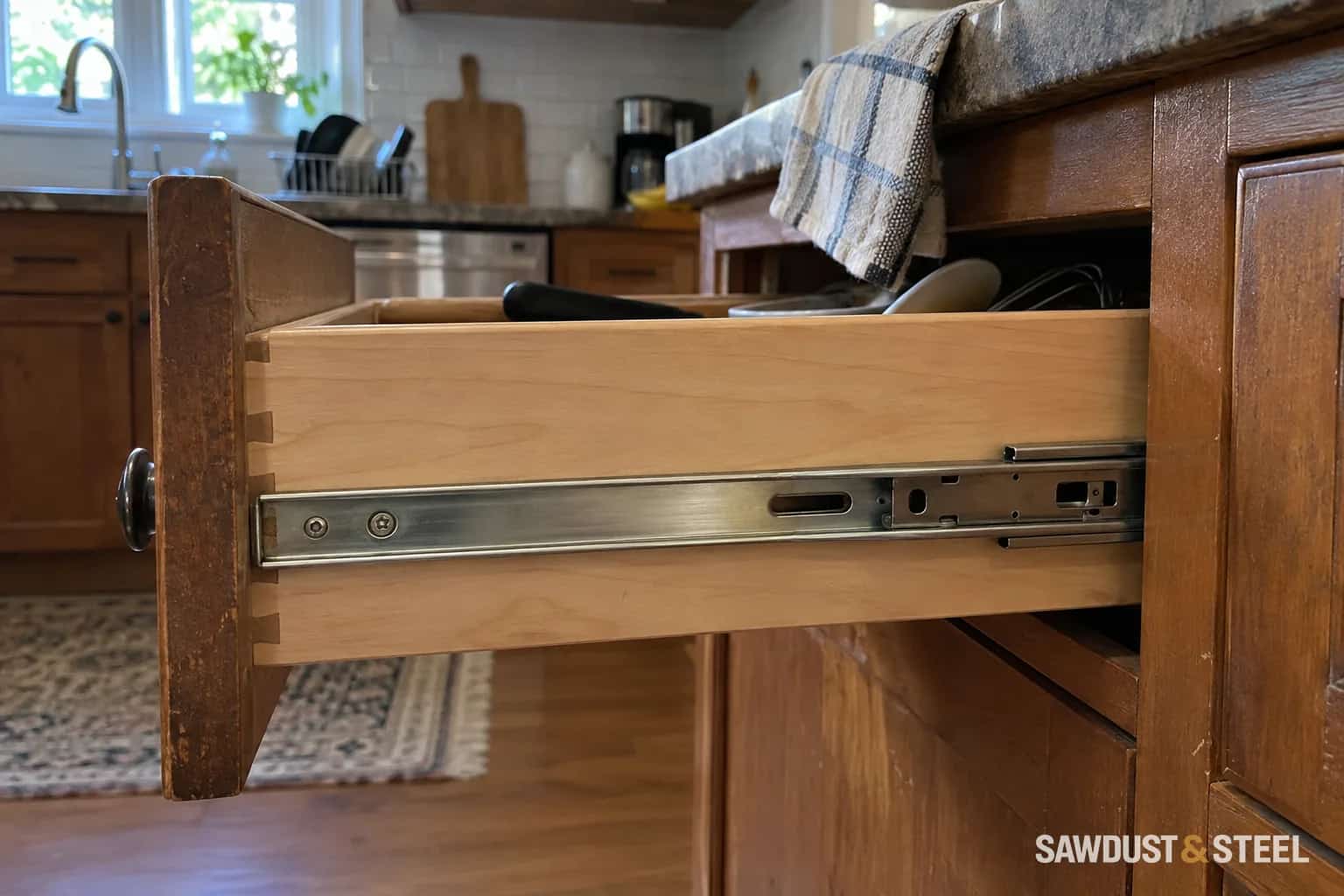
The cabinet fronts cleared each other until the long brass pulls arrived. Now the fridge door meets a drawer handle, or the corner cupboard opens only if the dishwasher is shut. A handle is a three-dimensional part of the layout, not the final decoration.
Mock up the handle's depth as well as its length
Use the actual sample or a cardboard block matching its projection from the front. Hold it securely with a finish-safe temporary method, or work with a spare front. Open the neighbouring door slowly without forcing contact. Do not drill one hole as a trial unless that location has already been approved.
Closed fronts
Mark the intended pull position and projection.
One door moving
Trace the first contact with adjacent handles or appliances.
Both in use
Test the real loading and access sequence.
Service access
Confirm shelves, bins and appliance parts still come out.
A hinge stop is not always the answer
Restricting a cabinet door can prevent a collision, but check whether the cabinet's drawers or pull-outs still clear it. Restricting a refrigerator door may prevent removing a crisper drawer. Use approved hinge accessories only for compatible hardware; do not bend a hinge or modify an appliance stop.
Whirlpool: Refrigerator location and spacing treats refrigerator door clearance as a separate installation requirement. Apply the exact model's drawing when a cabinet pull sits beside it. The handle that misses the closed fridge may still obstruct the angle needed for normal use or cleaning.
Compare the changes before repairing holes
A lower-projection pull, different mounting position or compatible cabinet hinge limiter may resolve a local conflict. A filler panel or revised cabinet arrangement can be needed where the fronts themselves overlap. Ask the cabinet supplier to compare options before drilling finished doors, because moving a pull later can leave visible holes.
For panel-ready dishwashers, the handle is also part of the panel specification. Check panel weight and mounting before choosing a heavy pull or a fastening arrangement that penetrates too far. Do not fasten hardware through an appliance panel without its template.
Open everything after installation
Test doors, drawers, bins and appliance doors through their useful travel. Try the everyday combinations: unloading dishes into the adjacent drawer, pulling the waste bin out while the sink cabinet is open, and removing a refrigerator shelf. Check fingers as well as finishes; a narrow gap that technically avoids contact may still be unpleasant to use.
Keep the selected hardware's product number with the cabinet documents. If one handle must change later, that record helps preserve the layout and finish. For crowded interiors, drawer-organizer measurements finish the job on the other side of the front.