
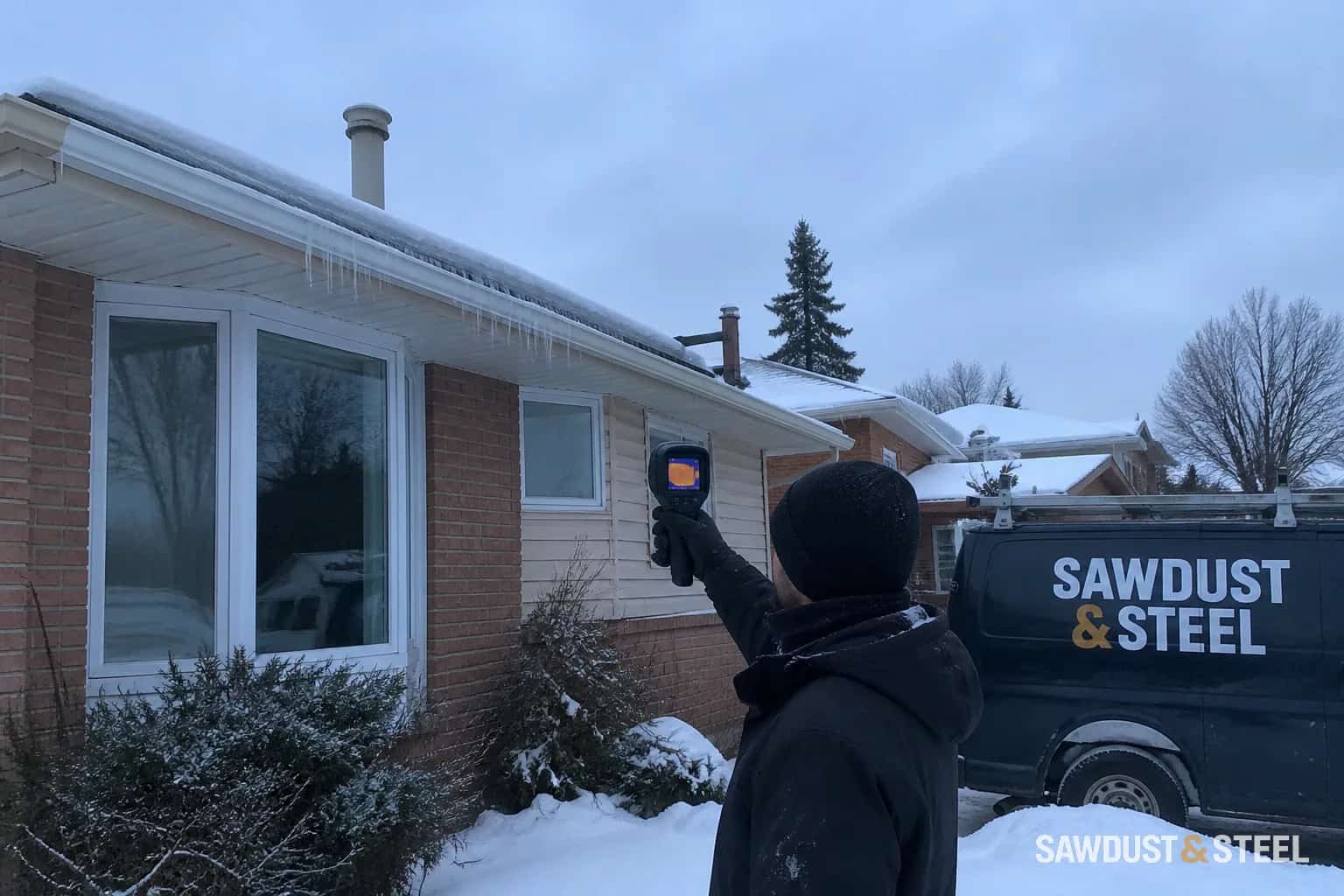
If the upstairs rooms are cold, topping up the attic can look like an easy fix. Before paying for more insulation, check what's underneath it. Gaps around the hatch, wiring, and wall tops can keep leaking warm air even beneath a deep new layer.
How much attic insulation is enough?
Natural Resources Canada's insulation guidance lists recommended roof or ceiling values by heating degree-day zone. The table ranges from R-45 in Zone 4 to R-55 in Zone 5 and R-60 in Zone 6, with higher values in colder zones. Those are retrofit guidelines, not a substitute for the current Ontario Building Code, the local permit review, or an assessment of the actual assembly.
Insulation type matters too. Loose-fill cellulose, fibreglass, batts, and spray products deliver different R-values per unit of thickness and have different installation limits. Ask for the target R-value, product, installed density, bag count, and minimum settled depth in writing. Ask for depth markers and photos that include the awkward edges, not just the easy middle. On a bungalow top-up, the centre looked generous but the insulation thinned out above the front bedrooms. We dealt with the perimeter detail before the hose came in. A photograph of one deep patch would have missed the rooms the owner was actually complaining about.
Inspect before adding anything
NRCan's roof and attic guide says to check roof framing, sheathing, soffits, fascia, leaks, stains, mould, flaking, and rot. It also warns that condensation can appear as frost during a cold snap. Fix roof or flashing leaks and identify the moisture source before covering the evidence with fresh insulation.
- Check for water marks, damp insulation, frost, mould, rot, and damaged framing.
- Confirm bathroom and kitchen exhaust ducts are sealed and terminate outdoors, not into the attic or soffit cavity.
- Look for gaps at the attic hatch, plumbing stacks, wiring, lights, chimneys, and wall tops.
- Keep soffit intake paths open with suitable baffles where the roof assembly needs them.
- Do not disturb unknown vermiculite or other suspect material. Health Canada says vermiculite insulation may contain asbestos. Stop and arrange appropriate assessment first.
Air sealing comes before the top-up
Warm indoor air carries heat and moisture through ceiling gaps. NRCan's air-leakage guide identifies the attic hatch, ceiling penetrations, ducts, chimneys, and partition tops as common leakage points. Seal compatible, safe locations first, then insulate without blocking ventilation. This is easier to do before the new insulation covers those gaps.
Include the access opening in the scope: a drafty attic hatch needs its own seal, closure, and insulation detail, even when the surrounding attic is well insulated.
Before signing an attic quote
Ask how the contractor measured the existing R-value, which air leaks are included, how ventilation paths and heat-producing fixtures will be protected, and how the final depth will be verified. An EnerGuide home evaluation can document insulation and air leakage in the context of the whole house. If the complaint is one bedroom over the garage or one cold window, diagnose the room-over-garage assembly or window draft before buying a whole-attic answer. Also check the live Ontario Home Renovation Savings guide before work begins, so you can meet any assessment or pre-approval requirements.