
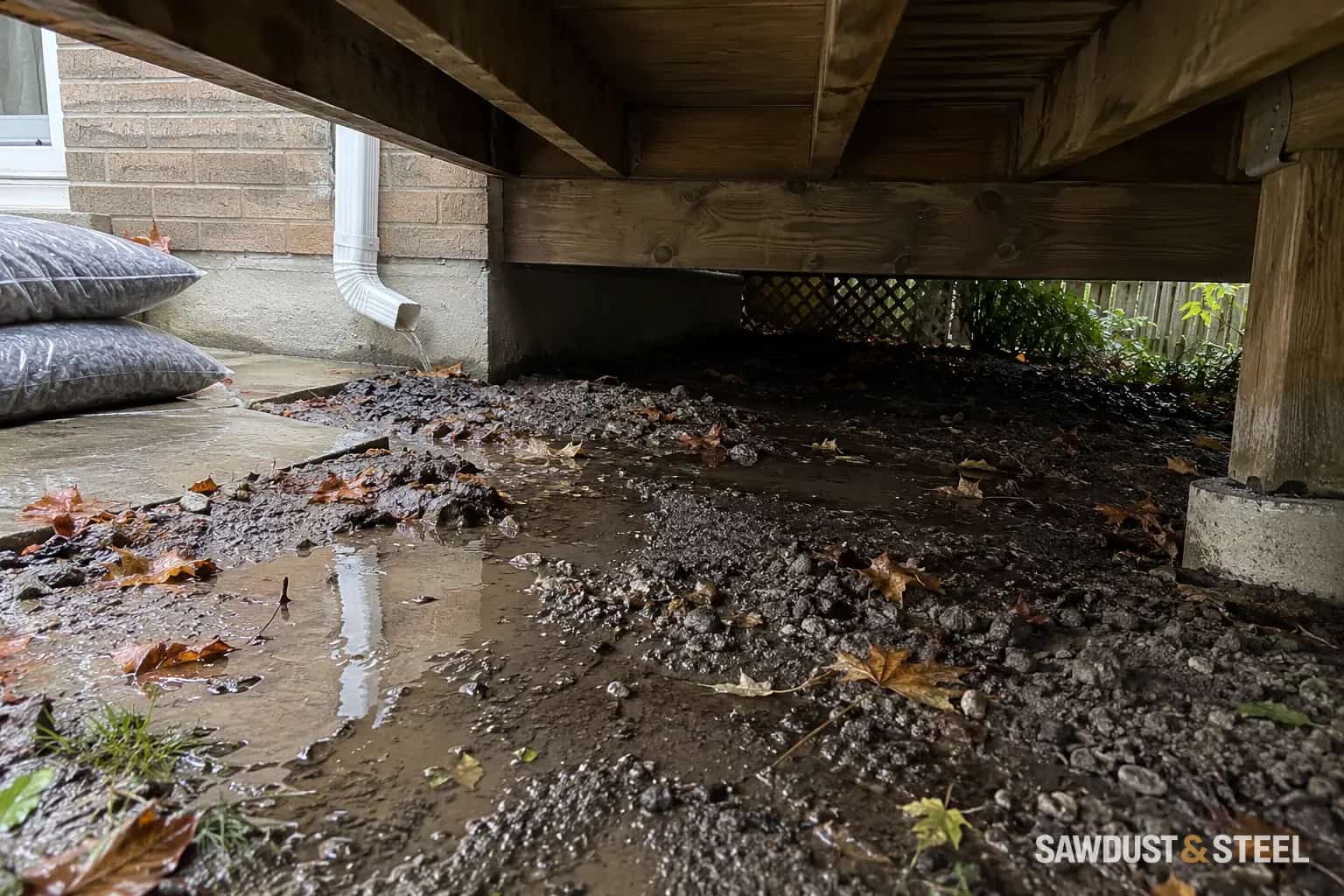
The lawn is wet again, and the proposed fixes sound equally convincing: a rain garden, a French drain, or a truckload of stone. Before choosing, establish whether you want to hold water temporarily, soak it into the ground, or move it somewhere else.
Those are different jobs. A rain garden is a planted depression designed to receive runoff. A French drain generally uses a permeable trench and pipe arrangement to collect or convey water. Neither name tells you whether the system belongs beside your foundation or where its overflow will go.
Follow the water through one rainfall
Note when the area first becomes wet. Water arriving quickly from a downspout or paved surface suggests a different problem from soil that stays saturated long after surrounding areas dry. Photograph the route, nearby slopes and any outlets. Include seasonal snowmelt, not only summer rain.
| Need | Possible approach | Must be established |
|---|---|---|
| Temporary storage and infiltration | Rain garden | Suitable soil, siting and overflow |
| Collect and convey water | Drainage trench or channel | Grade, outlet and maintenance |
| Reduce runoff from paving | Permeable surface | Complete base and discharge design |
| Water at foundation | Building drainage investigation | Cause and appropriate repair |
Do not diagnose groundwater from a single puddle. A buried pipe leak, blocked outlet or changed grade can produce a similar-looking patch. If water is approaching the house, first examine patios that slope toward the foundation and roof discharge. A planting scheme should not be asked to compensate for an unresolved building drainage defect.
A rain garden needs a suitable site
Public Safety Canada's landscaping guidance describes planted rain gardens and planned overflow. Use the concept with a site-specific design: soil suitability, nearby structures, septic areas and the volume arriving all matter.
Do not place the garden at the foundation simply because that is where the water already collects. Its inlet and overflow need to keep water away from vulnerable openings and neighbouring property. The selected plants also need to tolerate the actual pattern of wet and dry conditions, rather than merely appearing on a list of moisture-loving species.
A drain needs an outlet you can explain
A trench filled with gravel is not automatically a drainage solution. Ask where the collected water goes, how the pipe is graded, what happens when the outlet is blocked and how the system will be maintained. A buried pipe ending in saturated ground may simply move the puddle below sight.
The federal guide to French drains, trench drains and weeping tiles distinguishes these drainage approaches. A surface channel drain, a yard collection trench and foundation drainage are not interchangeable details. Avoid connecting new work to an unidentified pipe because it happens to be nearby.
Consider a combined approach
A surface channel can carry roof runoff to a suitable planted area; a rain garden can include a designed overflow. Conversely, a site with poor infiltration may require conveyance rather than a large soakaway. The useful choice follows the water and the ground, not a preference for whichever solution is currently popular.
Ontario stormwater guidance discusses constraints around infiltration systems. A drainage professional can translate those principles to the property and local requirements. Arrange utility locates before excavation, including information about private services that may not appear in the standard response.
Ask for a drawing and a maintenance route
The drawing should show the contributing area, inlet, storage or collection zone, outlet and emergency overflow. Include elevations where they determine flow. A plan consisting only of a dashed line labelled 'French drain' leaves most of the important decisions unanswered.
Keep access to cleanouts and visible outlets. Plan how leaves, sediment and winter debris will be removed without digging the system up. After construction, observe several rains and record any erosion or unexpected ponding. The successful result is not simply a dry patch where the old puddle sat; it is water reaching an appropriate destination without creating another problem.