
In a spring cleanup, Amira sweeps water away from the back door after every rain. She blames the open paver joints and orders more jointing sand. The next storm leaves the same puddle, now beside very handsome joints.
Watch where water starts and where it ends
Observe from a safe spot during rain. Is water falling directly onto the patio, arriving from a downspout, spilling from a gutter, or crossing from higher ground? Mark the pooling area and photograph it after the storm. A repair needs to address the source and destination, not only the lowest visible spot.
Include the shallow strip along the fence in that observation. It may be a drainage swale that landscaping must keep open, so raising the garden bed can change more than the view from the patio.
The federal property-grading guide recommends directing water away from the home and notes that paved surfaces may need different slopes from soil. It calls for professional advice and local-rule checks before changes. A number copied from a lawn-grading diagram is not automatically your patio specification.
A drain needs an approved destination
| Proposed fix | The question it must answer |
|---|---|
| Relay the patio | Can the finished surface drain while preserving door, siding, and masonry clearances? |
| Add a channel drain | Where does it discharge, and how will it be maintained through debris and freezing conditions? |
| Adjust a downspout | Does the new route reach a suitable drainage area without affecting neighbours or walkways? |
| Add jointing material | Is the actual problem joint condition, or is the whole surface pitched incorrectly? |
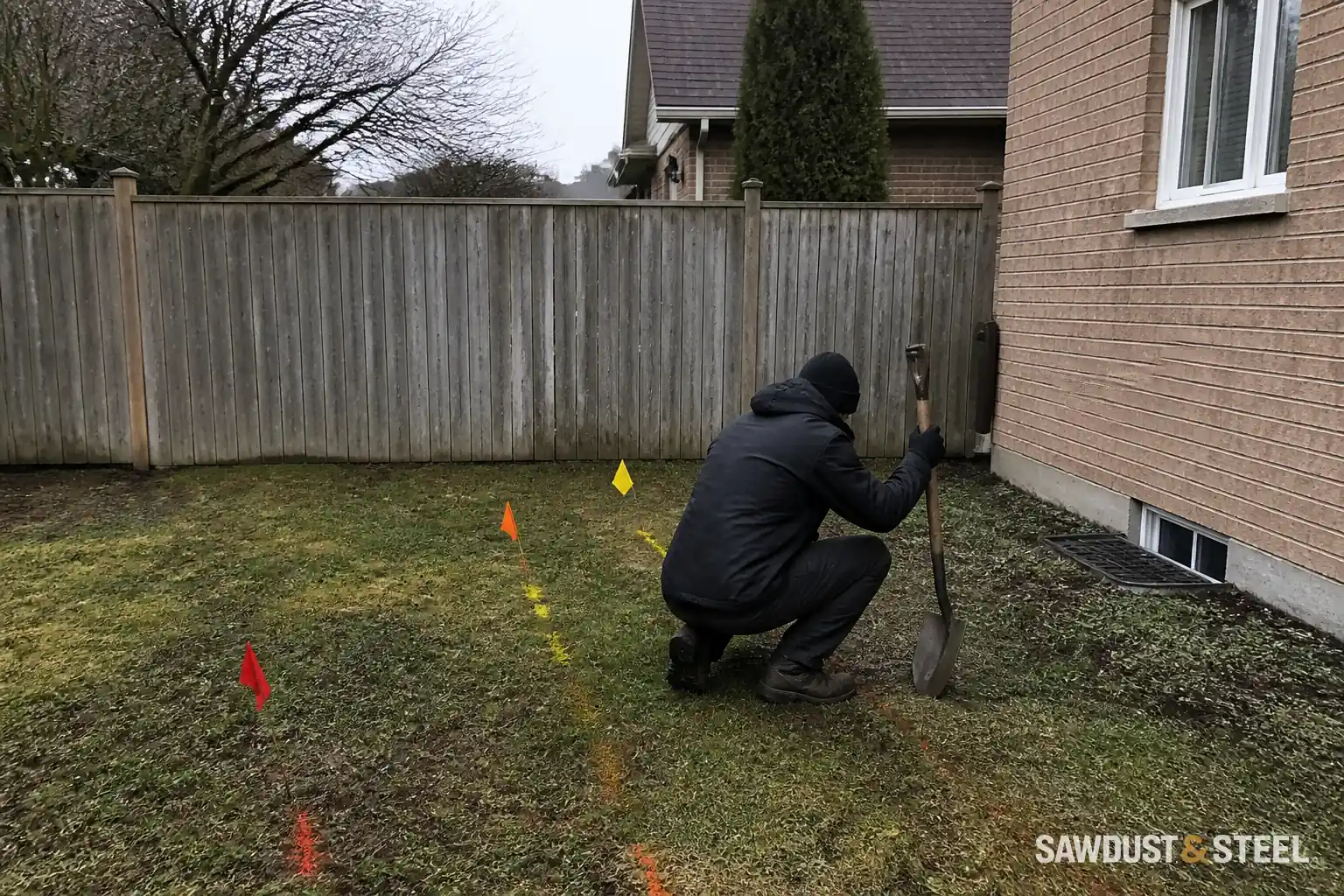
Avoid raising paving against cladding, blocking drainage openings, or creating a new low point at a basement window. Site constraints may require a designed drainage solution rather than simply adding height at the wall. Arrange utility locates and check private services before excavation.
Scope the base, not just the pretty surface
If settlement caused the slope, ask what the assessment says about the base and underlying conditions. Relaying the same pavers without addressing the reason they moved can repeat the problem. Have the quote separate surface reuse, base correction, drainage, and any wall-side repairs.
With the pavers lifted, we found the settled strip continued beyond Amira's puddle. Resetting only the visibly wet patch would have left another low point beside it. The revised work reused most of the stone but extended the base correction and kept the wall clearances intact. Her weekend table went on the lawn while the patio was out of use. After rain, we checked the full route to the agreed drainage area, not just whether the doorstep looked dry.
If water is arriving from above, start with why clean gutters still overflow before blaming every paver. If lifting the patio is the answer, arrange utility locates before digging. And if the damp has already reached downstairs, sort out basement moisture before finishing; a new wall covering won't improve the route the rain takes.
Once the overall water route is understood, inspect the smaller failures too: joint sand washing out and pavers spreading at the edge point to different repair details.