
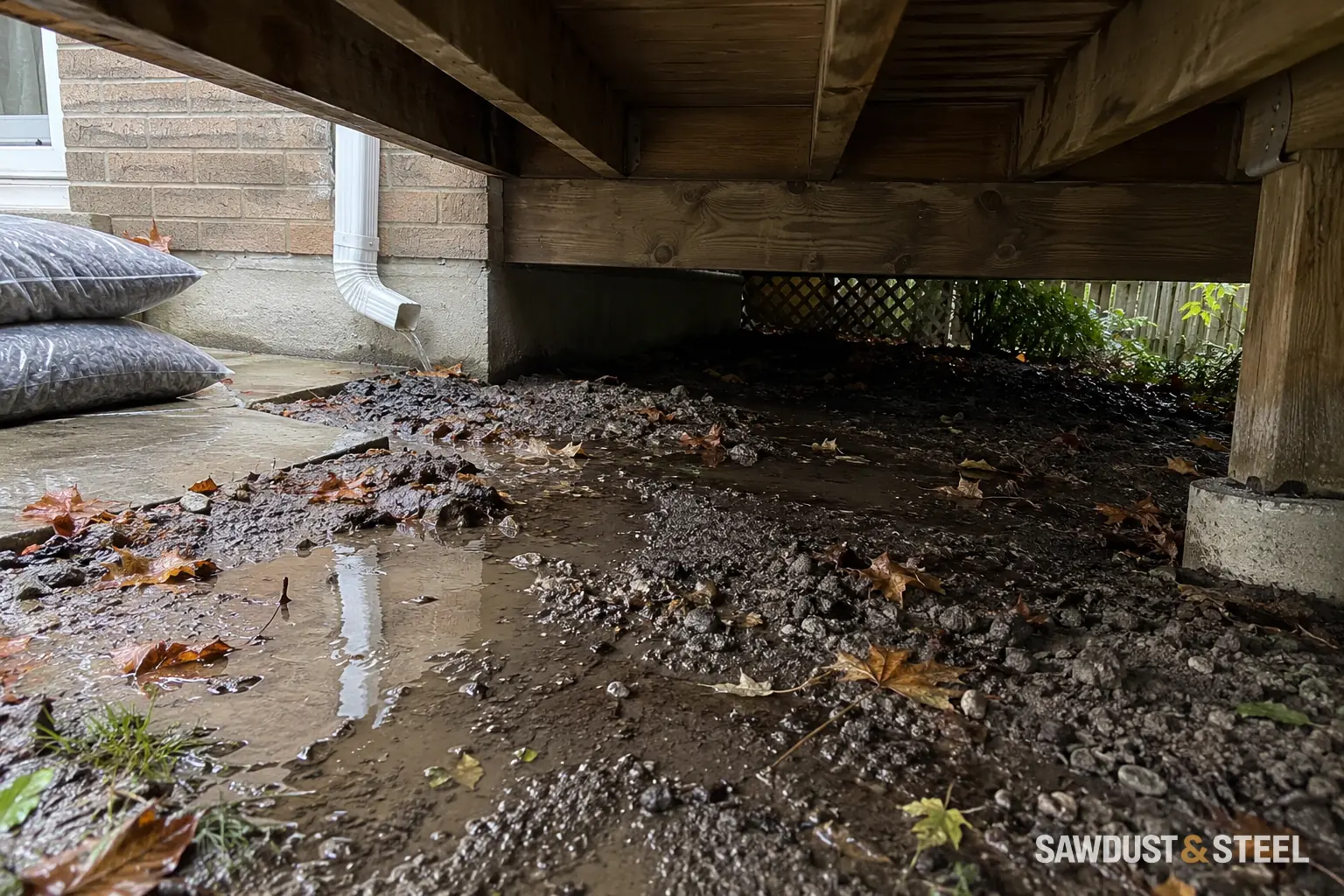
Rain Garden or French Drain for the Wet Part of the Yard?
Compare a planted infiltration area with a drainage trench by water source, soil, outlet and maintenance. The wet spot alone does not choose the solution.
Read the guideGuides 1-8 of 8
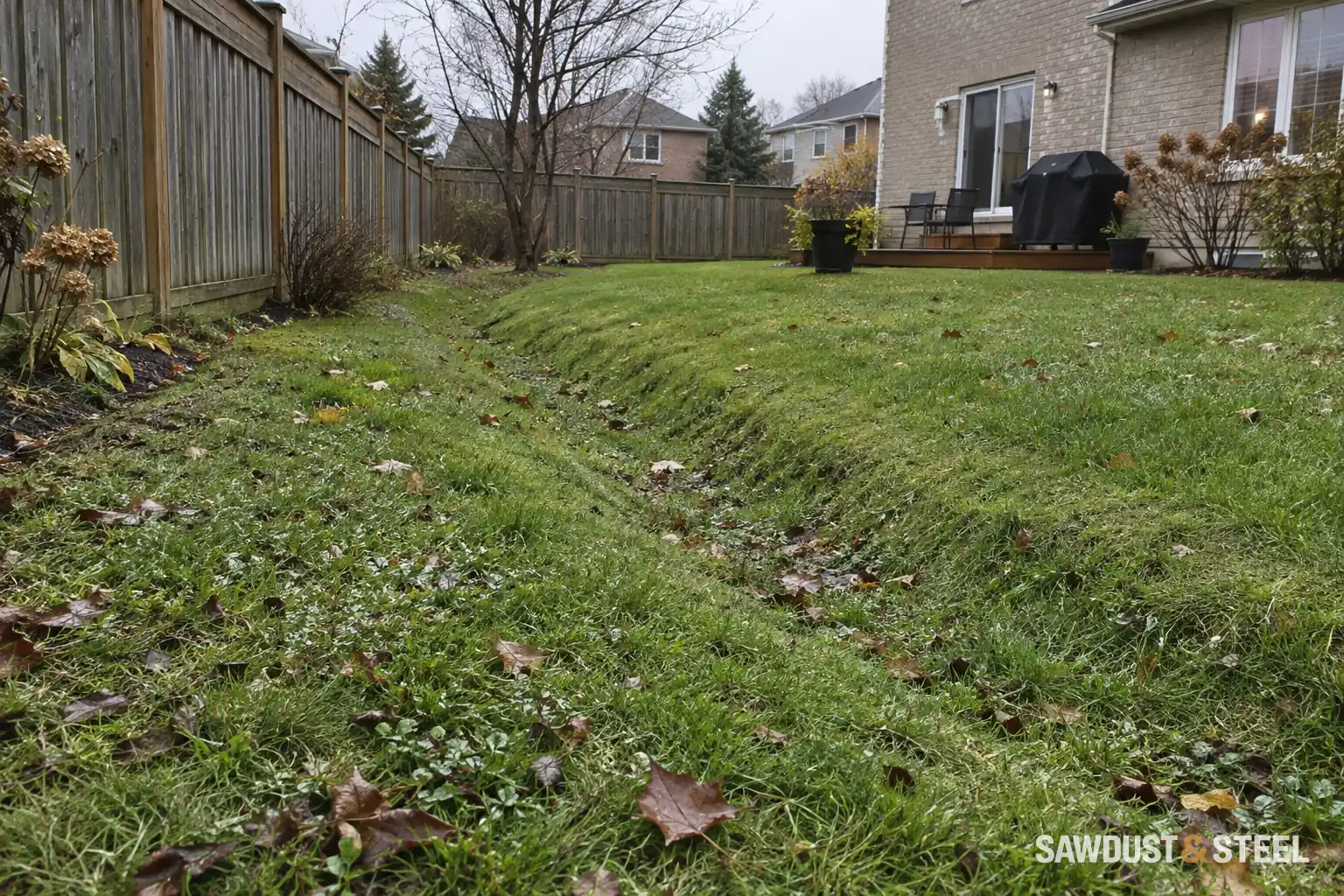
Compare a planted infiltration area with a drainage trench by water source, soil, outlet and maintenance. The wet spot alone does not choose the solution.
Read the guide
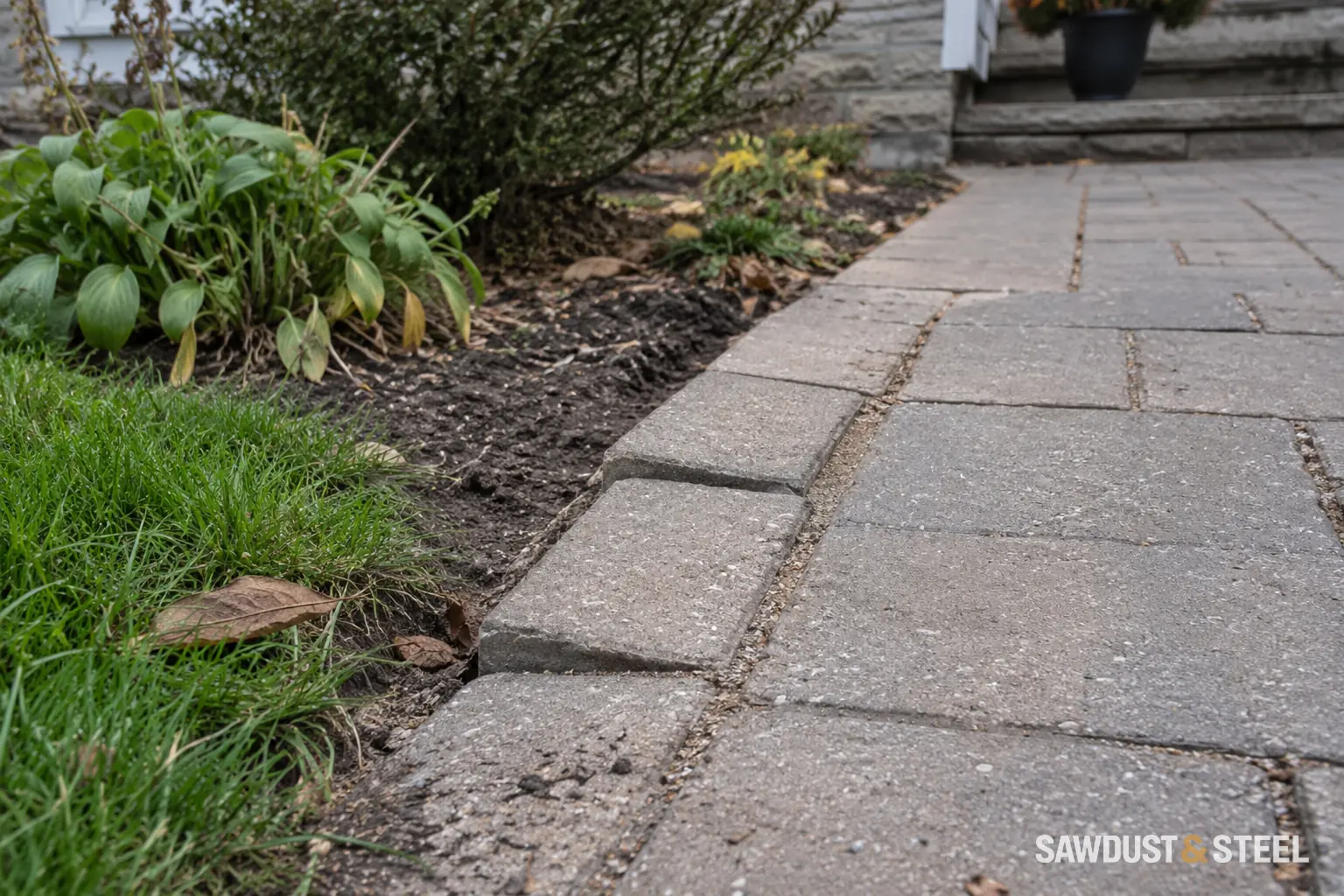
Before filling the dip beside a fence, check whether it carries runoff. Preserve the drainage route when adding beds, paving, posts or a shed.
Read the guide
Permeable paving needs a suitable base, soil and overflow route. Compare the entire drainage assembly before replacing an ordinary patio.
Read the guide
Before cutting a root beneath a raised paver, distinguish tree growth from base failure and check tree protection rules.
Read the guide
First find out whether the chair foot drops into a joint or the chair rocks on an uneven surface. They feel similar when you sit down, but one starts with the furniture foot and the other may require a paving repair. Test the actual chair before buying a patio full of new slabs.
Read the guide
Do not start with another bag of sand. Follow the washout uphill and check whether the pavers move. Concentrated runoff, an unstable edge or a shallow failed repair can empty the same joints repeatedly, even when the new material initially looks firm.
Read the guide
When the outer row spreads, look below the visible edge before adding joint sand. The restraint may be missing, loose or sitting on the wrong layer. If the border also sinks, the base or drainage may be part of the repair.
Read the guide
White pavers do not all need the same treatment. A powdery deposit, joint-sand residue, cloudy sealer and an etched surface can look similar from the kitchen window. Identify the paving and recent work, then inspect a dry test area before buying cleaner or another coat.
Read the guide