
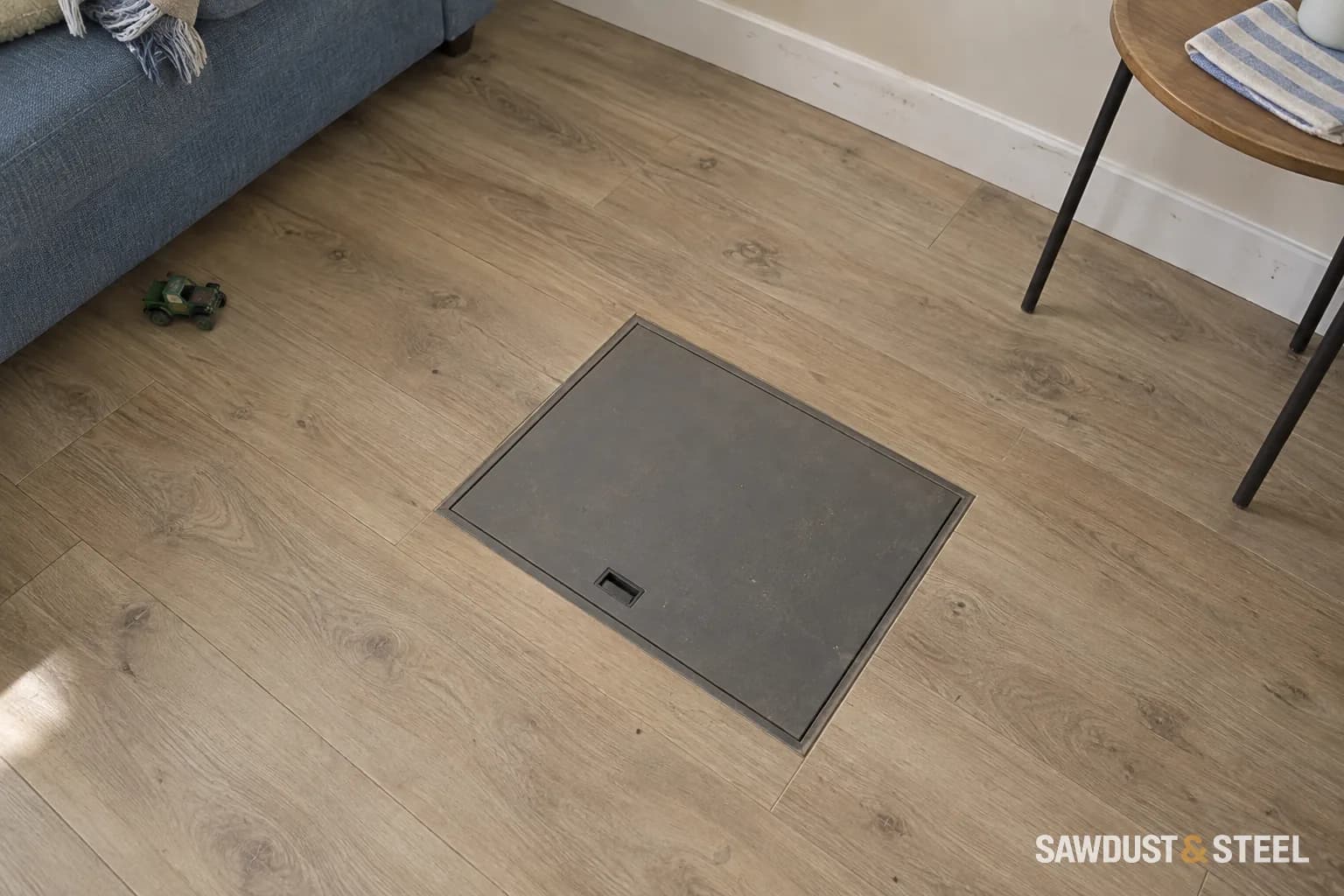
The floor installer asks where the rectangular cover should go. The answer cannot be wherever the sofa will hide it most completely.
Identify the device and its access needs
Ask the plumber to identify the valve model, orientation, service space, and maintenance instructions. Confirm the required access opening before ordering a decorative hatch or building a cabinet above it.
Toronto's flooding-protection guidance explains that backwater valves require regular inspection and maintenance. It also notes that plumbing fixtures should not be used while the valve is closed. Keep the operating instructions with the house records.
Two covers, two different jobs
The decorative floor hatch is not the valve lid. The hatch lets you reach the plumbing; the valve lid belongs to the plumbing equipment. Draw both, including the space between them after insulation, subfloor and flooring are installed. A neat opening that exposes only the middle of the device may still prevent its lid, bolts or removable parts from coming out.
For a concrete example, Mainline describes the #4963 Fullport valve as having a clear inspection top and an integral cleanout. The finish detail must preserve access to those features. That does not establish one universal hatch dimension: the installed depth, access-box arrangement and service procedure still need checking against the exact valve. Ask the plumber to demonstrate the lid-removal route before approving the floor opening.
On the furniture drawing, draw the hatch fully removed beside its opening. Then draw someone kneeling where the plumber expects to work. If the only position puts their knees under a fixed media cabinet, move the cabinet. A coffee table that can genuinely be moved is different from an aquarium or full-height bookcase that nobody will shift for routine maintenance.
Ask who supplies the hatch, who trims the flooring and who checks it after installation. A flooring edge can accidentally bridge the removable panel, while a recessed tile insert can become surprisingly heavy. The finishing contractor should confirm that the selected hatch is suitable for its loads and floor assembly. Keep lifting keys or other required opening tools in a known location, not in the cupboard the hatch is meant to service.
Before handover, open the finished hatch with the owner present and identify the valve without dismantling it. Photograph the view with the nearest wall in frame. Keep the model instructions, maintenance schedule and plumber's contact together. If accessing the actual valve involves removing a sealed plumbing lid, follow its instructions and the plumber's guidance; a demonstration of the finish hatch is not an invitation to open the valve during a backup.
Design the cover into the room
Show the cover on the floor plan and the furniture plan. Consider how the flooring meets it, whether it can be lifted, and where a person will work during maintenance. Make it findable for someone who did not watch the renovation.
Coordinate before the flooring starts
- Exact location and clear opening agreed with the plumber.
- Cover detail compatible with the floor assembly.
- No fixed joinery or partition preventing service.
- Device information and maintenance instructions saved with the renovation documents.
If adding a valve, establish permit requirements and any subsidy eligibility before construction. Do not assume a Toronto program or condition applies elsewhere in the GTA.
A valve and a sump have different jobs. If the home also relies on a sump, consider its power-outage backup plan separately.
Keep the other drainage service points accessible too. A cleanout behind a finished wall needs room for actual drain-cleaning work, not just a view of its cap.