
The valve has closed to keep sewage out. That sounds like the moment to relax, but the shower upstairs still sends water somewhere. If its route to the sewer is closed, that water has not disappeared. This is the part of backwater-valve ownership that deserves a place beside the washing-machine instructions.
Understand the closed route
A backwater valve is a one-way protective device in a drainage line. During a sewer backup it can close against incoming flow. Water used inside the house then has to wait on the upstream, or house, side of that closure. Enough added water can find an indoor opening before it finds its way out.
Toronto's backwater-valve guidance explicitly says not to use plumbing fixtures while the valve is closed, including toilets, sinks, dishwashers and washing machines. This is an operating precaution, not just advice to postpone unusually long showers.
Street side
The valve closes against wastewater coming back from the sewer.
House side
Water from connected fixtures still travels towards the closed valve.
Household response
Stop adding wastewater through those fixtures until normal operation is confirmed.
Know which fixtures your valve serves
Do not infer the protected area from where the access hatch happens to sit. One installation may protect the main building drain; another arrangement may protect particular lower fixtures. Ask the plumber to identify the valve model, the pipe it serves and any fixtures or appliances that bypass it. Mark that information on a simple house plan.
Public Safety Canada describes different valve types and recommends professional selection and installation. Its guidance also discusses closed-valve alarms and the risk of self-flooding from water use. A neighbour's layout is not evidence that your upstairs toilet can safely be used.
Make a short household pause list
| Use or appliance | Plan before a storm |
|---|---|
| Toilets, showers, baths and sinks | Make sure everyone knows which connected fixtures must not be used during closure. |
| Washing machine | Do not start a load during confirmed closure; know the model's safe pause procedure for a running cycle. |
| Dishwasher | Check delay-start settings and avoid scheduling discharge during a known closure. |
| Other automatic drains | Ask the plumber about water-softener regeneration, condensate and other equipment that can discharge without someone opening a tap. |
| Visitors or another household in the building | Share the operating instruction and how a closure will be communicated. |
Do not invent a way to stop automatic drainage by capping a pipe, disconnecting equipment or switching off essential systems. Ask the appropriate installer for a safe operating plan. The useful preparation is knowing what runs automatically and who can control it.
Even before a confirmed closure, Public Safety Canada advises avoiding high-water-use activities during heavy rain. A forecast is not proof that a valve is shut, and rainfall ending is not proof that it has reopened. Follow the actual device and alarm instructions.
Respond to the alarm without opening the valve
Learn the difference between a closure alarm, a low-battery warning and a device fault for your model. Keep its instructions accessible. When a closure is indicated, pause connected water use and tell the household. Do not remove a cleanout cap, reach into the valve or prop its gate open to help water leave during a backup.
Ask the installer how normal operation is confirmed and when to call for service if an indication persists. There is no universal wait of ten minutes or an hour that applies to every sewer and valve. If wastewater is already entering the home, keep people away from the affected area and seek the appropriate emergency plumbing and municipal help; this guide is not a sewage-cleanup procedure.
Keep protection and access working together
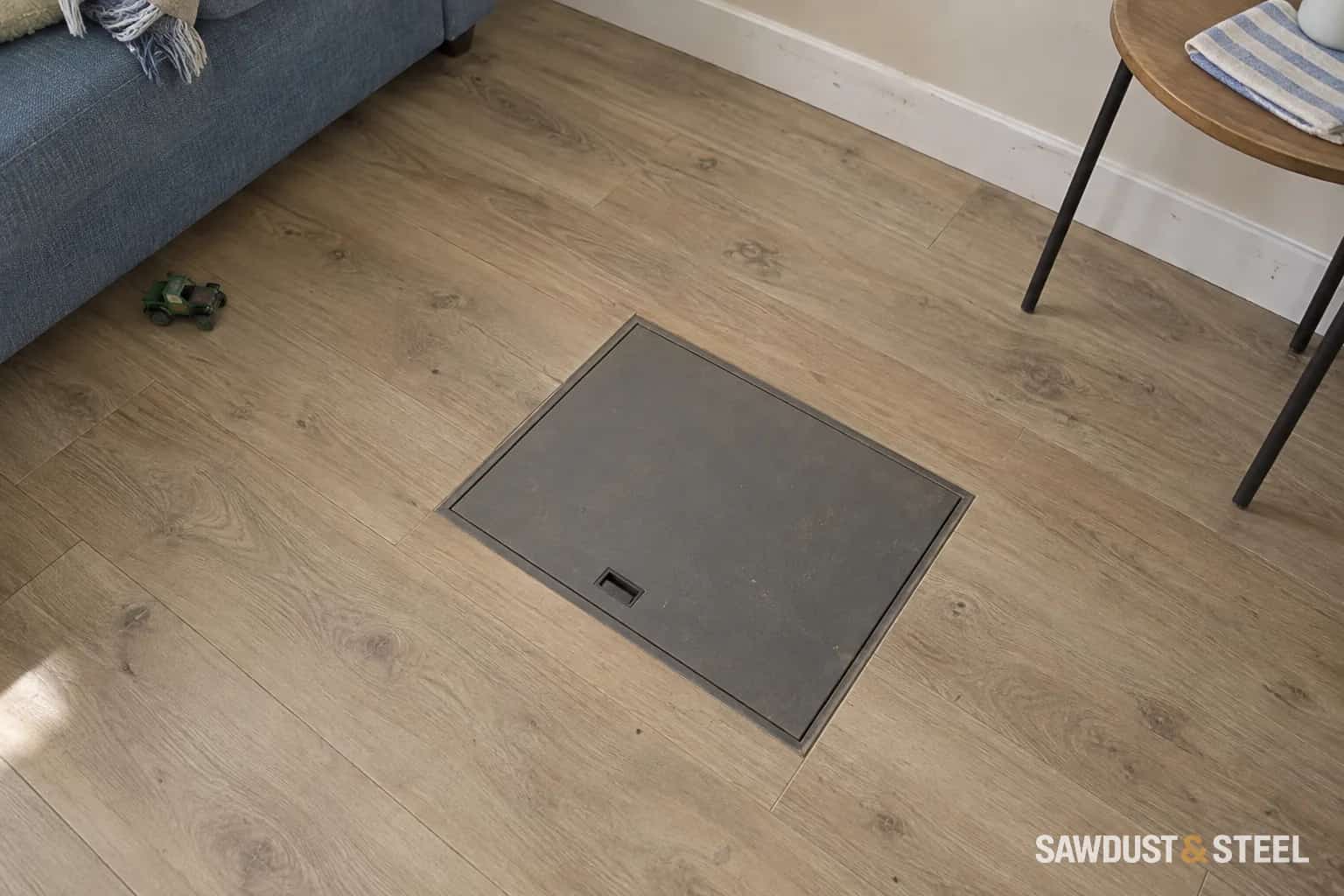
An alarm does not replace inspection and maintenance according to the manufacturer. Keep the backwater-valve access cover reachable after flooring and furniture changes. Record the model, service contact and agreed maintenance schedule with the house documents.
The sump pump has a different job, and its operation does not prove the sewer line is open. Likewise, a rain barrel needs its own overflow route; stored roof water and a sewer valve are separate parts of managing a storm. A useful household plan names each device and its job instead of calling everything downstairs the flood system.