
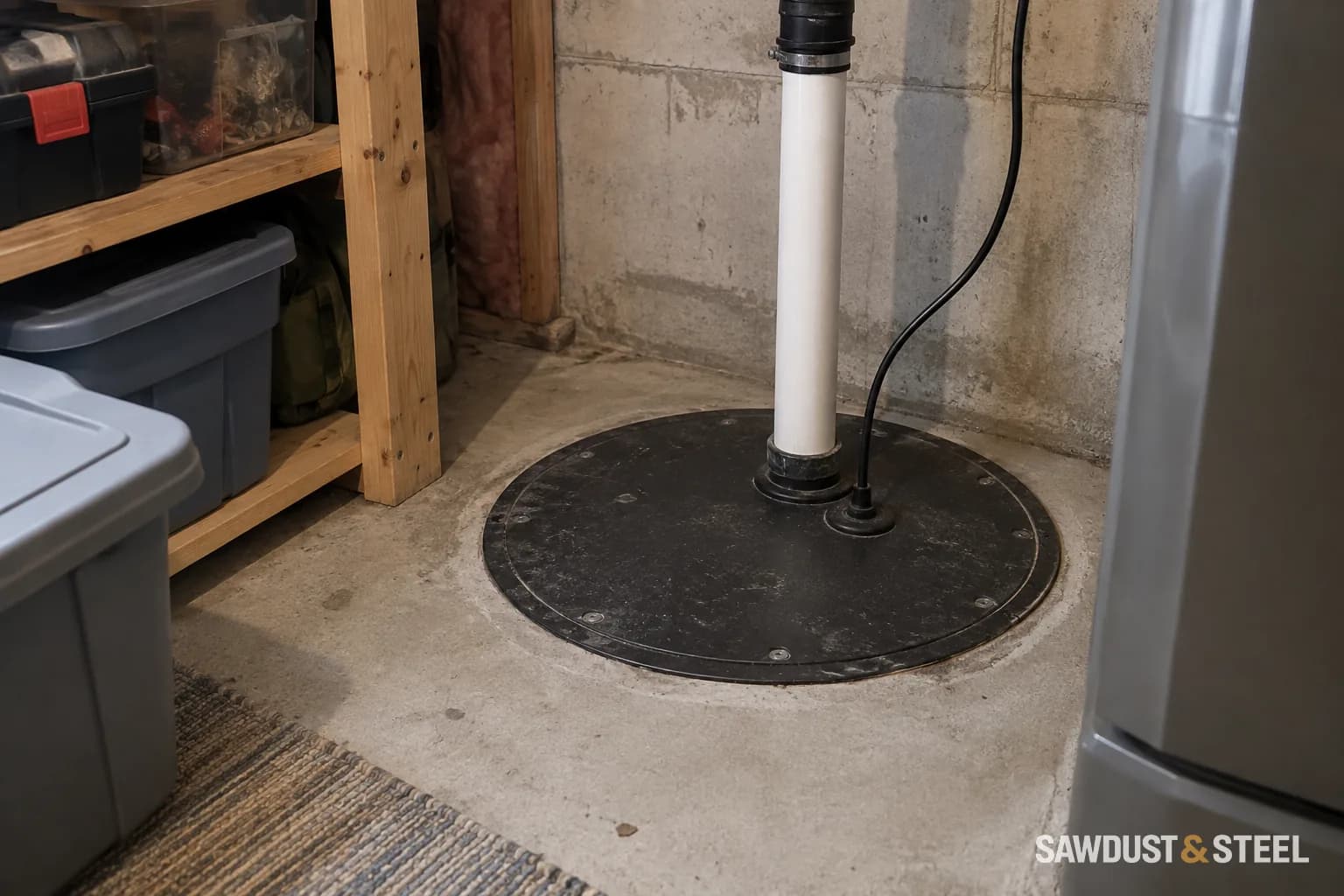
The primary pump works. The question is what happens on the evening when the rain is heavy and the lights go out together.
Define what the backup is meant to cover
Ask the installer which failures the proposal addresses: loss of mains power, failure of the primary pump, or another specific condition. Those are not automatically the same scenario.
Toronto's sump guidance notes the risk of power loss in storms and suggests considering battery backup. It does not establish the size or runtime for your house. That requires the actual equipment and pumping conditions.
Compare a system, not a battery label
Request the backup pump's performance at the intended discharge arrangement, the battery requirements, and the assumptions behind any runtime estimate. Ask whether that number means continuous pumping or intermittent cycles, and what water demand it assumes. The installer should also explain the testing and maintenance procedure. Put those answers beside the equipment model in the house records; an impressive number without its conditions is difficult to use when the weather turns.
Read capacity at the discharge height, then read runtime separately
The Basement Watchdog Big Dog CONNECT BWD12-120C is one named example: the manufacturer publishes 3,500 US gallons per hour at zero lift and 2,200 at a 10-foot lift. Those are different points on the performance curve, not interchangeable capacities. Ask the installer to account for your actual discharge arrangement rather than buying from the larger number.
The same product information describes 40 hours with one battery at a 10% duty cycle, with runtime varying by water flow. Ten percent means pumping for the equivalent of six minutes per hour, not continuously for forty hours. Do not scale that figure into a guaranteed storm duration: battery condition, demand, installation and recharge conditions matter. Keep the exact specified battery and assumptions beside the quote.
| Check | Record |
|---|---|
| Normal pump cycle | Water lowers and reaches the intended outlet |
| Backup operation | Installer demonstrates the manual's safe test procedure |
| Alarm | What the indication means and who will respond |
| Restoration | Normal supply, controls and valves returned to operating condition |
| Maintenance | Battery type, inspection schedule and replacement guidance |
Ask the installer to demonstrate the manufacturer-approved test while the system is accessible and conditions are controlled. Do not deliberately disable the primary system during a storm to see what happens. Keep hands out of an energized basin, and do not improvise wiring, chargers or battery combinations. Record the test date and which pump actually ran; hearing a motor without observing the water level and outlet leaves too much unknown.
Plan for routine inspection before finishing the room. The lid, pump connections, battery and controller need the access their instructions specify. A fitted cupboard over the pit can turn a simple check into a furniture-moving exercise. Keep the discharge route on the house sketch and show the person who checks the house during absences where the outlet is.
If a remote alarm is part of the purchase, ask what communications and power it depends on. Demonstrate the notification and confirm the recipient can act. A message sent to a phone nobody checks is a record of a problem, not a response plan. Keep a local contact and the installer details with the equipment instructions.
Check the route and the warning
- Where does each pump discharge, and can that route remain clear?
- What happens if the primary pump fails while power is still available?
- How will an alarm be noticed, including when nobody is downstairs?
- Who will perform the scheduled checks and eventual battery replacement?
At handover, have the installer demonstrate the checks you're expected to make and how you'll know something needs attention. Save the equipment details and maintenance schedule where you'll find them during an outage. That's when a clear plan becomes more useful than the battery's biggest advertised number.
Winter reliability also depends on keeping the discharge route from freezing; include the outlet in the backup review.
Coordinate the sump lid and its seal with maintenance access; a finished cover should not make the equipment impossible to inspect.