
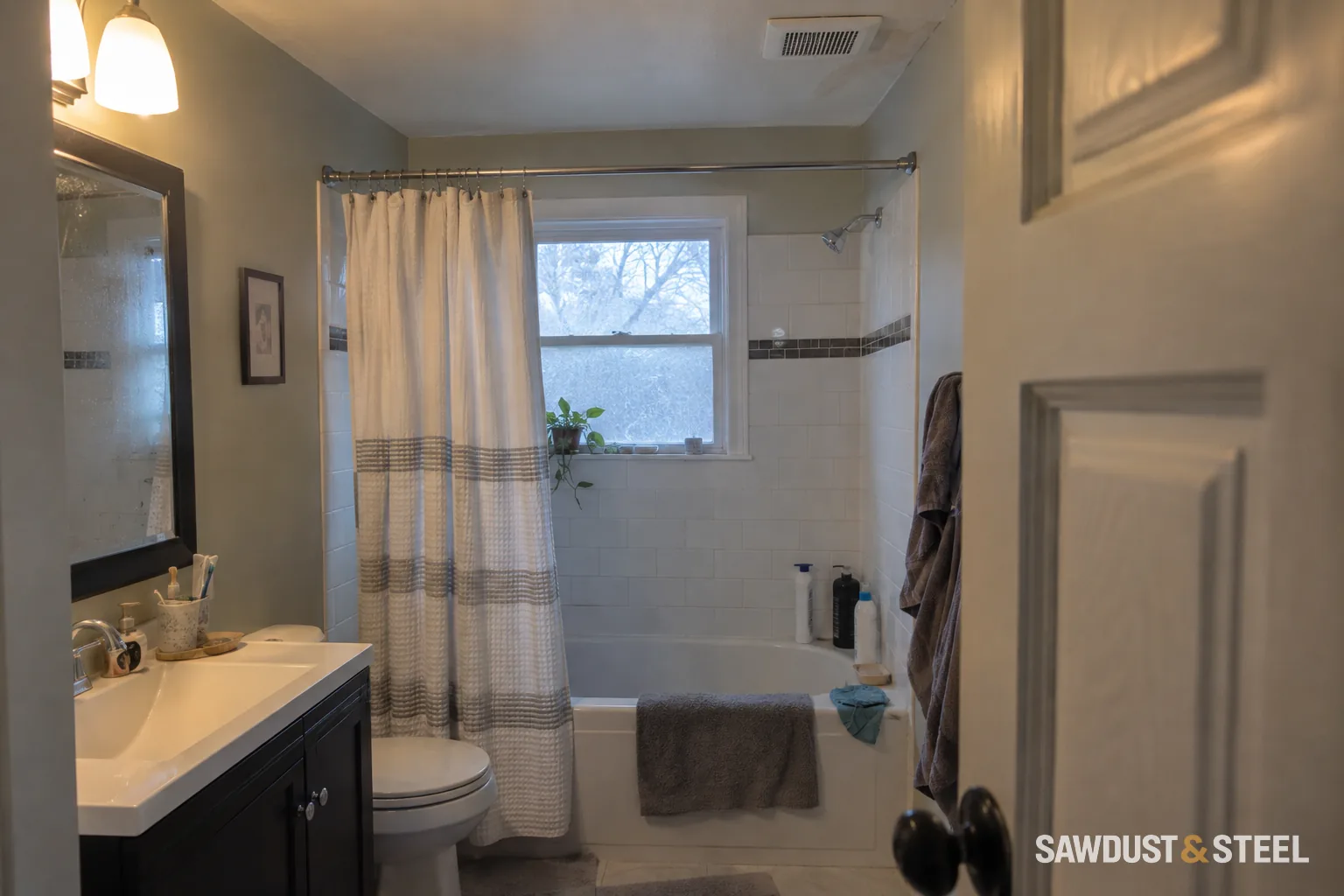
You can touch both walls of the bathroom without taking a step, yet the quote still makes you sit down. Small rooms pack plumbing, wiring, ventilation and waterproofing into very little space. Before cutting the tile budget, look at the layout: keeping working fixtures where they are can change the scope more than choosing a cheaper towel bar.
What is a sensible first planning number?
For a full bathroom renovation in the GTA, a deliberately broad starting allowance is about $20,000 to $50,000+ CAD. Use that only to test whether the project is financially plausible before drawings, selections, and a site review. It is not a published market average.
A cosmetic refresh that keeps the working room intact can fall below that band. A larger ensuite, curbless conversion, structural change, relocated plumbing, custom millwork, specialty tile, steam equipment, or premium fixture package can rise above it. Confirm those decisions before asking for a firm price.
| Decision | Lower-cost direction | Higher-cost direction |
|---|---|---|
| Layout | Keep fixture locations | Move drains, supplies, walls, doors, or windows |
| Shower or tub | Standard tub or simple shower | Curbless floor, bench, niche, custom glass, or steam |
| Existing condition | Sound framing and subfloor | Water damage, movement, mould, or uneven structure |
| Finishes | Stock vanity and readily available tile | Custom millwork, slabs, specialty tile, and premium fixtures |
| Regulated work | Limited like-for-like scope | Building, plumbing, HVAC, or electrical design and inspections |
Which costs are easiest to miss?
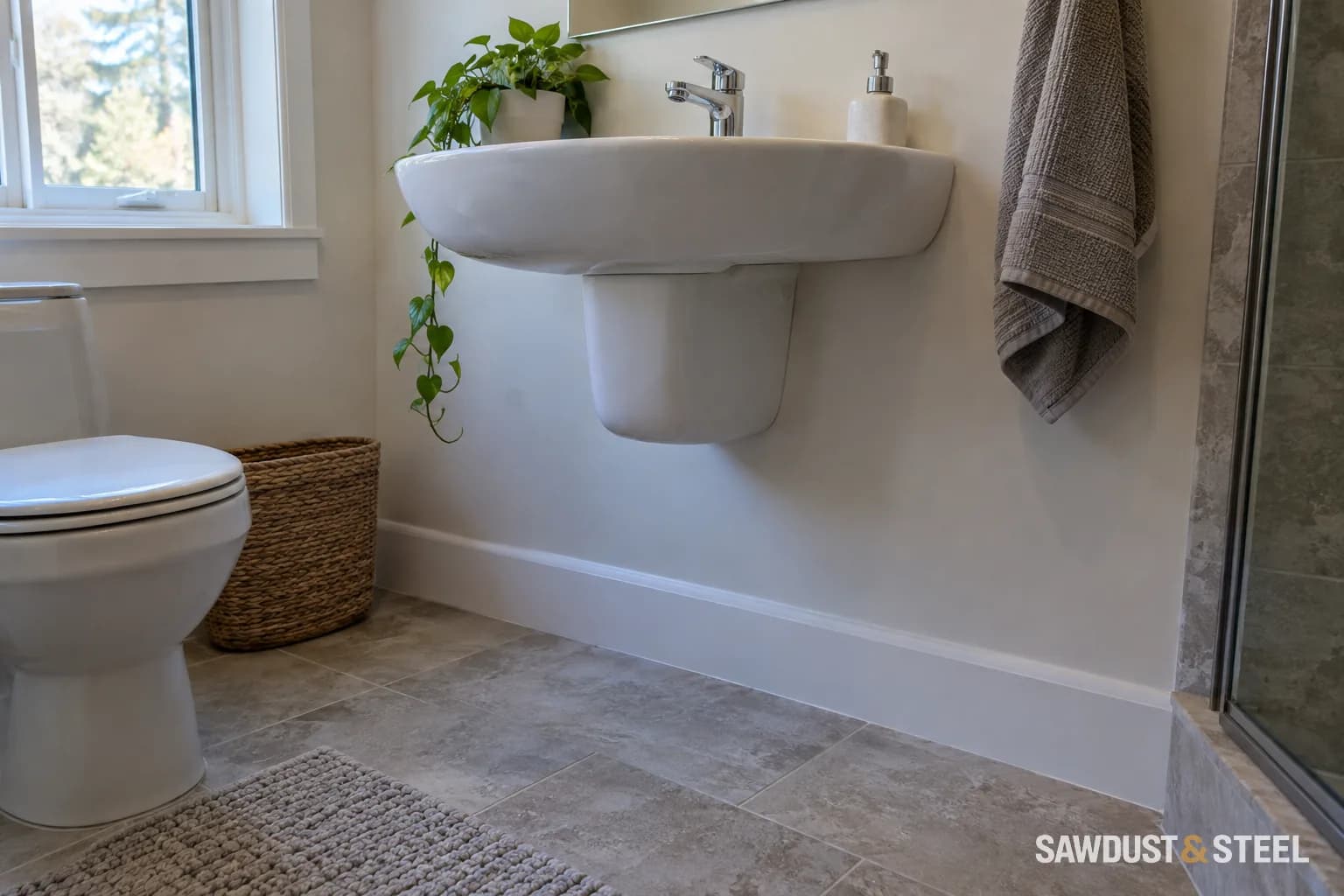
Check for these easily missed costs: demolition and disposal, floor or framing repairs, ventilation to the exterior, electrical notification, permit drawings, inspections, temporary protection, delivery, glass measurement, paint and trim, cleanup, and final deficiency work. Ask which are included in the total. In a small Mississauga bathroom, keeping the toilet in place saved the plumbing move, but the exposed floor around it still needed repair. We showed the soft area to the owner before removing more material and priced that repair separately. Keeping the layout reduces one risk; it does not tell you whether the old floor is sound.
Keep a contingency for concealed conditions, but do not use contingency as permission for a vague contract. The quote should say what can be seen, what is assumed, what is excluded, and how a discovered problem becomes an approved change.
How do permits affect the budget?
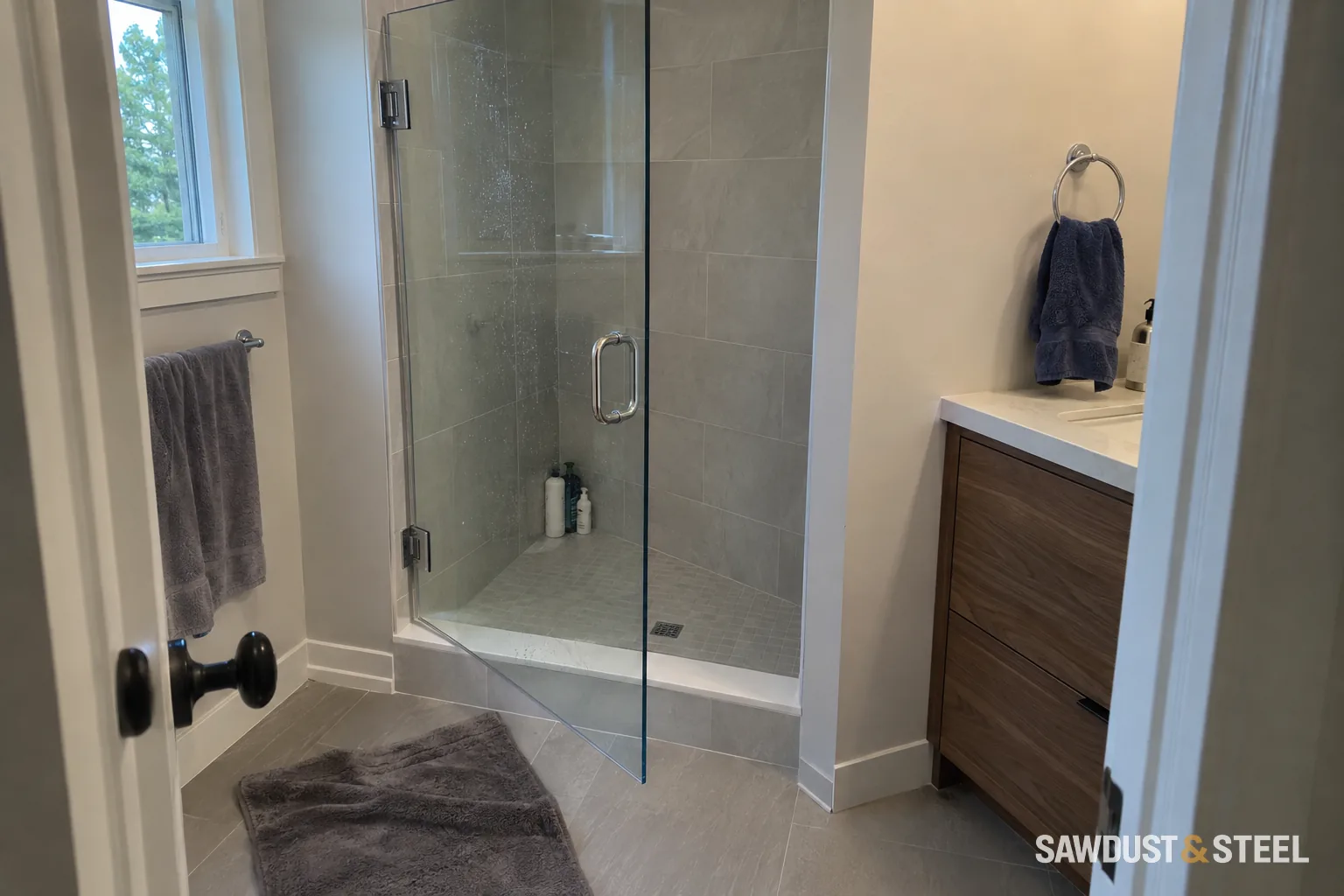
Permit needs follow the actual work, not the room name. Ontario's building permit guide says municipalities administer building permits and determine the drawings and supporting documents required. Moving plumbing, altering structure, changing an opening, or coordinating a larger permitted renovation can add design, fees, inspection stages, and time.
Electrical work has a separate path. ESA says almost all electrical work requires a notification, and a municipal building permit does not replace it. Ask the quote to identify who files each approval, pays each fee, books inspections, corrects deficiencies, and provides the final records.
How should two bathroom quotes be compared?
Make both quotes answer the same questions: which items are supplied, which are allowances, which fixtures move, which waterproofing assembly is included, how much tile and glass are assumed, what permits apply, what remains after demolition, and what counts as a change. Ask for missing items to be priced before comparing the totals.
Ontario's consumer guidance on starting a home renovation recommends a clear written agreement and explains estimates, deposits, payment terms, and changes. Read the contract before the first payment, then keep every approved change in writing.
Where is it sensible to save?
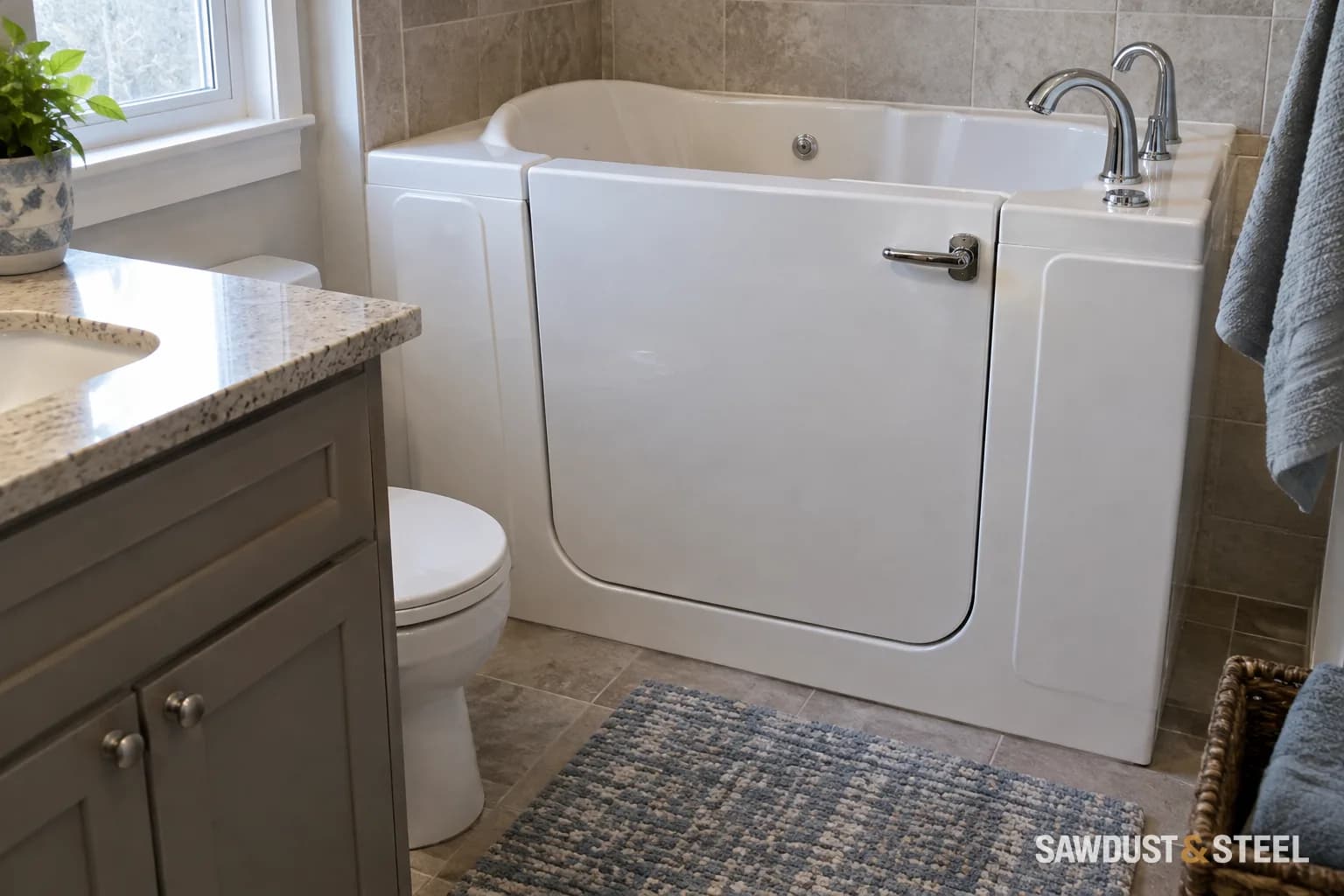
Save by keeping a good layout, choosing available fixtures, limiting custom glass and millwork, and using one restrained tile family. Do not create savings by deleting structural review, ventilation, electrical safety, waterproofing, or required inspections. These details protect the room and the people using it.
Once the budget looks workable, the next household question is usually how long you will be sharing the other bathroom. The GTA bathroom timeline lays out that sequence. Check the permit guide for the work you are changing and the shower waterproofing comparison for what belongs beneath the tile before comparing quotes.