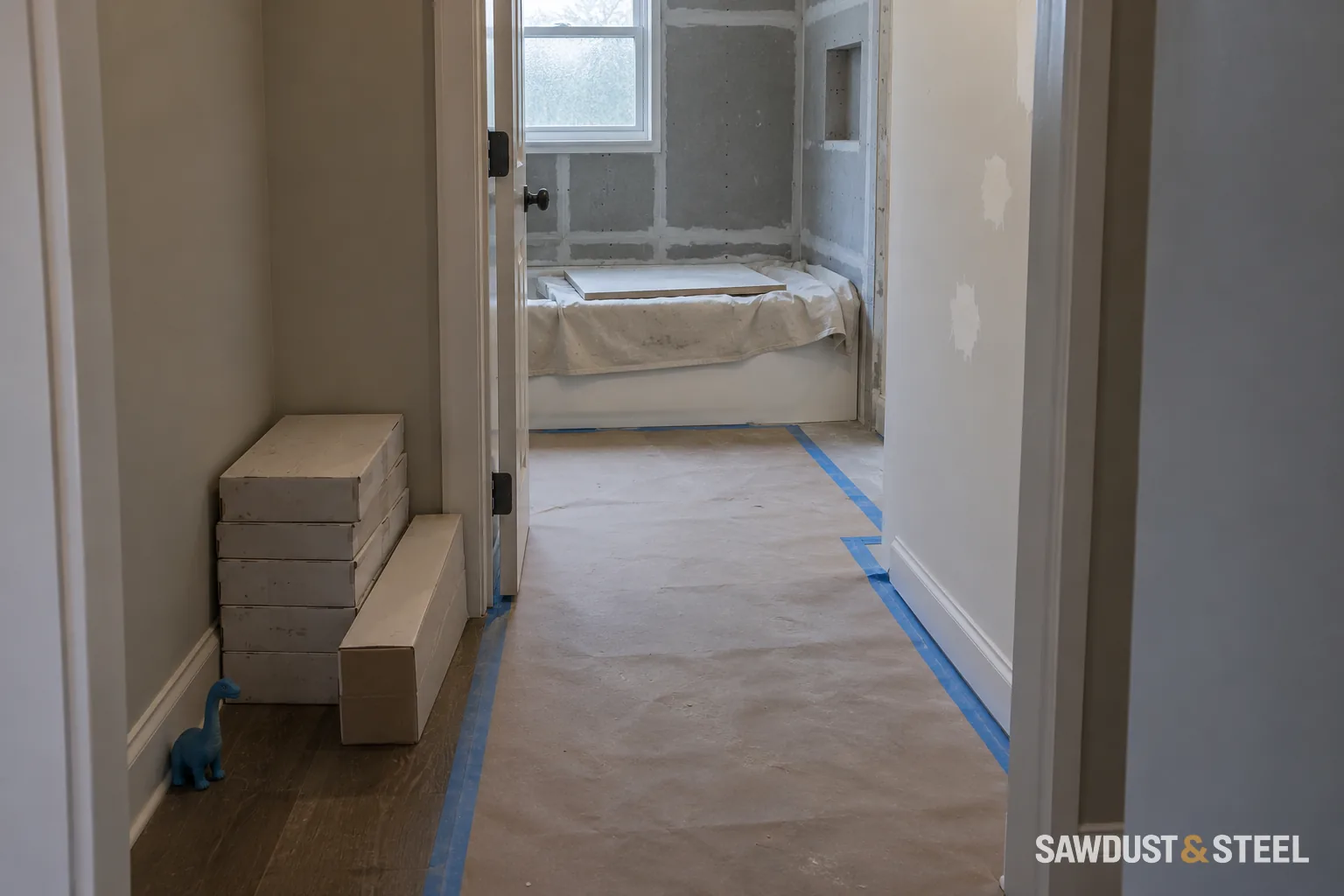
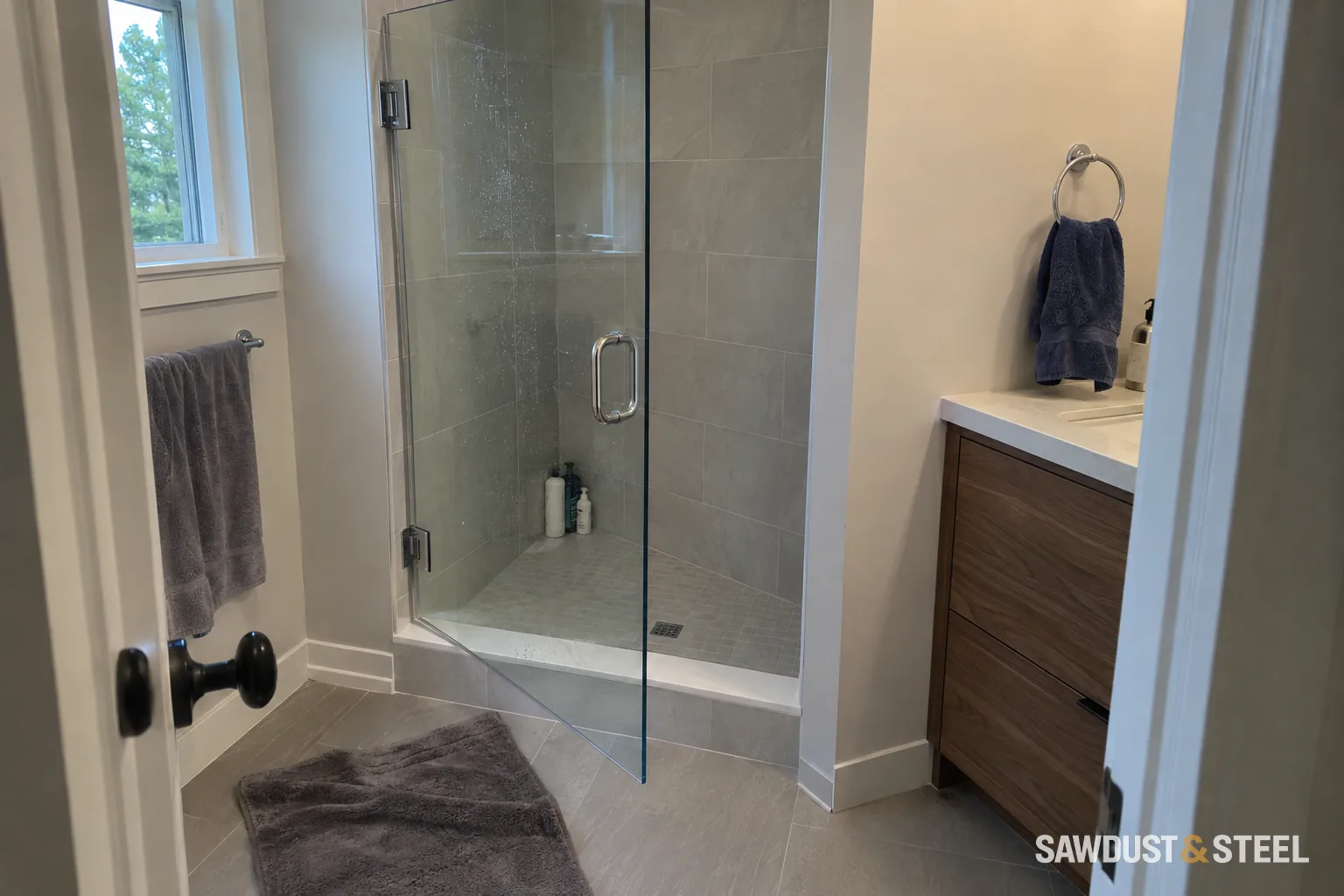
You can spend an evening choosing shower tile and barely a minute discussing what keeps the water inside it. Reverse that order for a moment. KERDI, RedGard and hot mop solve the waterproofing job in different ways; the useful comparison is how each proposed assembly joins the floor, walls, corners and drain. Ask to see those connections before the tile makes them disappear.
What is the practical difference between the three systems?
| System | Form | Useful strength | Main control point |
|---|---|---|---|
| Schluter KERDI | Factory-made sheet membrane | Uniform thickness and integrated shower components | Seams, corners, penetrations, drain connection, and approved mortar |
| RedGard | Liquid-applied membrane | Fits irregular surfaces and can form a listed shower-pan liner | Substrate preparation, coverage, thickness, drying, and every transition |
| Hot mop | Specialist asphalt-and-felt pan | Traditional custom pan method where accepted and properly detailed | Qualified installer, pan and drain detail, ventilation, and a separate wall-waterproofing plan |
Walls and niches
Include seams, inside corners and every niche return.
Pipe openings
Match the seal to the valve, shower arm and selected system.
Wall meets floor
Connect the wall waterproofing to the pan around the perimeter.
Drain connection
Identify the exact membrane-to-drain detail before installation.
Shower entrance
Resolve the curb or curbless transition and glass fixings.
Connection map only. Layer order, slope, overlaps and test timing come from the selected assembly instructions. A hot-mop pan still needs a coordinated wall system.
What does KERDI actually provide?
Schluter's current KERDI product page describes an 8-mil-thick sheet membrane with a modified polyethylene core and fleece on both sides. The fleece anchors into thin-set mortar, and compatible drains, bands, corners, and collars can make one connected shower assembly.
Factory thickness removes one application variable. The substrate must be suitable, the mortar must match the substrate and current Schluter instructions, and every seam, corner, penetration, niche, and drain connection still needs the specified treatment. Check the treatment around every pipe penetration too. We run through that list with the valve and shower arm locations marked before tiling. On one shower, a revised arm position landed outside the original penetration detail. It was a small change in the room and a necessary waterproofing revision behind it. Photographing the completed repair before tile was more useful than photographing another unopened membrane roll.
Keep the adhesive choice on that same product list. Our premixed adhesive and shower tile guide explains why a convenient tub is not enough to establish compatibility with the membrane.
When does RedGard make sense?
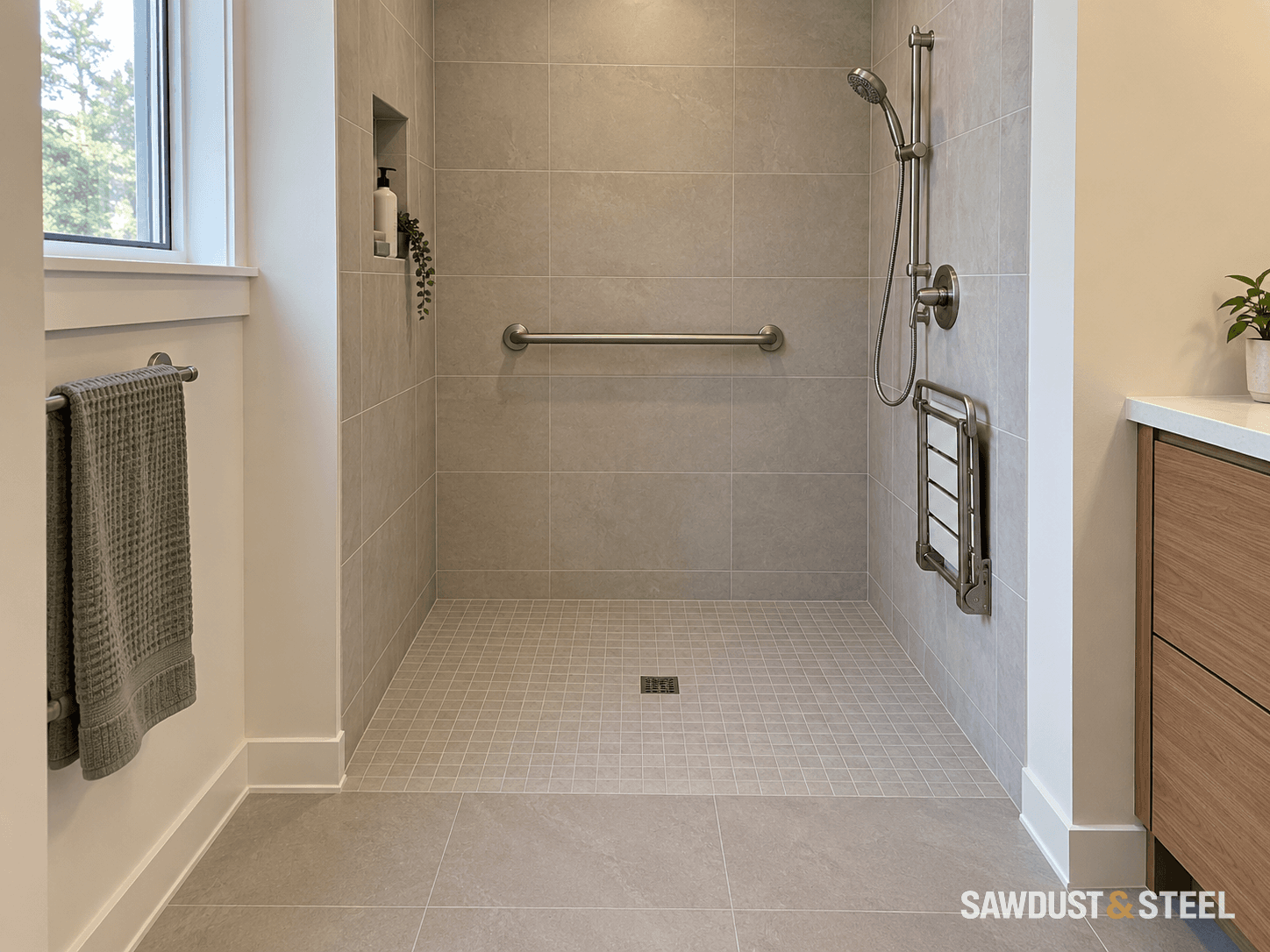
RedGard is a ready-to-use liquid waterproofing and crack-prevention membrane. Custom Building Products lists it for interior and exterior tile applications and as an IAPMO-listed shower-pan liner. Its current product page and technical data sheet set different coverage requirements for waterproofing, crack isolation, and shower-pan use.
That distinction matters. Liquid membrane thickness is created on site, so the installer must follow the current data sheet for preparation, reinforcement, coverage, drying, and testing. Verify the specified coverage and thickness rather than judging by colour.
RedGard can be a sensible choice for a compatible, fully detailed assembly, including irregular shapes where a liquid product is convenient. It should not be treated as a cheap substitute for missing design. The selected drain, substrate, joints, and wet-area limits still have to work with the product instructions.
Where does hot mop fit in an Ontario bathroom?
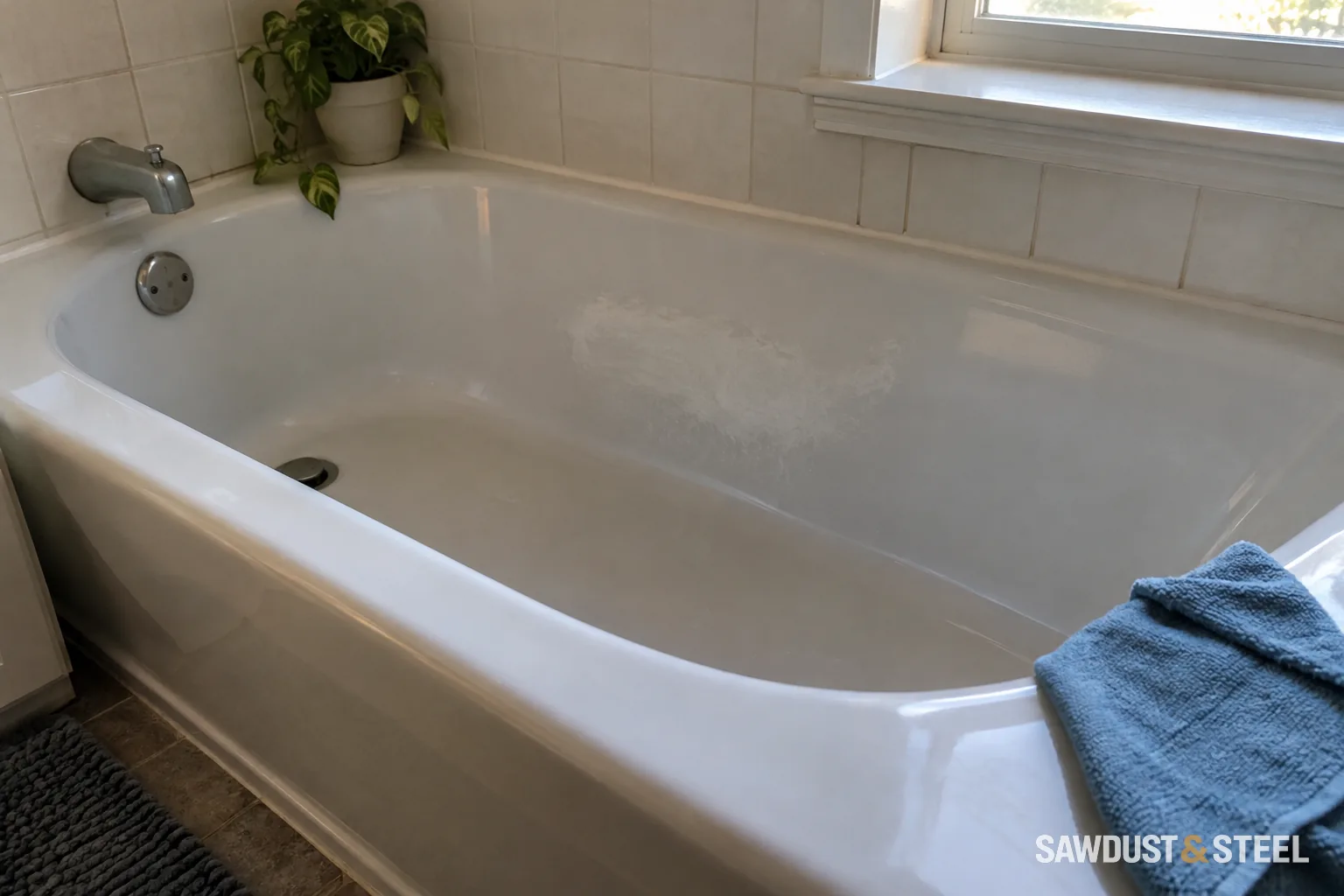
Hot mop uses layers of hot asphalt and reinforcing felt to form a shower pan. For a concrete method example, South Coast Specialty Systems describes its hot-mopped pans as layered felt and asphalt over a pre-sloped base, with reinforced corners and the backing and drain prepared first. That is a California specialist's method description, not an Ontario approval. Heat, fumes, substrate, curb, drain, and flood-test details still need to be planned as a complete assembly. It also addresses the pan, not every wet wall by itself.
Do not assume that a traditional method is automatically accepted for every project, or that a product brochure approves a mixed assembly. Ask the designer, municipality, and installer to identify the exact pan, drain, wall system, inspection sequence, and supporting documentation.
What should a homeowner ask before choosing?
Ask for the named system and current installation document. Ask which components come from that system, which approved alternatives are proposed, who owns the drain and transition details, when the assembly will be inspected or tested, and what photographs and warranty documents will be handed over. Ask to see how the proposed method matches those instructions.
What actually makes waterproofing fail?
The vulnerable places are usually changes and interruptions: drain connections, wall-to-floor transitions, corners, niches, benches, fasteners, pipe penetrations, and the boundary between wet and dry areas. Movement, poor substrate preparation, incomplete coverage, incompatible products, and rushed testing can defeat an otherwise reputable system.
Adding steam changes the enclosure decision, including the ceiling and vapour-control details. Work through the ordinary-shower-to-steam conversion plan before assuming the existing waterproofing can stay.
The best choice is therefore the complete system that suits the shower and can be installed, checked, and documented correctly. KERDI offers uniform sheet thickness. RedGard offers liquid-applied flexibility. Hot mop remains a specialist pan option. Check the work before the tile covers it.
What should you photograph and check before tile?
Arrange this review before the tile delivery becomes the day's main event. Keep a wide photo of each wall and the pan, then close-ups of the five connections above. Photos preserve what was visible; the installation and test records explain how it was checked.
- Name the assembly. Save the product names, drain model and installation document used. A bucket or roll in the photo does not identify all the components.
- Check the connections. Ask the installer to show the completed seams, corners, niche, pipe openings, wall-to-pan junction and entrance against the selected detail. Photograph repairs and any changes made after the first inspection.
- Record application checks. For sheet membrane, record the specified seam and connection treatment. For liquid membrane, retain the coverage and thickness checks required by that product for the intended use. Colour alone is not a measurement.
- Keep the water-test record. Record the date, duration, starting and finishing water levels, result and any repair/retest. Confirm the product's required drying or curing period and the applicable inspection sequence before testing or tiling.
- Plan later fixings. Agree how glass, seats and accessories will be secured without leaving untreated holes through the waterproofing. Save the final photos with the warranty paperwork.
Use the manufacturer's procedure for the actual product: Schluter explains its shower water test, while CUSTOM's current RedGard data sheet covers RedGard application and testing. Their timing and details are not interchangeable. This checklist helps you organize the review; required municipal inspections remain part of the project's approval process.
Planning a level entrance? Read the curbless shower guide next for the floor, drain and access decisions that affect this assembly. If the room stays damp after showers, the bathroom fan and venting guide covers a separate part of the moisture problem.