
"How long will it take?" usually means "How long will I be washing mugs somewhere ridiculous?" Separate the time without a working kitchen from the design and ordering beforehand. You need both dates on the schedule, plus the deliveries and inspections that can move them.
Think of two connected stages: getting ready and working in the house. Replacing cabinets in the same layout is a different job from moving plumbing or removing a wall. Ask for dates based on your agreed layout, actual product availability, and required approvals. A calendar borrowed from a different kitchen is mostly decoration.
What does a realistic kitchen schedule include?
| Phase | What must happen | What commonly holds it up |
|---|---|---|
| Design and approvals | Measure, confirm layout, select appliances, identify structural and service changes | Late layout changes, incomplete drawings, missing municipal or trade approvals |
| Ordering | Release cabinets, fixtures, appliances, tile, flooring, and hardware | Back orders, damaged parts, dimensions changed after ordering |
| Open-wall work | Demolition, framing, plumbing, HVAC, electrical, required reviews | Hidden damage, old services, or work concealed before review |
| Close and finish | Drywall, flooring, cabinets, counter template, backsplash, trim, commissioning | Counter fabrication, missing panels, incomplete selections, punch-list parts |
What must be decided before demolition?
Lock the parts that affect rough-ins first: cabinet plan, sink and dishwasher locations, range type, hood route, refrigerator dimensions, lighting plan, flooring transitions, and any wall or opening change. Cabinet drawings and appliance specifications should agree with each other before anyone opens a wall.
- Confirm the final plan against measurements taken in the actual room.
- Choose appliance models early enough to coordinate power, gas, water, ventilation, and clearances.
- Identify long-lead or special-order items and name an acceptable substitute before ordering.
- Write down who applies for each approval, who books each review, and what must remain visible.
- Do not schedule demolition around an optimistic delivery email. Schedule it around confirmed readiness.
If delivery comes before the room is ready, agree on suitable cabinet storage and an arrival inspection. A space in the garage is not automatically the right environment.
Which approvals can affect a GTA kitchen timeline?
Approval is not one bucket. As a current Toronto example, the city lists cabinetry and millwork as work that does not require a building permit, while structural or material alterations and changes to plumbing or heating systems can require one. Check the actual municipality and scope using its current guidance. Toronto's building-permit list is a useful example, not a substitute for Oakville, Burlington, Mississauga, or another local authority.
Electrical work has its own lane. The Electrical Safety Authority says almost all electrical work requires an ESA notification, and hired electrical work must be performed through a Licensed Electrical Contractor. A municipal building permit does not replace that notification. Gas work is separate again and belongs with a business verified in TSSA's fuels-contractor registry.
What happens after the old kitchen comes out?
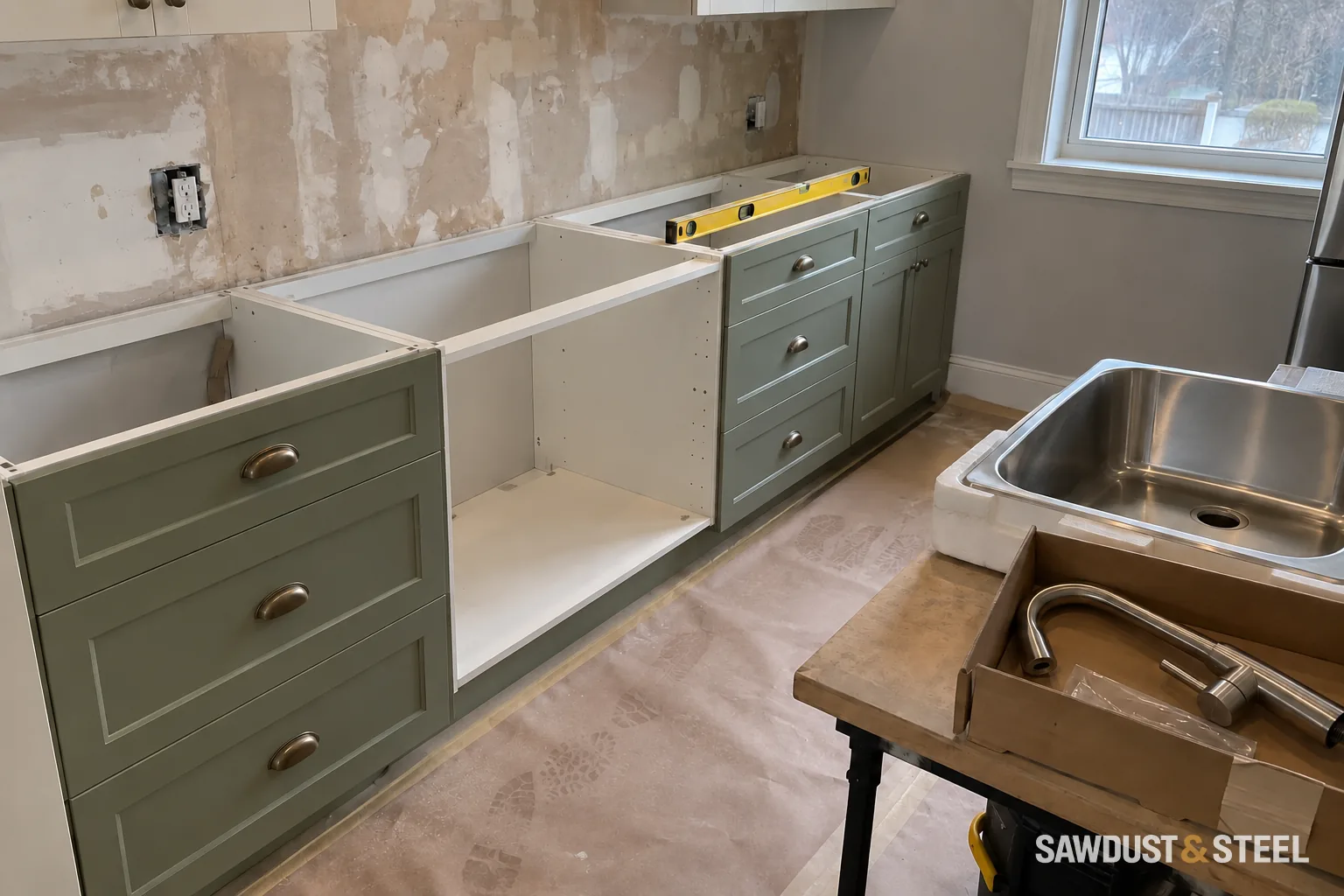
With the old kitchen out, we check the room against the drawings before the next trades settle in. On a same-layout job, the wall behind the sink was bowed enough that the new cabinet run needed more fitting than the survey had suggested. We photographed it, agreed the correction and checked the end panel position before proceeding. That mattered to the counter measurement, not just the wall finish. Framing, damaged material and hidden services need the same pause: agree any change before it disappears behind the new kitchen.
The usual order is rough framing and services, required reviews, insulation or wall repairs, drywall, flooring where applicable, cabinets, counter measurement, counters, backsplash, fixtures, appliances, trim, adjustments, and closeout. Some tasks overlap; some absolutely should not. Countertops, for example, are normally measured against installed and level cabinets rather than drawings alone.
Where do kitchen schedules usually slip?
- The layout changes after cabinets or appliances are ordered.
- A structural, plumbing, electrical, HVAC, or gas question is discovered after demolition instead of during planning.
- A missing cabinet panel or damaged appliance is noticed on installation day.
- The counter fabricator cannot measure because the cabinets are incomplete or not level.
- An allowance remains undecided until the trade needs the product in hand.
- The schedule has no owner for approvals, inspections, deliveries, or deficiency parts.
Ask for two finish milestones: a safely usable kitchen and a fully closed-out job. A sink connection, appliance commissioning and required approvals matter differently from a backordered handle, even though all belong on the list. On our weekly look-ahead, we name the next decision, who owns it and the day it is needed. That gives you something to act on besides refreshing a delivery tracker. Pair the schedule with living through a kitchen renovation and the GTA kitchen cost-planning guide.
Put a sink-out date on the schedule
Here are two planning examples to discuss with a contractor, not measured GTA averages or completion promises. In a same-layout cabinet replacement with all major items on hand, no concealed repairs, booked trades and a confirmed counter appointment, a three-to-five-week site window might allocate week one to removal and room preparation, week two to cabinets and template, and the remaining time to fabrication, counters, connections and finishes. If the sink comes out on day one and reconnects in week four, plan roughly three to four weeks without that sink, even if the final handle arrives later.
A layout change with a structural opening and relocated services needs a different draft calendar. A six-to-ten-week site planning window could allow the first two to three weeks for opening, structural/service work and reviews, then enclosure, cabinets, counters and reconnection. Under those assumptions, the old sink might be unavailable for four to eight weeks. Neither example includes design, ordering or permit lead time before demolition; hidden conditions or an unconfirmed fabrication slot can extend both.
Replace every assumed duration with the actual trade or supplier commitment before booking demolition. Ask whether a temporary sink is feasible and who installs and removes it. Mark the earliest safe reconnection date separately from cosmetic completion, and identify the single delayed item that could move it. The point of the example is to expose dependencies, not to make a calendar look reassuring.
| Milestone | Evidence needed before it is promised |
|---|---|
| Demolition | Scope approved; materials and trade dates confirmed |
| Cabinets ready for template | Installed, aligned, complete and accepted by fabricator |
| Sink back in service | Counter and sink installed; plumbing trade booked; required checks complete |
| Kitchen usable | Appliances commissioned and outstanding work safe to live around |
| Closeout | Deficiencies and required records complete |