
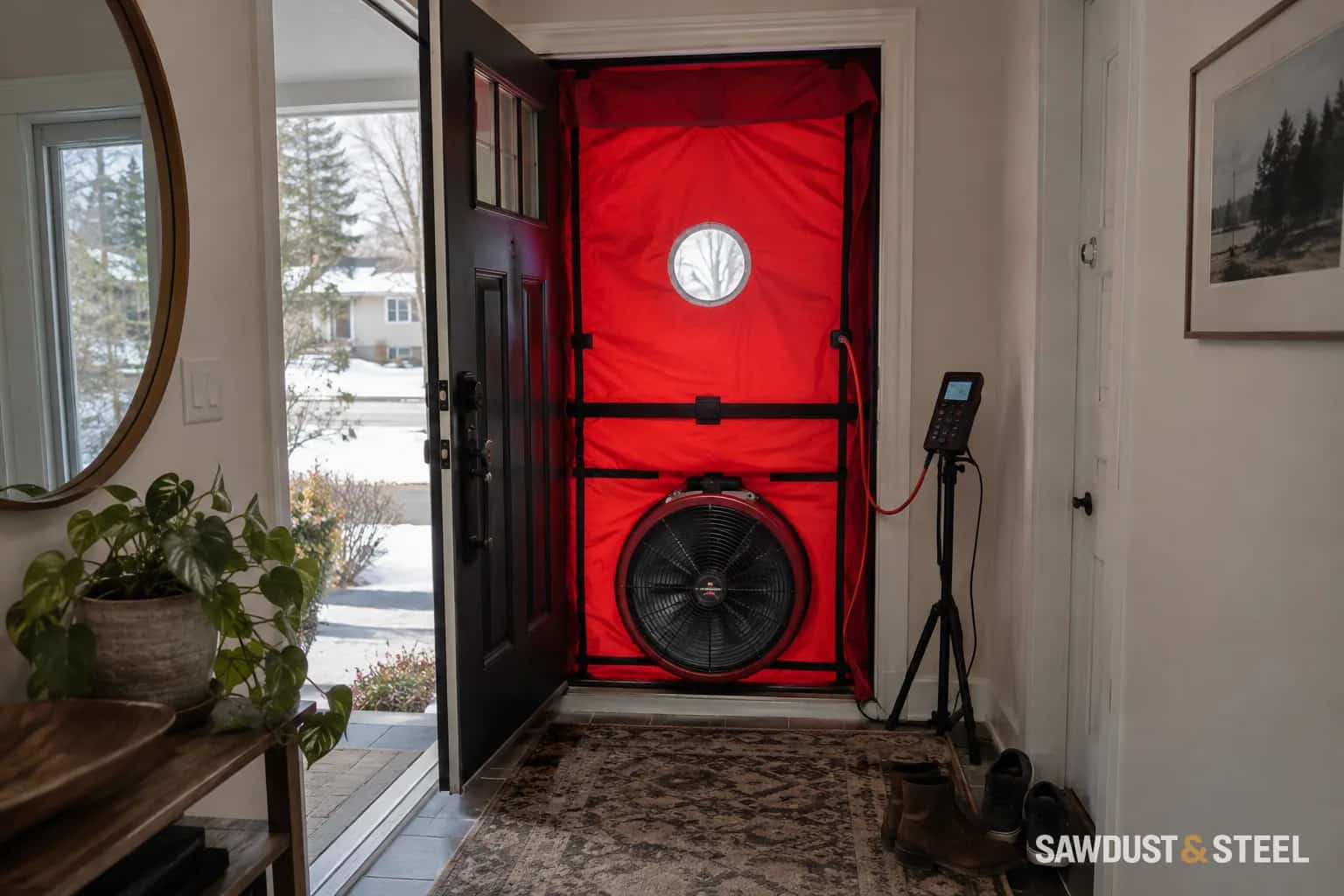
The window feels cold, the upstairs room never quite settles down, and two contractors have suggested two expensive answers. Before choosing new windows or more insulation, it can be worth buying a better explanation. The name of the test matters less than whether its findings resolve your actual complaint.
Know what each tool can tell you
| Assessment | Useful evidence | What it does not establish alone |
|---|---|---|
| Blower door | Air leakage measured with a controlled indoor-outdoor pressure difference. | The correct repair material or a diagnosis of every uncomfortable room. |
| Thermal imaging | Surface-temperature patterns that may warrant closer investigation. | A direct picture of moisture, hidden mould or insulation thickness. |
| Broader home energy evaluation | Envelope and equipment observations combined with an energy model and recommendations. | A guarantee that every proposed upgrade will solve one specific comfort complaint. |
NRCan's air-leakage guidance describes infrared scanning with a blower door as useful for finding leakage and missing insulation. Temperature patterns are clues: weather, sun exposure and operating conditions affect what an image reveals. Ask the assessor whether conditions will support the particular investigation you want.
FLIR's explanation of thermal imaging makes the limitation clear: the camera reads surface patterns rather than seeing through the wall. A pattern may justify another check, but it should not be presented as a photograph of hidden water or a direct view of the wall cavity.
Bring a complaint map rather than a proposed cure
Sketch the house and mark where and when discomfort occurs. Write down wind direction if the draft seems wind-related, whether the problem changes with a bedroom door, and whether it appeared after renovation. Include photos of persistent condensation or staining. Keep an existing quote in the folder, but do not make its proposed solution the only question.
For instance, a cold feeling beside glass may involve surface temperature rather than an air leak. The drafty-window versus cold-glass guide helps describe that distinction. A bedroom that changes temperature with its door shut may also need distribution measurements. A whole-house leakage result does not answer that room-level question by itself.
Ask these questions before booking
- Is this a blower-door test only, or a broader assessment with an energy model and recommendations?
- Is thermal imaging included when conditions permit, and what happens if the weather is unsuitable?
- Will someone identify and photograph important leakage locations, or will the deliverable contain only a total leakage result?
- Will the report distinguish observed conditions from suspected concealed defects?
- Can the findings be used to compare repair quotes from other contractors?
- What preparation is needed, and are renovation work or combustion appliances relevant to test scheduling?
NRCan's EnerGuide evaluation description explains the role of a registered energy advisor and the collection of airtightness, insulation, window, equipment and ventilation information. Confirm the service organization and what your appointment covers. Do not assume that a contractor's free camera visit provides the same scope.
Let the advisor manage test preparation
Clear access where requested and discuss fireplaces, fuel-fired appliances and any current construction beforehand. The blower door deliberately changes pressure, so the advisor's preparation instructions matter. Do not improvise a test with household fans or operate combustion equipment against the test instructions. If the building is partly open during renovation, ask whether it is in a suitable state to assess.
You do not need to decide in advance which wall to open. The useful homeowner contribution is access, a clear history and enough time to ask how a measurement relates to the problem you noticed.
Turn the report into a scope you can compare
| Ask for | Use it to |
|---|---|
| Leakage result with units and test conditions | Compare an eventual retest on a meaningful basis. |
| Annotated locations and photographs | Identify which accessible details the repair quote includes. |
| Priority and reason for each recommendation | Separate a large energy opportunity from a small comfort improvement. |
| Ventilation and moisture implications | Avoid treating air sealing as an isolated task. |
| Items needing another specialist | Keep structural, water-entry and equipment faults from disappearing into an insulation quote. |
An upgrade quote should say which observed conditions it will address and what completion can be checked. If the plan includes air sealing, ask how the home's intended ventilation will be maintained. If persistent winter wetting is the main complaint, bring the humidifier and condensation log. Good measurements help you spend in the right place; they do not remove the need to connect cause, work and result.