
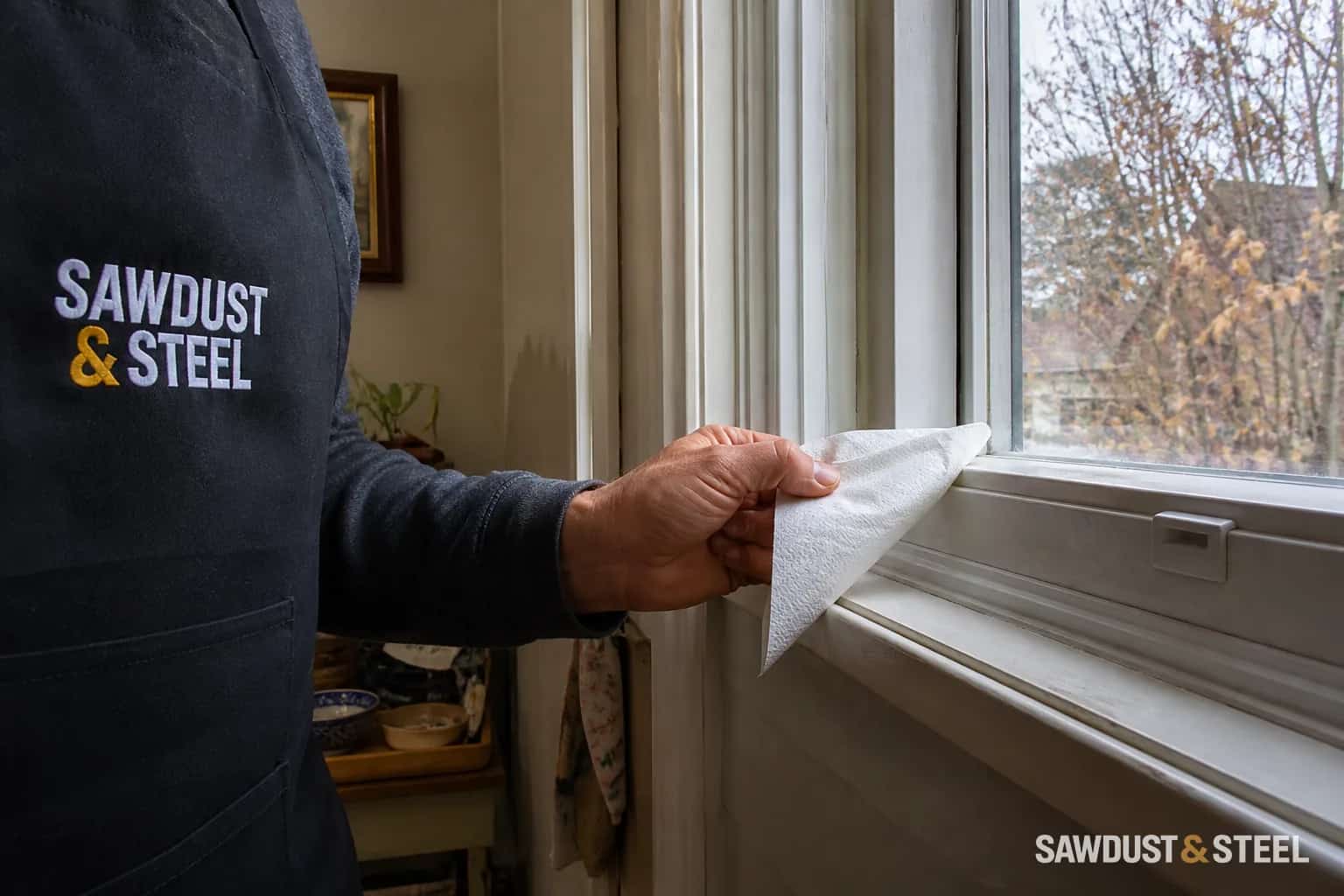
The house felt dry, so you raised the humidifier. Now the bedroom sill needs a towel every morning. It is tempting to look for the correct number and leave the dial there until spring. Unfortunately, the same setting can behave very differently on a mild November night and a sharp January cold snap.
Check which side of the window is wet
Room-side droplets you can wipe off are different from moisture trapped between sealed panes, rain entering at the frame or condensation on the outdoor surface. Record the location before changing equipment. If water follows rainfall or stays between the panes, lowering the indoor humidifier is not a diagnosis of the window problem.
For room-side wetting, note whether it affects many windows or one cold corner. A single window behind a tight blind, curtain or built-in seat may have a local airflow problem too. The curtain and condensation guide deals with that situation; a whole-house dial can be only part of the answer.
Compare the dial with a room measurement
A humidifier setting is a control target, not a survey of every room. Use a separate hygrometer in a representative occupied location, away from the humidifier plume, an exterior wall or a supply outlet. Record temperature as well as relative humidity. If two meters disagree substantially in the same location, check their instructions and accuracy before making small adjustments on the strength of one display.
NRCan's operating guidance shows that condensation limits vary with outdoor temperature and glazing type. Its table assumes a particular indoor temperature. That is why a single outdoor-temperature chart copied onto every humidifier is not a guarantee for your actual windows.
Health Canada's moisture guide gives general indoor humidity guidance while emphasizing moisture control. Do not use a general range as a reason to keep adding water when cold surfaces remain wet. Nor should a condensation-control setting be treated as medical advice for someone's symptoms.
Use a cold-snap log, not a competition for the highest setting
| Record | Example of a useful note |
|---|---|
| Outdoor conditions | Colder overnight than the previous two days; windy on the west wall. |
| Room conditions | Temperature and humidity from the same meter and position. |
| Equipment setting | Humidifier level or automatic mode before and after one adjustment. |
| Moisture pattern | Several sills wet, one corner damp, or no persistent droplets. |
| Other activity | Laundry rack, long shower, cooking or unusually high occupancy. |
- Dry the accessible wet sill and note the extent of recurring moisture.
- Reduce unnecessary added humidity using the equipment's ordinary controls and instructions. Change one setting at a time.
- Use the intended kitchen and bathroom exhaust during moisture-producing activities.
- Keep ordinary room airflow around the window available without blocking registers or altering required doors.
- Compare the next observations with weather and activity recorded alongside them.
If the humidifier has automatic outdoor-temperature compensation, check that it is installed and set up as intended rather than bypassing its control to reach a preferred number. For a portable unit, follow its cleaning and water instructions. This is an adjustment routine, not a procedure for modifying a furnace-mounted humidifier.
Look for moisture sources that changed
A house that suddenly needs less added humidity may have more people at home, more cooking, or a new indoor laundry-drying routine. Air-sealing work can also change how the building behaves. Keep those changes in the log rather than assuming the glass has deteriorated on the same day.
If the house has an HRV, understand which control adds moisture and which calls for ventilation. Turning both dials in pursuit of the same percentage can produce confusing results. The HRV control guide explains the equipment distinction and why seasonal operation matters.
Escalate persistent wetting with evidence
Recurring frost, damaged trim, visible growth or a room that stays unusually damp calls for investigation. Bring the log and photographs to the appropriate window, ventilation or building-envelope professional. Ask whether the next useful measurement is surface temperature, ventilation performance or an energy assessment. Replacing a window or adding insulation without separating the moisture source from the cold surface can leave the same complaint in a more expensive room.