
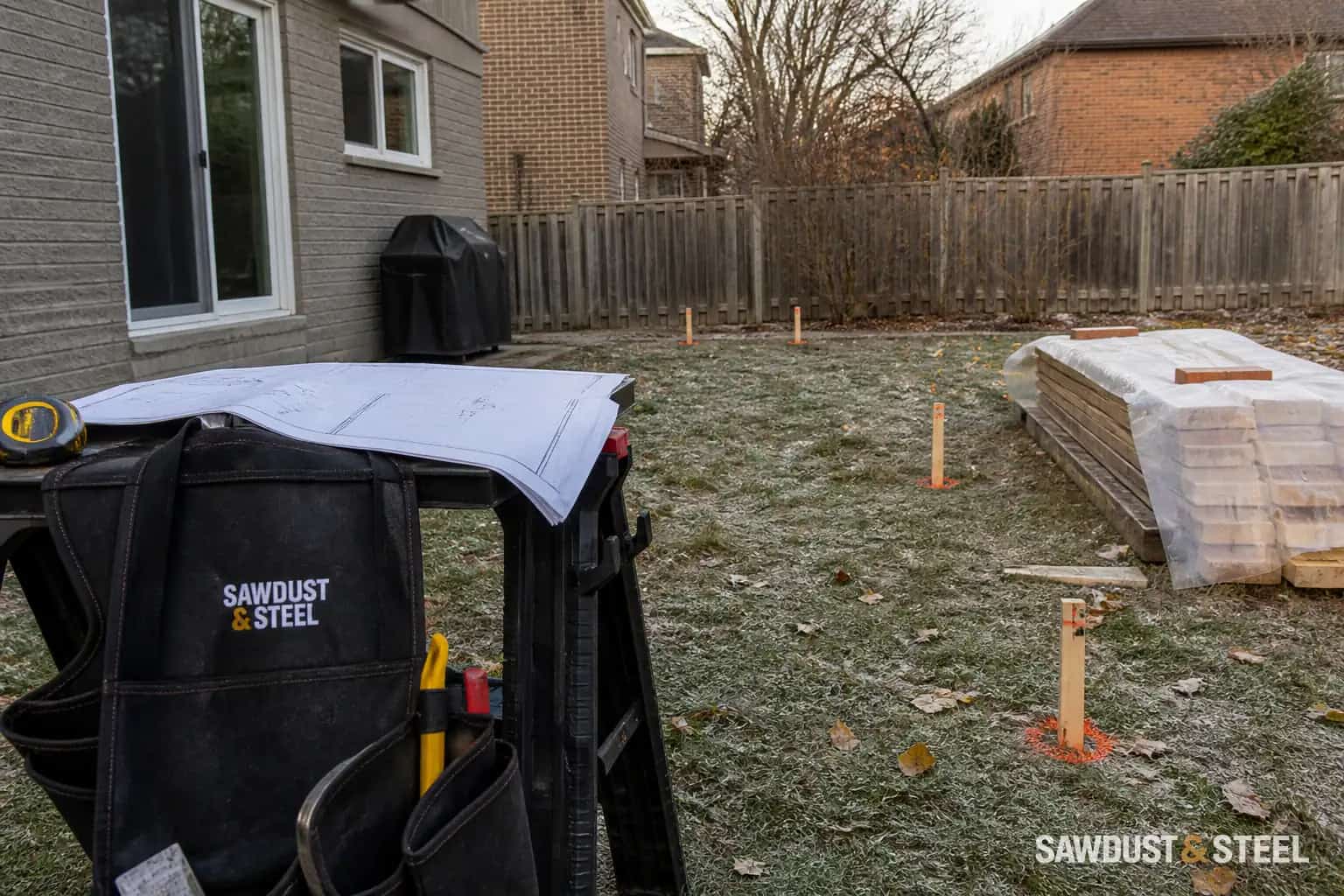
On a late-fall deck in Burlington, we finished the frame while the owner was putting the patio cushions away. The finish coat waited for spring. That split worked because it was agreed before we started, with a return visit in the scope. A November start can buy you a usable deck for the first warm weekend, provided the schedule includes the less photogenic work: keeping access clear, protecting materials and knowing when to stop.
When does a cold-weather build make sense?
| Site condition | Build now? | Why |
|---|---|---|
| Permit, drawings, and footing design are ready | Possibly | The work can follow an accepted plan instead of racing the freeze |
| Frozen access or unknown buried services | Pause | Excavation and safe equipment access are unresolved |
| Concrete protection plan is documented | Possibly | Cold-weather placement and curing can follow the project specification |
| Material limits or inspection dates are unknown | Pause | The installation limits and review dates are not yet confirmed |
Start with the same approvals as a warm-weather deck. Toronto's deck and porch guide illustrates the drawings and zoning questions a municipality may require. Your municipality and the exact design control the application.
What changes when the ground is cold?
Footing depth, type, spacing, load, soil, and frost protection belong to the accepted design. Excavating frozen ground can be slower and can disturb the bearing surface. Cast concrete needs a cold-weather placement and curing plan that follows the specification and supplier guidance; protection may be needed after the working day ends. Helical piles may avoid some concrete scheduling, but they still require project-specific design, installation records, and municipal acceptance. See the footing comparison for the tradeoffs.
Do deck boards care about temperature?
Yes. Wood moisture, frozen surfaces, vinyl or composite movement, board handling, fastener systems, sealants, and coatings all have product-specific limits. Store materials as the manufacturer directs and use its current gap, fastening, and temperature instructions. Allow handling and installation time for cold or icy materials.
Finishing can be split from structure. It may make sense to complete accepted footings and framing in suitable conditions, then wait for a warmer, dry window for the coating. On the Burlington job, the shaded boards beside the house stayed damp after the sunny end had dried. We checked both rather than letting the best-looking corner speak for the whole deck. The contract should identify the unfinished items, who checks readiness and how the return visit gets booked.
Is a winter discount worth it?
A quieter calendar can help scheduling, but cold-weather protection, snow clearing, shorter daylight, access work, and return visits can add cost. Compare scope, not just the total. Ask which weather days are allowed, who pays for protection, how delays work, and whether final coatings or landscaping are deferred.