
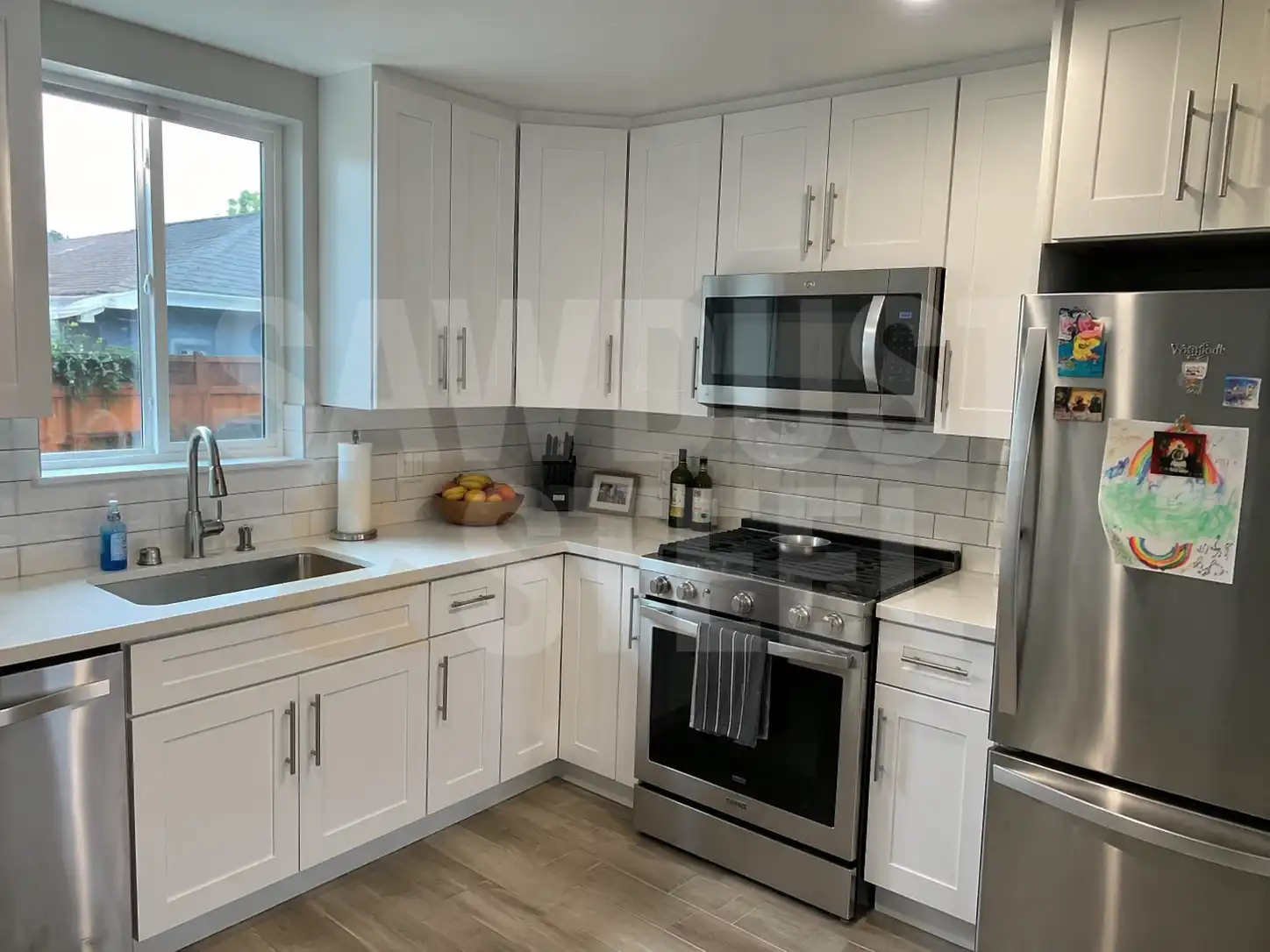
You can picture the new cabinet doors already. But will you still have to unload three saucepans to reach the frying pan? Refacing can make a tired kitchen feel good again when the boxes and layout work. It cannot move the dishwasher out of the walkway. Before choosing a door colour, open the cupboards and decide which frustrations you are actually paying to fix.
What each option changes
- Door replacement keeps the boxes and usually the visible box finish, then changes doors, drawer fronts, and often hardware.
- Refacing keeps the boxes but renews exposed ends, face frames, fillers, doors, drawer fronts, and related trim as one finish system.
- Full replacement removes the boxes and can change storage, cabinet sizes, appliance locations, clearances, and the room layout.
- A hybrid may keep a sound run while replacing an island, pantry wall, or damaged sink cabinet.
The keep-or-replace test
Empty the sink cabinet rather than inspecting around the washing-up liquid. On a refacing visit, a plastic shelf liner was hiding a swollen bottom panel while the adjacent drawer units were still square and solid. We had the leak dealt with first, then priced that cabinet separately from the doors. Keeping the sound run still made sense; covering the damaged box would only have postponed the awkward part. Check mounting, shelf sag, drawer travel and whether the openings are square, then test the actual appliance doors and bins. New fronts should not leave you kneeling on the floor to reach the same saucepan.
If the main complaint is doors that rub or sit crooked, first separate hinge adjustment, cabinet alignment, and moisture movement. The repair may be smaller than a refacing project.
Price the whole interruption
A refacing quote should say whether it includes end panels, fillers, toe kicks, hinges, drawer boxes, handles, disposal, paint touch-ups, appliance removal, and adjustments. A replacement quote should also cover demolition, wall repair, electrical and plumbing changes, permits where required, counters, backsplash, flooring transitions, and trim. Our renovation quote guide shows how to compare the inclusions.
If the boxes pass and you like working in the room, refacing may give you the change you wanted without rebuilding everything. If the cupboards themselves are the frustration, see what IKEA, semi-custom, and full custom cabinets would change for you. Then check the kitchen timeline, including how long the sink will be out of action. That part rarely appears on the door sample.