
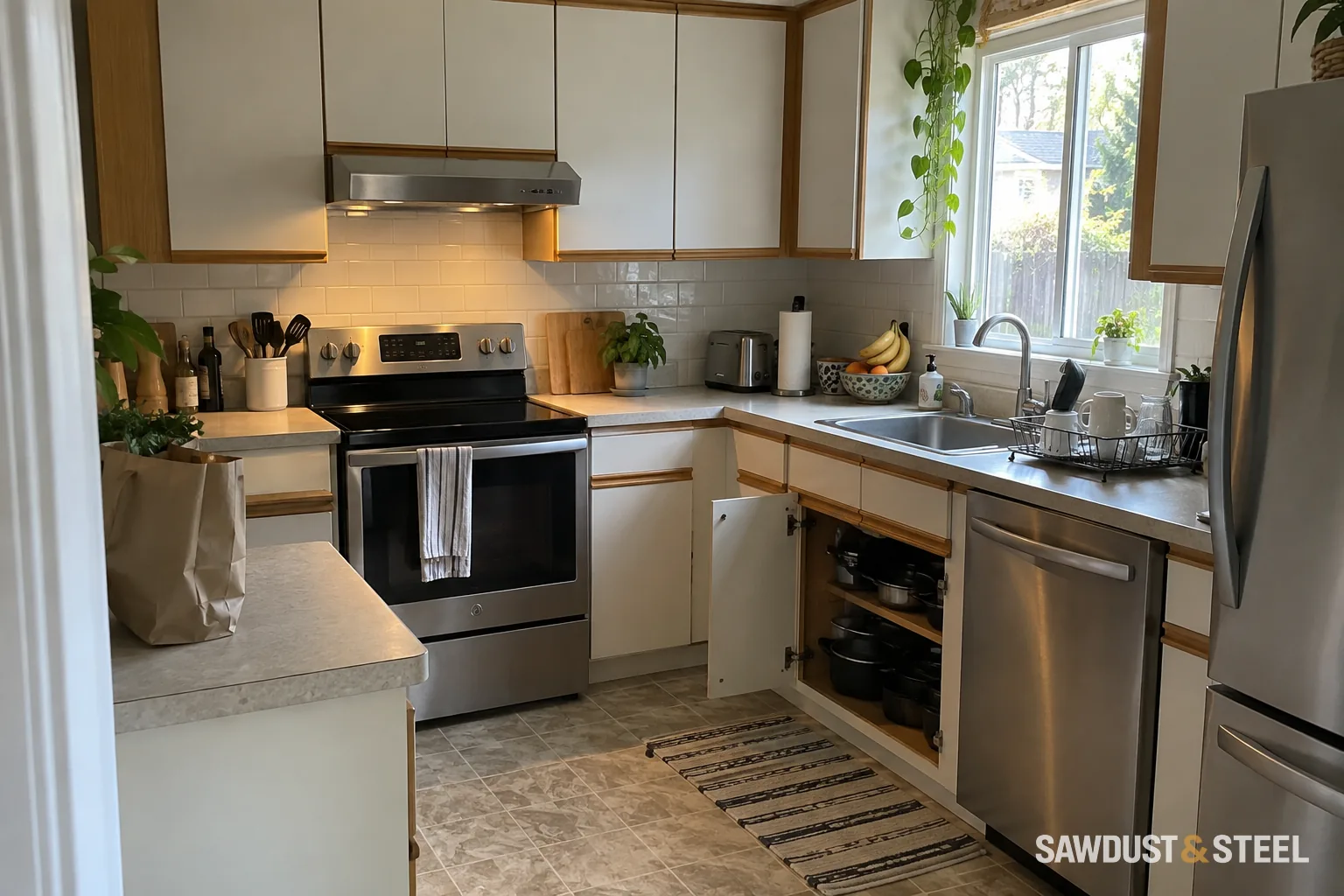
Three cabinet quotes, three very different totals, and all three promise drawers that close softly. What are you buying with the difference? Sometimes it is a finish you love or a cupboard made to fit an awkward corner. Sometimes a standard box would serve you perfectly well. Start with the room and the things that annoy you about using it; then choose the cabinet route that actually fixes them.
What is the useful difference between the three tiers?
| Cabinet route | Usually strongest when | Watch closely |
|---|---|---|
| IKEA SEKTION | The layout works with standard modules and you value replaceable system parts | Fillers, panels, anchoring, assembly, and fitting fixed sizes to imperfect walls |
| Semi-custom | You want a broader catalogue of sizes, fronts, finishes, and storage options | What is truly configurable, what remains an upcharge, and the exact warranty |
| Full custom | The room or design needs cabinets made for specific dimensions and details | Shop drawings, materials, finish samples, hardware, installation, and service after delivery |
When is IKEA SEKTION the sensible choice?
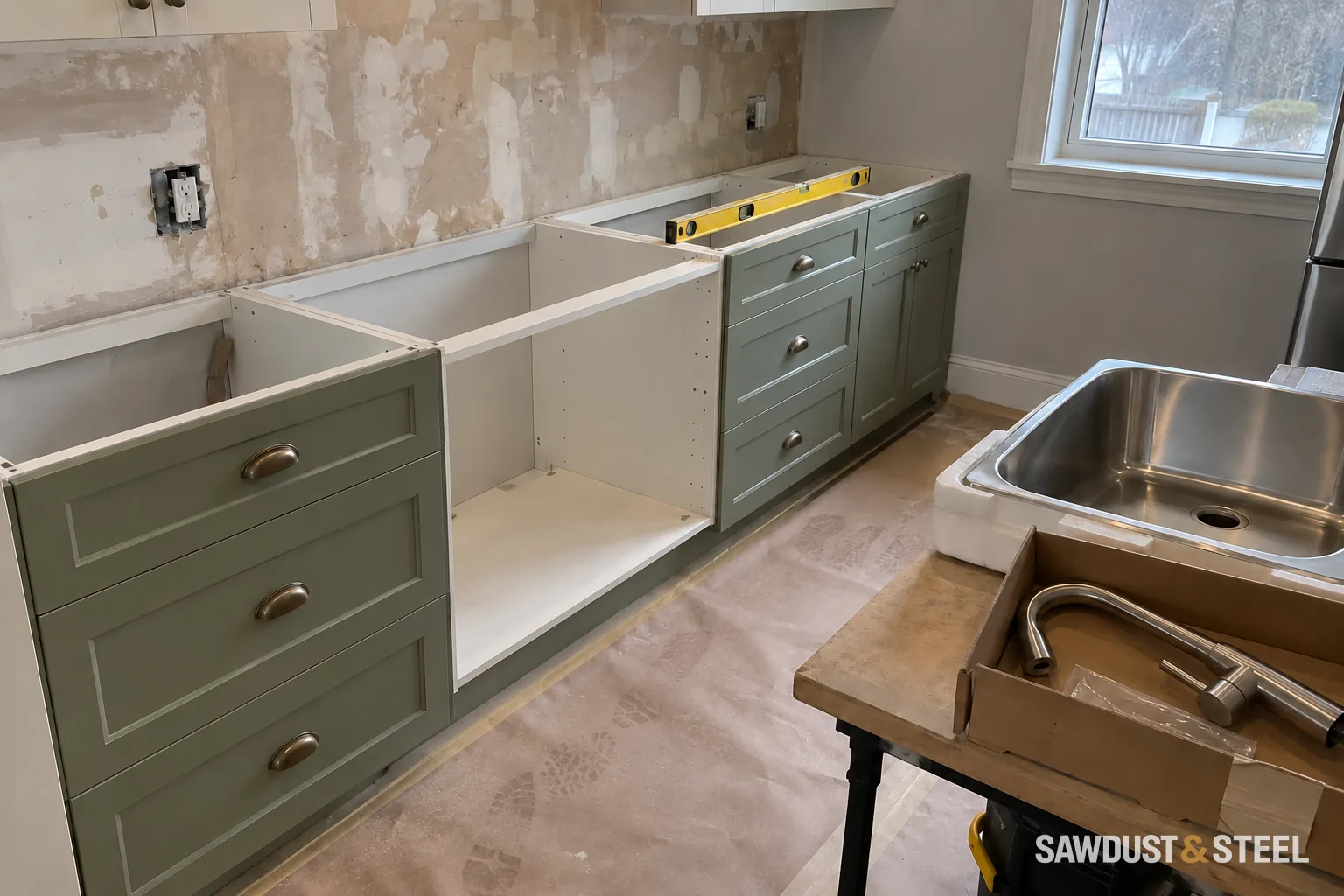
SEKTION is a standardized modular cabinet system. IKEA Canada's current product information describes a three-quarter-inch particleboard frame with melamine surfaces, installed with system components such as a suspension rail. Its 25-year limited warranty covers defects in material and workmanship for specified SEKTION components in domestic kitchen use, subject to the actual terms and proof-of-purchase requirements.
The predictable sizes are useful until an old wall takes some of the promised space back. In one modular kitchen, we checked the end of the run at floor, counter and wall-cabinet height. The wall leaned, so the filler had to be wide enough to trim to that shape without stealing the drawer's opening clearance. The client kept the standard boxes and paid for careful fitting. That was a better use of the budget than ordering every cabinet in a special width to solve one crooked corner.
- Confirm every frame, front, hinge, drawer, panel, rail, leg, toe kick, and organizer on the order.
- Measure walls at more than one height and check corners, floor level, appliance clearances, and door swings.
- Price assembly, installation, fillers, cover panels, trim, and modifications rather than comparing box prices alone.
- Use fasteners suited to the actual wall construction and follow the current installation instructions.
A compact, regular layout is friendly to a modular cabinet system. The quality still depends on measurement, panels, fillers, and installation.
What does semi-custom cabinetry add?
Semi-custom cabinetry still comes from a manufacturer's catalogue, but the catalogue normally offers more dimensions, front styles, finishes, interior accessories, and modifications than a basic modular system. That can reduce filler space and solve an island, pantry, appliance wall, or odd corner without turning the whole kitchen into a one-off commission.
The category name proves very little by itself. Ask for the exact cabinet line, box and back construction, exposed-finish material, drawer and hinge models, modification limits, replacement-part policy, finish sample, and warranty. Semi-custom can mean a useful middle ground. Check what the specific line actually allows you to change.
When does full custom earn the extra work?
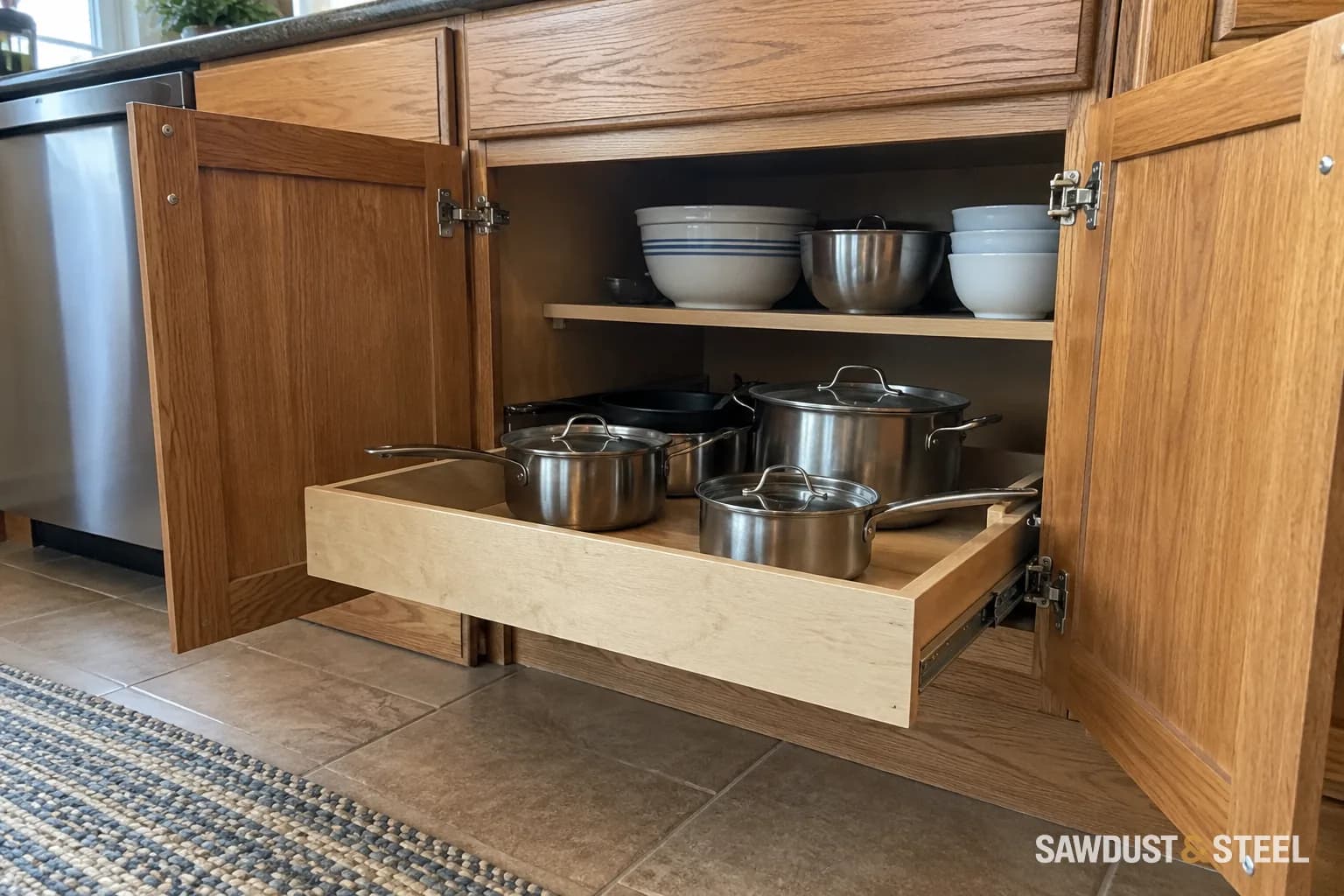
Full custom is most useful when the cabinet must fit the room instead of making the room fit a catalogue. Bowed walls, sloped floors, unusual ceiling conditions, integrated millwork, furniture-like details, highly specific storage, or a difficult appliance composition can justify it.
Custom gives you more control, and more decisions to record. Ask the shop drawing to show what happens at the wall, not just the attractive cabinet front. Who measures the final opening? Who trims the end panel on site? Who repairs a nick after installation? Specify materials, joinery, interiors, hardware, appliance panels, finish and warranty. We leave the physical door sample in the kitchen for a few days so the owners see it under their evening lights as well as daylight. A cream that looks calm at noon can look surprisingly yellow beside the lights you already own.
What should every cabinet quote include?
- A dimensioned plan and elevations tied to the actual appliance models.
- Box, back, front, exposed-panel, shelf, drawer, and finish specifications.
- Named hinge and drawer hardware, plus the included interior organizers.
- Fillers, scribes, toe kicks, cover panels, crown, light valance, and appliance panels.
- Delivery, assembly, installation, site modifications, disposal, and touch-up responsibilities.
- A written warranty for both the product and the installation.
Our practical bias is simple: use the least complicated system that gives the room a clean layout and the storage you need. Spend on good planning, correct installation, durable touch points, and the details you will notice every day. The GTA kitchen cost guide shows where cabinets affect the wider scope, and the cabinet refacing guide covers the fourth option: keeping boxes that are still worth keeping.