
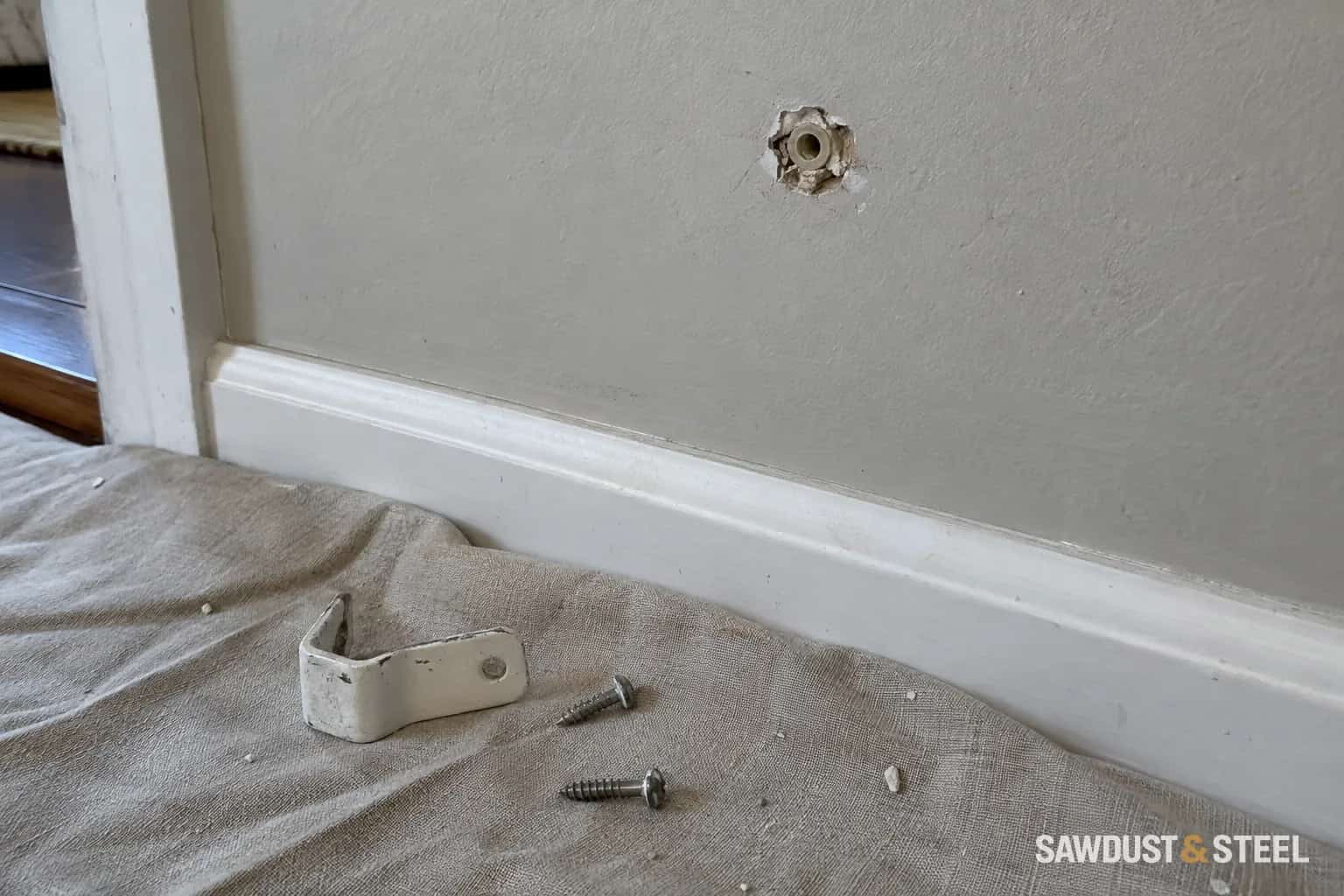
Curtain hardware gets pulled sideways every day. Add a heavy lining or a bracket extended far from the wall and a marginal attachment can start moving. The first sign is often a little crescent of dust above the bracket, well before the whole rod comes down.
Remove the load before tightening anything
Support the rod and take down the curtains safely, with help for wide or heavy assemblies. Inspect each bracket and the wall around its fixings. Check for cracked plaster, enlarged holes, a loose anchor, a bent bracket or a screw that was never properly engaged. Compare the centre support with the end brackets if the system includes one.
The IKEA VIDGA wall-bracket guidance says fixing choice depends on wall or ceiling material. That applies to selecting the attachment for the identified construction; it does not mean any anchor with a reassuring weight label will suit every curtain arrangement. Follow your rod or track manufacturer's spacing and fastening instructions.
What moves under normal use?
Attachment
Bracket pulls from wall
Assess the substrate and fixing arrangement, including existing damage.
Rod support
Rod bows between brackets
Check the rod's span, curtain load and required intermediate supports.
Hardware
Bracket bends but wall stays sound
Check product capacity and excessive projection before replacing like for like.
Shortening the reach can help the layout
Set the projection only as far out as needed to clear handles, trim and the curtain folds. Do not shorten it so much that the fabric drags on the sill or heater. If the curtains are hard to draw, fix the gliders, rings or overlapping fabric instead of allowing the daily pull to keep loading the brackets.
Weigh the complete curtain set if the hardware supplier needs a load figure, including lining and accessories. A replacement fabric can be much heavier than the old one. Check whether the rod length requires another support and whether that support interferes with the way the curtains open.
Do not guess what is behind the trim
Window headers and framing vary. Do not assume a long screw driven anywhere above the window will find timber. Establish suitable fixing locations and check for hidden services before drilling. If the wall is damaged, repair it or use a verified attachment to sound material rather than covering the failed hole with a larger decorative plate.
A mounting board can be useful if designed and attached correctly, but it has two connections to check: board to wall and bracket to board. The coat-hook backing guide explains that distinction. Decorative trim held with small finishing nails is not automatically a suitable rod support.
Check the movement, not just the level
After installation, draw the curtains gently through their normal travel and watch for movement at the brackets. Keep children from pulling or climbing on the fabric. If you cannot identify a sound attachment in fragile plaster or an unusual wall, have the installation assessed before returning a heavy curtain set to service.