
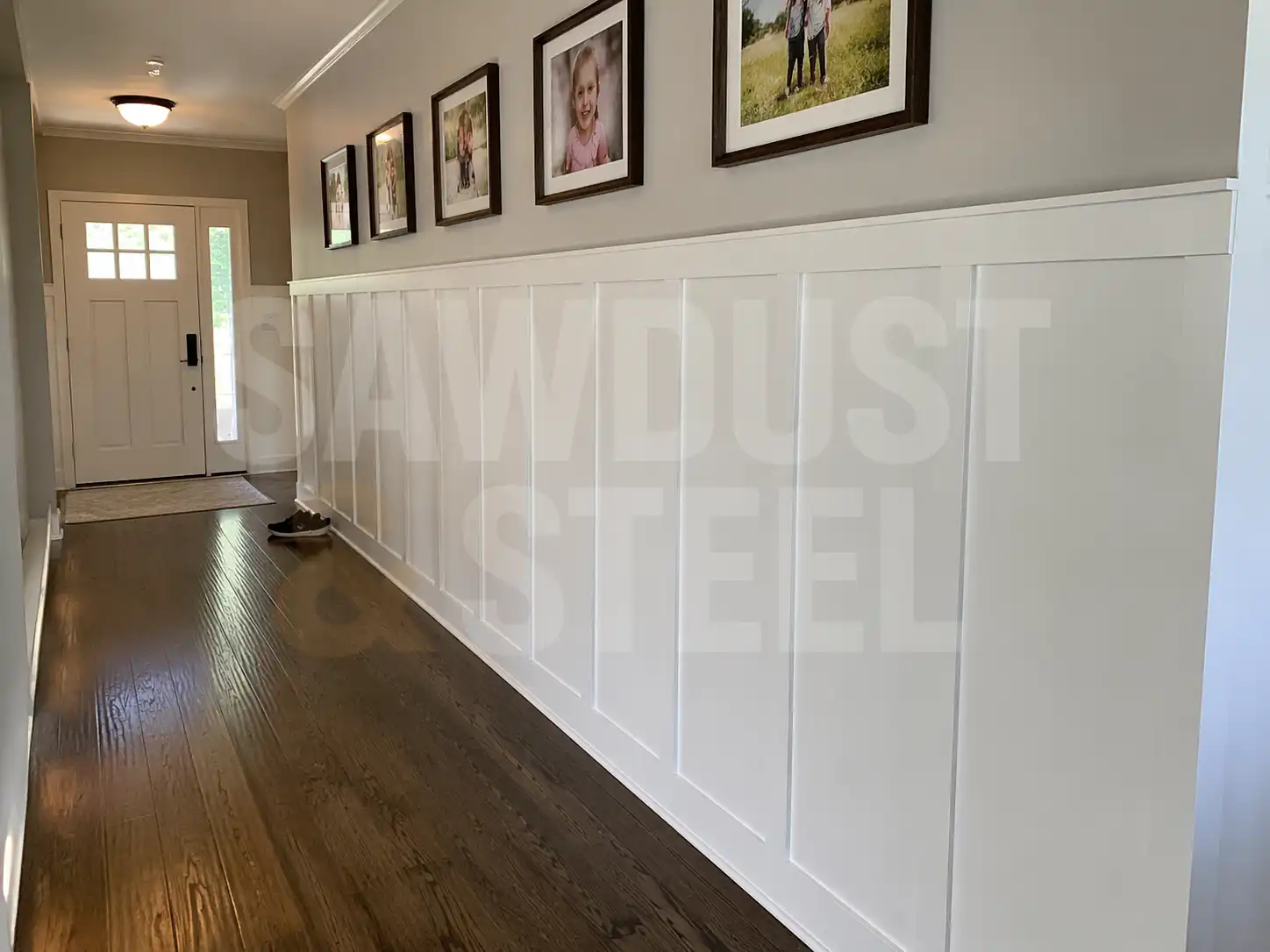
A gallery wall rarely stays exactly as planned. One photograph gets a larger frame, another moves downstairs and the neat arrangement gains a school drawing. A hanging rail is useful when that change is expected, but it has a visible look and an installation commitment of its own.
Decide how often the arrangement will change
Individual hooks or anchors let each frame sit close to the wall with no hanging cords visible above it. They suit a layout you expect to keep. A continuous rail lets compatible cords and hooks move along the run, making height and position changes easier. The rail may be deliberately visible or coordinated with the upper wall detail.
Individual wall fixings
Simple for a stable arrangement; each relocation may need a new suitable fixing and a wall repair.
Rated hanging rail
Useful for frequent changes; accept the rail and cords as part of the appearance and check all component limits.
The smallest rating can govern the picture
The Artiteq Click Rail specification describes a system with its own rail rating and mounting components. The rail's total capacity is not automatically the capacity of one cord, hook or frame attachment. Match every component and follow the installation document for the selected rail and wall construction.
Weigh the complete frame with glazing, backing and contents. Large glazed frames can be much heavier than they look. Check the frame's own hanging points too; a strong wall system does not repair loose eyes in a thin frame. For valuable or unusually heavy work, use a professional installer familiar with the wall and hanging system.
Do not assume decorative moulding is a rated rail
Older homes may have timber picture moulding intended for hooks, but its present attachment and condition still need checking. New decorative trim can resemble it without being designed to carry pictures. Inspect before using it, and do not rely on paint or caulk to judge whether it is secure.
If preparing or removing old painted trim, follow Health Canada's guidance on suspect lead coatings before disturbing it. Preserving an older wall finish can be a good reason for a carefully planned rail, but the rail itself still requires suitable fixing points. It is not a way to avoid assessing a fragile wall.
Mock up cords and sight lines
Tape paper templates of the frames to the wall and add string where the hanging cords would sit. View the arrangement from the room's usual seats and doorway. Check whether the frames tilt forward and whether lights cast distracting shadows. A rail that looks discreet above one large frame can look busier above many small ones.
Coordinate the rail with wall panelling and cap details before fixing either. Keep clear of services and identify appropriate support before drilling. If a nearby curtain bracket is already loose, do not assume the same wall anchors will be suitable for the new display.
Make future changes easy to do correctly
Keep the rail model and component instructions with spare hooks. When a frame changes, check its new weight and hanging points rather than merely shifting the old hook. A flexible display works best when its limits remain easy to find after the packaging is gone.