
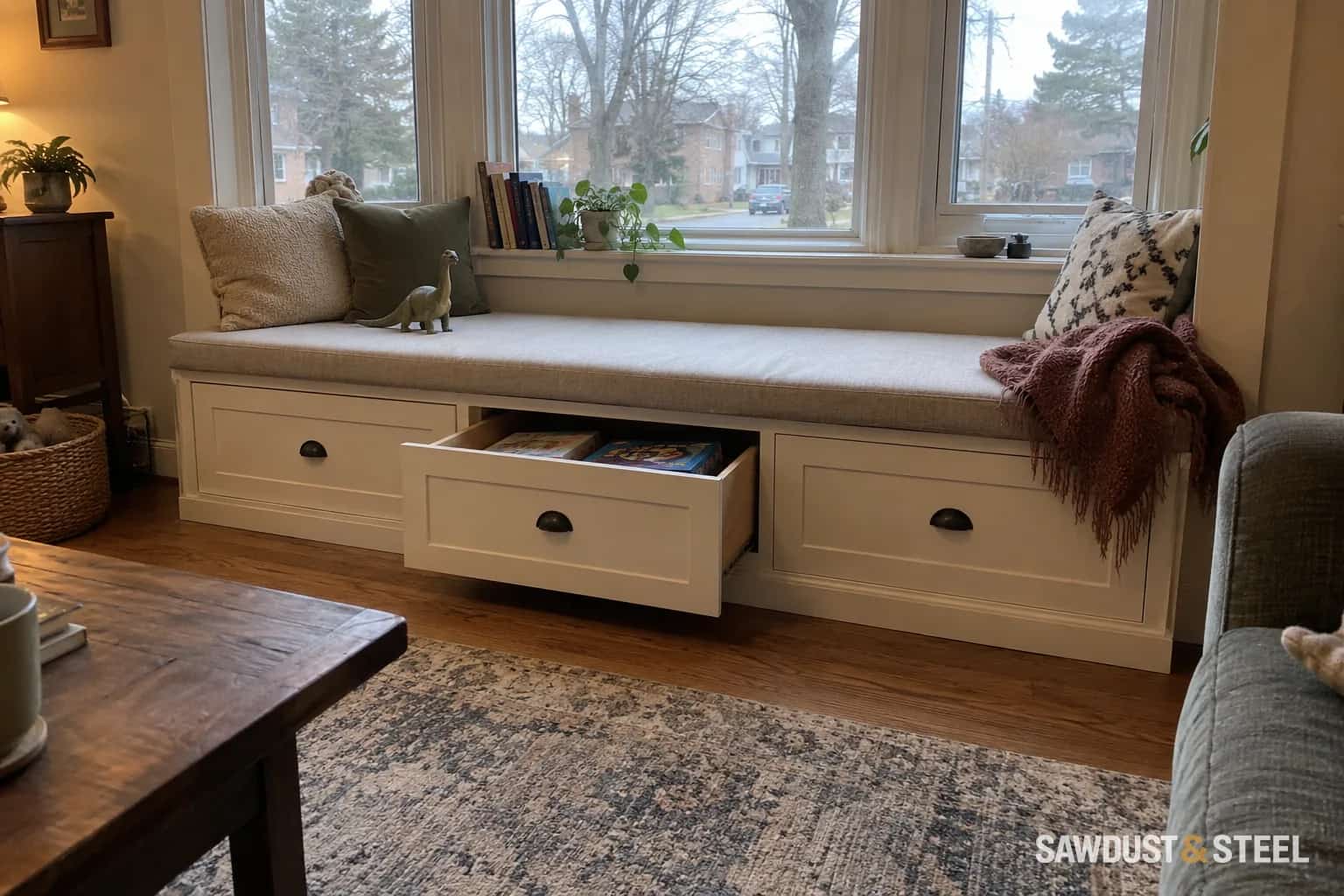
If a window began getting wetter after a seat was installed, do not immediately blame the glazing. The room may still be warm while the narrow pocket behind the cushions stays cold. A storage seat changes more than the view from the sofa.
Look at the room-side path to the glass
Natural Resources Canada explains that airflow near glass helps keep its surface warmer and that deep sills, window coverings and nearby furniture can interrupt that movement. A tight seat back or pile of cushions can create a similar obstruction. This is a possible contributor, not proof that every wet window is caused by the joinery.
Air route kept clear
Room air can reach the glass; cushions and window coverings do not seal off a cold pocket.
Glass enclosed by furnishings
A deep seat, tight curtain and cushions restrict circulation around the lower window.
Change one thing and watch the pattern
Move cushions away from the glass and open the window covering while keeping normal heating in use. Record indoor humidity and the outdoor weather alongside what you see. Compare several similar cold mornings rather than one mild afternoon. Wipe up collected water so it does not sit on the sill or behind the seat while you investigate.
Note where the water forms. Room-side droplets near a blocked lower edge are different from moisture trapped between sealed glass panes. Rain-related staining also points to a different investigation. Do not close over damp trim with new panels; you will lose the opportunity to see whether the condition returns.
Keep heaters and supply air usable
Identify any electric baseboard, radiator, supply register or return grille before designing the seat. Their clearance and service requirements come from the equipment and system, not from a generic bench plan. A few decorative holes in a board do not establish an acceptable enclosure for a heater. Have the heating arrangement reviewed if cabinetry changes its operation or access.
For an existing seat, inspect inside accessible compartments and behind removable cushions for dampness. Do not cut ventilation slots near concealed services without knowing the construction. If persistent condensation continues after obvious obstructions are removed, investigate humidity, ventilation and window performance rather than drilling an arbitrary pattern in the seat.
Make the window easy to clean and inspect
Allow the sash to operate and the glass to be cleaned without standing on an opening lid. Choose cushions that can be moved and avoid trapping their back edge against a damp sill. The design should let you inspect the junction between window trim and cabinetry after the first cold spell.
The choice between a lid and drawers affects that access. If a hinged seat is the right choice, review lid support and pinch points at the same time. A comfortable seat should not make routine window care awkward.