
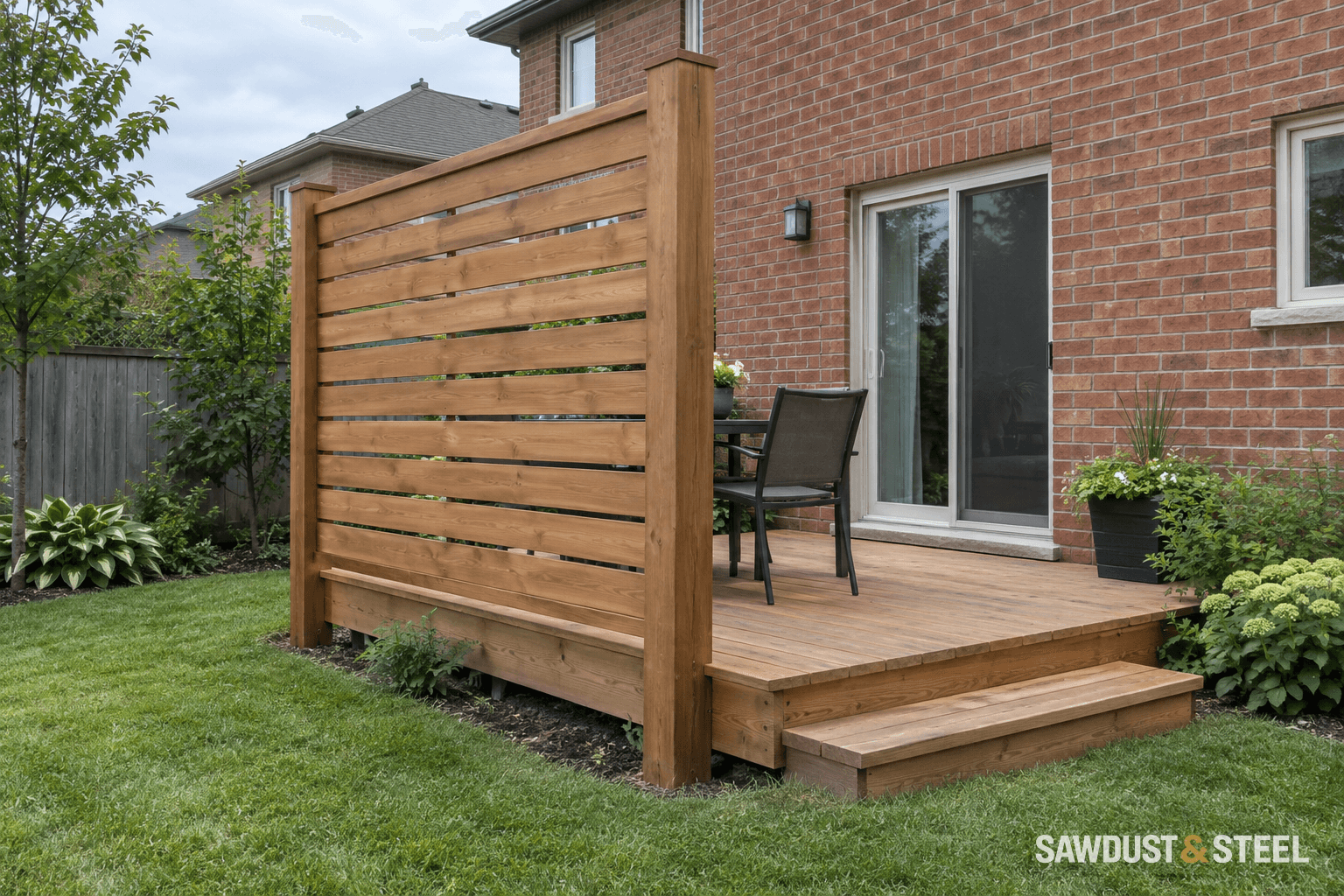
A light privacy panel still gives wind a large surface to push against. Before fixing it to an existing deck, establish the screen system, the post attachment and the route those forces take into the supports. The rail cap is not a design brief.
Read the mounting instructions before buying the panel
The Deckorators 5/8-inch privacy-screen frame instructions specify a 46-inch span between posts and distinguish surface-mounted from in-ground post kits. Those are product assembly details, not a wind approval for any existing Ontario deck. Take the exact manual, infill choice and mounting kit to the person reviewing your deck; a different decorative panel can change the loading.
Ask the reviewer to mark the support route on a section through the deck edge. If the answer is independent ground-supported posts, the drawing should show them rather than implying the old guard carries the screen. Keep the existing fall protection effective during the work. Do not add a solid panel to a guard system merely because its post feels stiff by hand.
Separate the height rule from structural approval
Toronto's Fence Bylaw, Table 1 item 5 sets a 2.0-metre-above-deck limit for the unroofed-deck fence location described there, subject to its location conditions and other applicable provisions. That is a Toronto rule for a defined location, not an Ontario standard and not proof that a deck can carry the screen. Give the municipality the deck height, distance to streets and lot lines, roof status and proposed overall screen height.
For the privacy test, sit in the intended chair while someone marks the unwanted sightline on a safe ground-level mockup. Compare a short dining-corner screen with a full perimeter enclosure. Check the view standing at the door too: the useful panel position may differ between a seated meal and a person walking onto the deck.
A screen may also affect the deck guard arrangement. If the aim is a clearer view with wind shelter, compare glass and aluminum guards before selecting a privacy product.
The wind needs somewhere to go
A panel transfers force into its fixings, posts, and whatever supports those posts. The higher the panel and the more exposed the location, the more important that complete connection becomes. Do not assume extra screws into a rail cap establish a suitable design.
Trex's lattice guidance describes decorative privacy panels that allow airflow. Openings can change how a screen behaves, but decorative lattice is not automatically a guard or a structurally approved attachment to your deck. Use the exact system's instructions and a qualified design where required.
Answer these before ordering panels
- How tall and wide is each screen, and how exposed is the deck?
- What supports the posts, and how are the forces carried into the structure or ground?
- Does the screen affect an existing guard, its openings, or climbability?
- How does the municipality measure height and regulate the proposed location?
- Will the finished screen obstruct an access route, window, vent, or required exit?
Toronto's deck and porch application guide illustrates the structural and site information expected for deck work. It is not a blanket approval for a privacy-screen height. Confirm the proposed addition with your own municipality.
Privacy can be more targeted
Sit where you actually have coffee and identify the sightline you want to block. A shorter or narrower screen placed deliberately may solve that problem with less enclosure. Draw it before buying it. More panel is not always more useful, especially if it also removes the breeze and evening light. If the proposed screen is on a boundary fence, use the separate guide to privacy slats in an existing chain-link fence. Its mesh, posts and exposure need their own assessment.
We marked Chris's sightline while he sat at the table, then checked it standing at the back door. He needed less screening than the three panels he'd bought. The revised design supports the dining-corner screen independently of the old rail cap, with the connections resolved before installation. One side stays open for light and breeze. He can still talk to the neighbour over the barbecue; he just doesn't have to do it through every meal.
Before buying the panels, check whether the screen also has to work as a deck guard and whether the existing frame is worth building onto. Then spend a few minutes in that dining corner at the time you'll use it. Privacy is only half the comfort question; a sunny deck can have a barefoot problem too.