
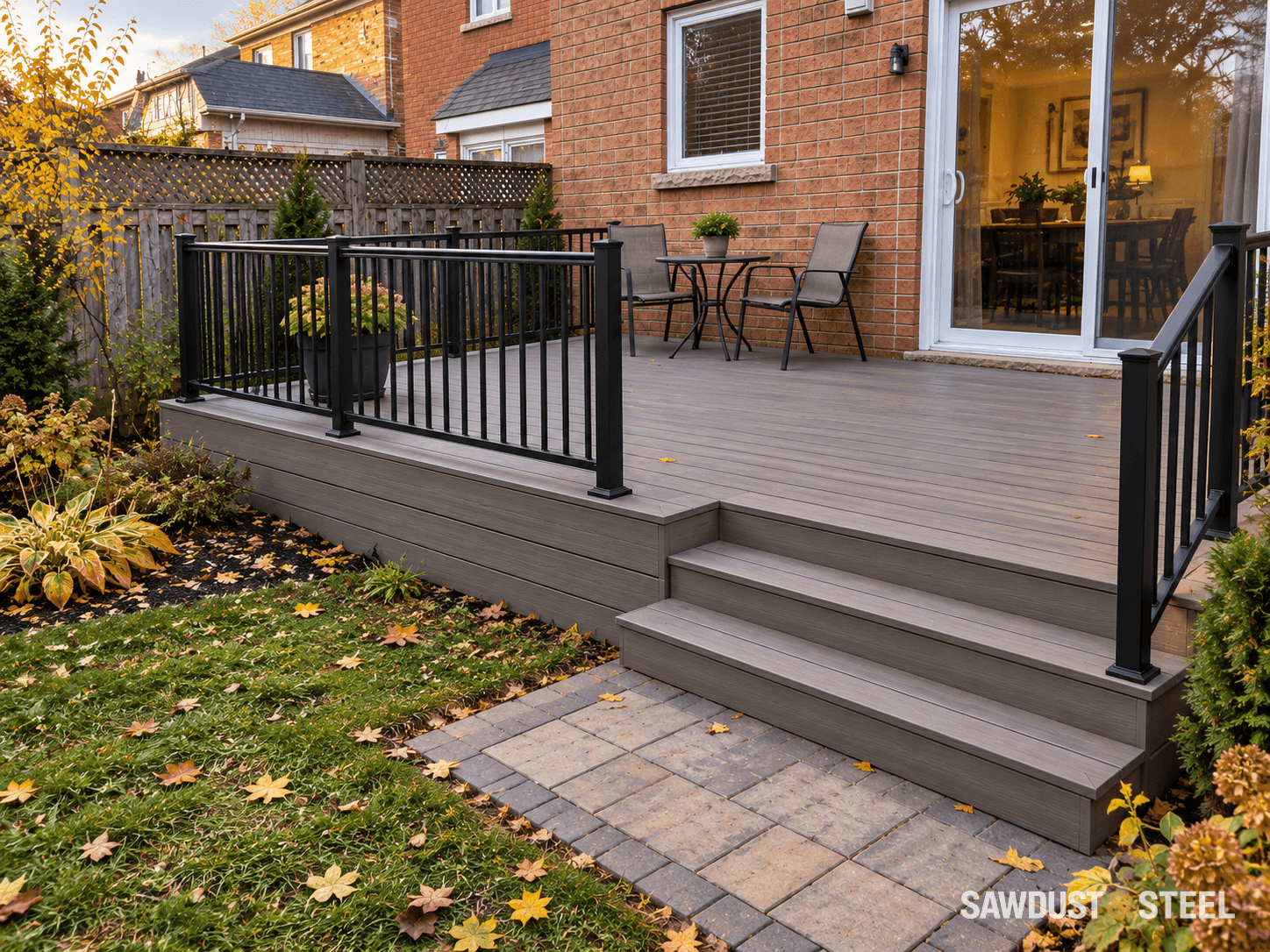
Compare glass and aluminum pickets from the chair where you will use the deck. Then compare the cleaning route, wind exposure, replacement parts and complete installed scope. A clear panel can preserve the view while creating a surface you cannot safely reach from either side.
Compare the complete guard system
| Decision | Glass infill | Aluminum pickets |
|---|---|---|
| Seated view | Broad clear areas; check rails and reflections at eye level | Repeated vertical members may be less noticeable than expected from the chair |
| Cleaning access | Both faces need a safe reachable cleaning method | More small surfaces, usually without a broad outer pane |
| Wind exposure | Solid infill changes the loading discussion | Open infill permits more airflow; still requires a designed system |
| Replacement | Record exact panel size, glass specification and retention parts | Record picket, rail, post and finish product codes |
| Installed price | Include glass, retainers, posts, anchors and access | Include complete rails, pickets, posts, anchors and any cuts |
The Regal aluminum railing installation instructions show a glass installation using the specified rails, gasket and support blocks. Those small parts are part of the system, not optional packing. Compare the exact installation and engineering information supplied for the guard you are buying; do not mix a glass panel from one system with convenient rails from another. Confirm the guard-to-frame connection as well as the panel system; Simpson's connection resources provide background for that discussion.
Plan the outside face before choosing glass
Stand safely at ground level and identify how the outside face would be cleaned. Do not plan to lean over a guard or reach from an unsecured ladder. An elevated deck over a garden bed, lower roof or steep slope can make access more consequential than the purchase price. Ask whether the selected system has an approved service procedure and who performs it.
For a busy family deck, compare fingerprints and water spots on an actual sample in ordinary light. We would choose from the everyday seated position. A railing photographed from the lawn may not resemble the one you look through over breakfast. Check reflections from the house and whether a dark top rail crosses the view when seated. Keep a product record with the panel dimensions and glass specification so a future breakage does not become a search for something that looks close enough.
Confirm the Ontario guard requirements first. A sheltered seating goal also belongs in the wind and privacy-screen discussion, especially on an exposed elevated deck.
Be honest about maintenance
- Can both sides be cleaned from a safe position?
- Will irrigation or roof runoff regularly spot the panels?
- How will the selected system behave in the exposed corner?
- Can a damaged panel or picket be replaced through an identifiable supplier?
Get the mixed-material option drawn if you choose one. Transitions and corners need proper details too. The useful decision is not which railing looks more expensive. It is which view you want to protect, and which chores you are prepared to repeat.
If an existing post already moves, start with the loose rail-post investigation before comparing replacement infill.