
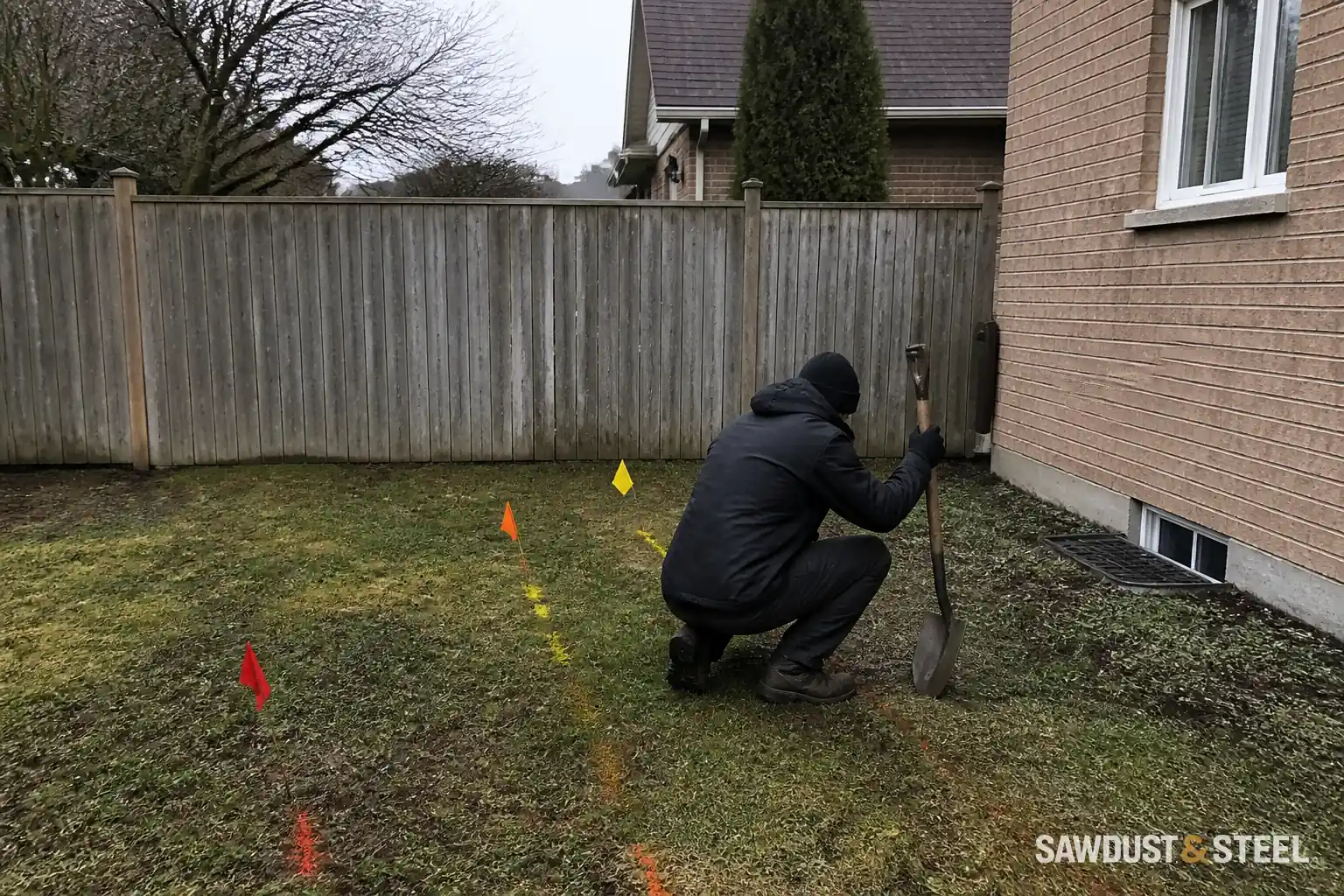
The fence is straight. The deck drawing is square. Unfortunately, neither tells you where the legal property boundary sits.
Setbacks are a siting question before they are a carpentry question. Resolve them while moving a line still takes an eraser.
Measure from the boundary that counts
Use reliable property information, such as an applicable survey, and have uncertainty about the boundary resolved by an Ontario land surveyor. A fence may be inside a lot, shared, or simply in the wrong place. Your neighbour's deck is not evidence of what your own lot permits.
Then check registered easements and access rights before locating the structure. A confirmed boundary and a compliant setback do not answer whether someone else has rights across that part of the lot.
Oakville's sample site plan asks for dimensions between the deck and property lines. It explicitly warns that the sample does not establish the zoning requirements for a particular property.
Describe the whole proposal
A zoning reviewer needs more than "a deck at the back." Include its height above grade, whether it is attached, the stairs and landings, any roof, and relevant projections. The applicable definitions and permitted encroachments determine which parts are measured and how.
A stair that turns towards the side yard can be the awkward piece, even when the main platform fits comfortably. We mark the stair and landing along with the platform during layout, then compare the whole outline with the site plan. On a tight yard, turning the stair back towards the lawn gave the owner a better gate route as well as a proposal they could take back for zoning review. Draw that before ordering the railing.
Permit exemption does not settle zoning
Oakville's deck guidance directs owners to verify zoning before applying. Building-permit requirements and property siting are different checks. A low or small structure should not be assumed free of zoning constraints.
If the proposed footprint does not comply, discuss a compliant redesign and whether a planning application is relevant. Do not assume a minor variance is automatic because the requested distance looks small.
Send a useful first enquiry
- Property address and available survey or site plan.
- Deck dimensions, height, attachment, and proposed cover.
- Stairs, landings, and distances to the identified boundaries.
- Known easements, protected trees, or conservation constraints.
Ask which zoning provisions apply to that drawing and keep the reply with that version of the plan. If you then widen the deck or swing the stair, send the revised layout back where needed. A written answer about yesterday's footprint doesn't resolve today's change, even if the change began as moving things a little to fit the barbecue.