
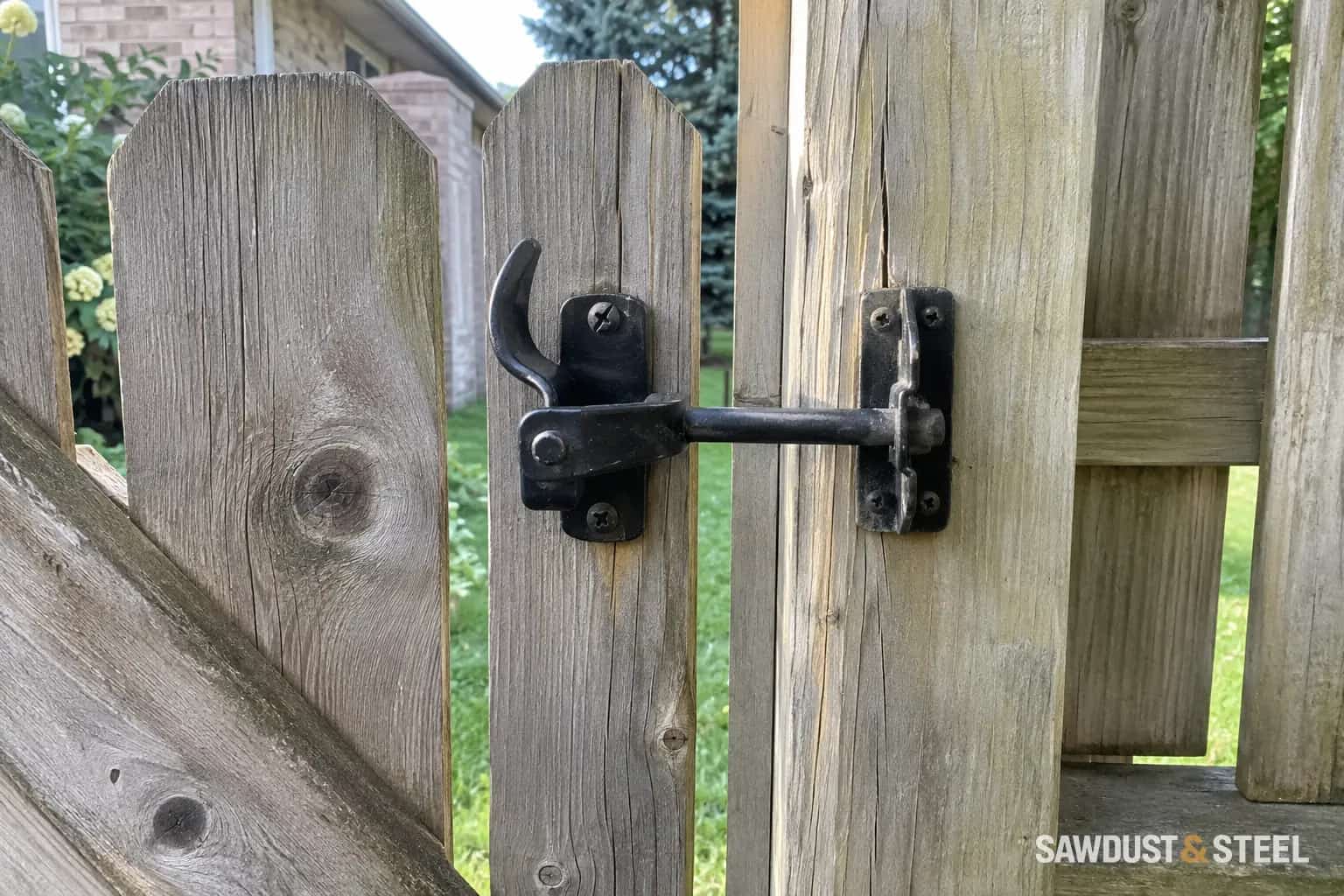
Decide which leaf opens every day
A double gate usually has one leaf used daily and another opened for wider access. Work out the opening order, latch overlap and where each leaf rests when open. A bolt should locate the leaf, not haul a sagging gate into alignment. If you must lift the gate to get the rod into its socket, diagnose the gate first.
Hang the leaves
Confirm free movement and correct latch overlap.
Locate the receiver
Use the final grade and hardware position.
Test both modes
Check daily passage and full-width access.
Coordinate receivers with the finished ground
The receiver must suit the bolt model and the surface below: soil, concrete and individual pavers are not interchangeable anchoring conditions. Ask the installer how the socket is supported, kept clear and drained, and whether it remains flush when the gate is open. Coordinate any drilling with buried-service checks. A loose paver containing a perfectly drilled hole still gives a moving gate a moving target.
If alignment changes at the same time as the receiver stops lining up, use A Wooden Gate Sags and the Latch Misses to locate the movement.
Check winter operation without forcing the rod
Keep the socket free of leaves and grit using the maker's care method. If the bolt binds after a freeze, do not hammer it down; check whether the ground, receiver or leaf has shifted. Recheck alignment after thawing. For a pool enclosure, the drop-bolt arrangement is part of the approved gate system, so a generic garden-gate workaround may not be acceptable.
Toronto requires a lockable drop bolt on double pool-enclosure gates; that requirement is specific to its pool enclosure rules. City of Toronto: fences.
Before you finish
- Choose a receiver for the actual bolt and substrate.
- Keep open-gate walking routes free of projections.
- Investigate movement before relocating the socket.